
This is the best English Scones Recipe I have ever tried, and I’m excited to share it with you. With this method you can make light, fluffy scones every time—quick, simple and made from pantry staples.

These scones are perfect for morning tea, a weekend brunch or a simple afternoon treat. They split open easily, are tender inside and crisp on top, and pair beautifully with jam and fresh cream.
Table of Contents
- Why you’ll love this recipe
- Ingredient notes
- Variations
- Instructions
- Tips for success
- FAQs
- Serving suggestions
- More recipes
- What readers are saying
- English Scones (recipe)
Why you’ll love this recipe
This is a dependable, no-fuss English scones recipe that consistently produces light, fluffy results. It uses just a few common ingredients, is quick to prepare and forgiving for home bakers of any skill level. The method keeps the butter cold and the dough handled minimally so the scones rise well and stay tender.
The recipe is ideal for adapting: add fruit, citrus zest, spices, or savoury ingredients such as cheese and herbs. It scales easily, so you can make a small batch for a family tea or double it for a gathering.
Ingredient notes
This classic scone recipe relies on four main ingredients that are usually on hand:
- Self-raising flour (or plain/all-purpose flour plus baking powder)
- A pinch of salt
- Cold butter
- Cold milk
If you don’t have self-raising flour, you can make a substitute by combining plain flour with baking powder. The amount of baking powder can vary by country and brand—use the guidance in the recipe notes below.
Variations
The base scone dough is versatile. Try one of these simple variations to change the flavour:
- Add a spoonful of sugar for a slightly sweeter scone.
- Stir in a handful of dried fruit such as raisins or currants.
- Fold in grated orange or lemon rind for a fresh citrus note.
- Mix in a teaspoon of spice such as cinnamon or mixed spice.
- Add chopped walnuts or other nuts for texture.
- Stir in chocolate chips for a sweeter treat.
- Spoon the dough onto hot stewed fruit and bake for a simple cobbler.
- Use cheese and herbs for savoury scones.
- Swap in gluten-free flour blend to make gluten-free scones (follow your blend’s instructions).
Instructions
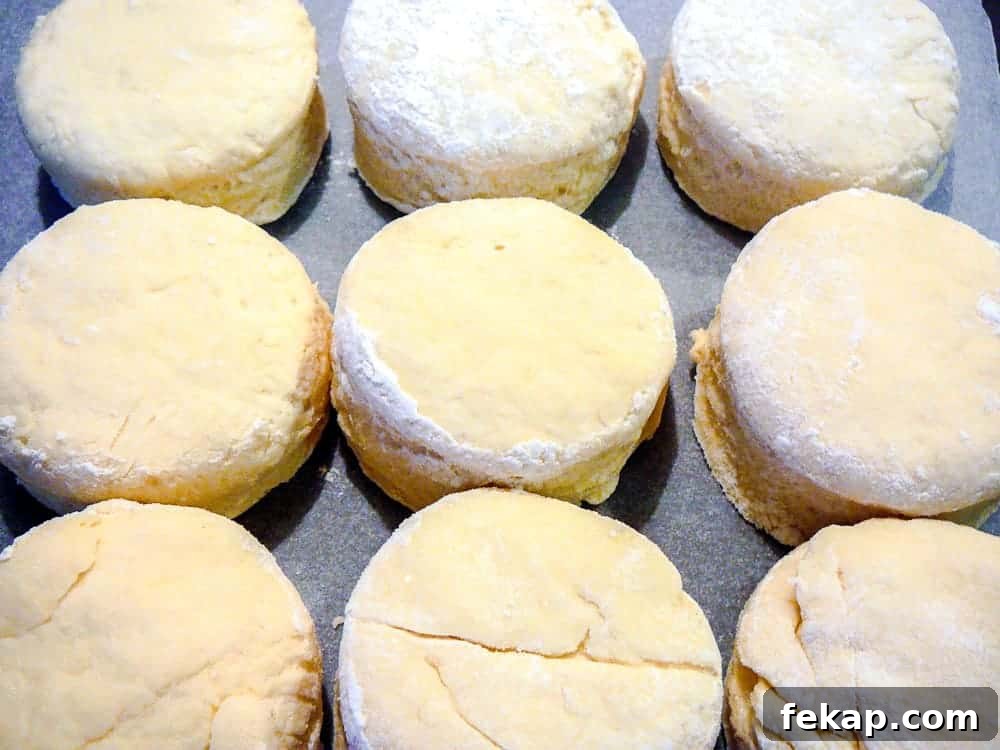
- Preheat a fan‑free oven to 230°C / 450°F so it’s very hot when you bake.
- Sift or whisk the flour with a pinch of salt, then rub in cold butter until the mix looks like fine breadcrumbs with a few small lumps of butter remaining.
- Add cold milk all at once and stir quickly with the blade of a knife until a sticky dough forms. You may need a tablespoon or two more milk depending on flour and humidity.
- Turn the dough onto a very lightly floured board, knead briefly (count to about 30), then pat to a round about 3 cm / 1 1/3 in thick.
- Cut out scones with a floured cutter, pressing straight down without twisting, and place them close together on a lined baking tray.
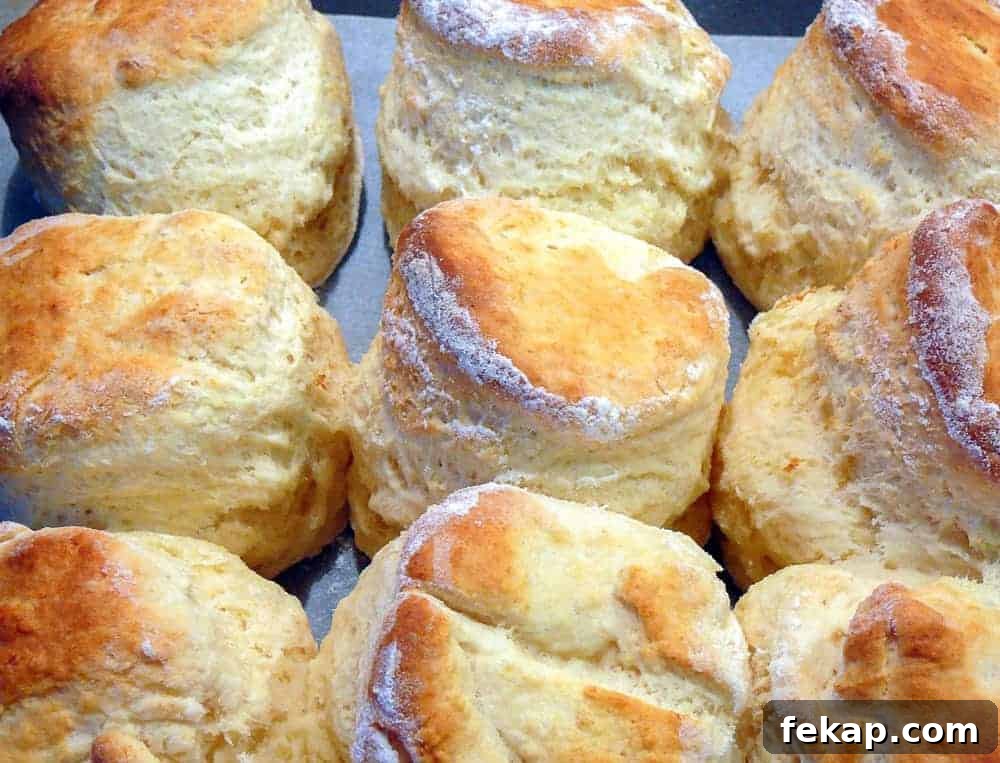
- Bake in the hottest part of the preheated oven for 12–15 minutes, until well risen and golden.
- Remove from the oven and wrap immediately in a clean tea towel to keep them soft and moist.
Tips for success
Follow these key points for reliably light and fluffy scones:
- Use a very hot oven – 230°C / 450°F is best to give the scones an initial lift.
- Keep all ingredients cold until you combine them; cold butter creates flaky layers.
- Grate or finely cut the cold butter into the flour and leave small “pebbles” for extra flakiness.
- Add milk all at once and mix quickly to avoid overworking the dough.
- Knead only briefly; over-kneading makes dense scones.
- Resist adding extra flour – the dough should be slightly sticky.
- Do not twist the cutter when cutting scones; press straight down to preserve height.
- Wrap scones in a clean tea towel as soon as they come from the oven to retain moisture.
FAQ’s
Can these scones be frozen?
Yes. Freshly baked scones are best eaten warm, but leftovers freeze well. Wrap each scone individually in plastic wrap and place in a freezer bag. To reheat, remove the wrap and warm in the microwave for about 20 seconds (turn halfway), or warm in a low oven until heated through. They won’t be exactly like fresh-from-the-oven, but they remain a convenient option.
What if I don’t have self-raising flour?
Make your own self-raising flour by mixing plain (all-purpose) flour with baking powder. In Australia use 2 teaspoons baking powder per cup of plain flour. In the United States use about 1 1/4 teaspoons baking powder per cup of plain flour. Check your baking powder brand for best results in other regions.
Serving suggestions
Serve scones warm, split in half. Spread with butter and your favourite jam, then add a spoonful of fresh thick cream for the classic combination. Other options include honey, maple syrup, golden syrup, soft cheese or chocolate spread. Scones are versatile—pick the topping you love.
More recipes
- Damper with olives, sun dried tomatoes and cheese (variation idea)
- Pumpkin bread with cream cheese frosting (inspired serving)
- Mascarpone cream (great as a scone topping)
What readers are saying
“This is the first time I’ve ever made scones that rise! I’ve been trying for years. Thank you — this recipe really works for me.”
“Easiest and most delicious scone that can be prepared in half an hour. Very impressed.”
English Scones

English Scones
This straightforward English scones recipe makes 9 large scones. It’s reliable, quick and easily adapted.
Ingredients
- 3 cups (450 g) self-raising flour (or plain flour plus baking powder)
- Pinch salt (about 1/8 teaspoon; up to 1/4 tsp to taste)
- 2 ounces / 60 g salted butter (cold)
- 1 1/4 cups (310 ml) cold milk, plus extra to brush
Times & Servings
Prep Time: 10 minutes | Cook Time: 15 minutes | Total Time: 25 minutes
Serves: 9 large scones
Author: Marcellina
Instructions
- Heat the oven to 230°C / 450°F.
- Measure and sift the flour with the salt. Rub in the cold butter until the mixture resembles fine breadcrumbs with some small lumps remaining.
- Stir in the cold milk with a flat knife until a sticky dough forms. Add a little more milk if necessary.
- Turn out onto a lightly floured board and knead very briefly (about 30 seconds). Pat to 3 cm / 1 1/3 in thick.
- Cut with a floured cutter, pressing straight down. Place on a lined tray close together and brush tops with a little milk if desired.
- Bake in the hottest part of the oven for 12–15 minutes until golden and risen. Wrap in a clean tea towel as soon as they come from the oven.
Notes
- To make self-raising flour: Australia — add 2 teaspoons baking powder per cup of plain flour; United States — add 1 1/4 teaspoons baking powder per cup of plain (all-purpose) flour. Adjust for other regions according to your baking powder brand.
- Metric measures: 450 g self-raising flour, pinch salt, 60 g butter, 310 ml milk.
Nutritional Estimate (per serving)
Calories: 220 kcal | Carbohydrates: 33 g | Protein: 5 g | Fat: 6 g
Nutritional information is an estimate. For accuracy, calculate using the exact ingredients and brands you use.