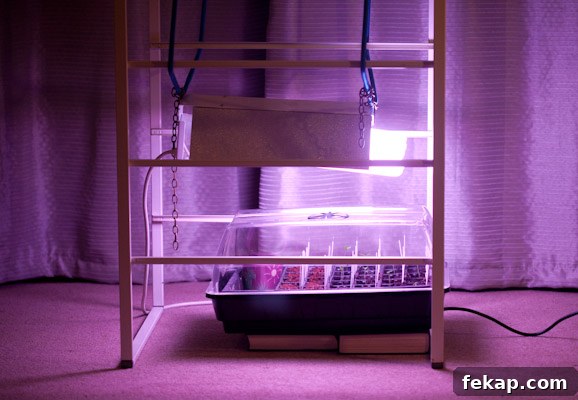
Several of my chilli seedlings have become a bit leggy since germination. They spent their early days in a dim room under a single 11W energy-saving bulb, which didn’t provide enough light to keep stems short and sturdy. This isn’t a disaster — leggy seedlings can usually be corrected by planting deeper when potting on — but I want to improve conditions now to encourage stronger, more compact growth.
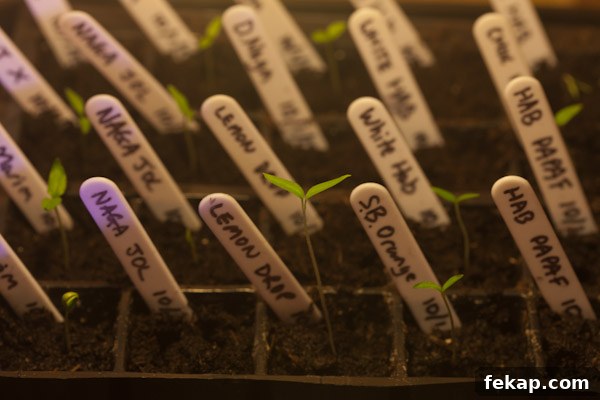
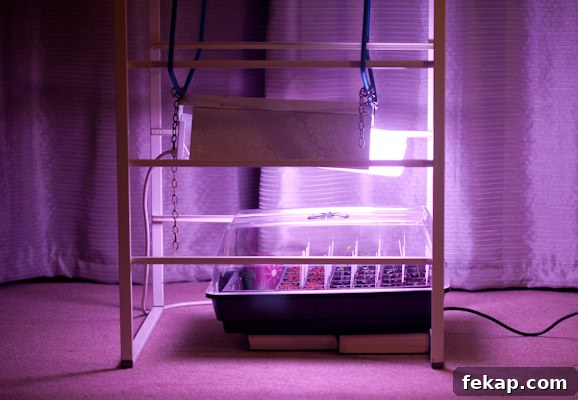
To address the legginess I’ve moved the trays under a 125W Nuturlite CFL grow light. I started with the lamp about 25 cm above the seedlings and plan to lower it a few centimetres every couple of days. This gradual approach reduces the risk of scorching or shocking young plants while increasing the light intensity enough to promote sturdier stems and fuller leaf development. Proper light is one of the most important factors for preventing stretch in seedlings; consistent, bright, cool-white light keeps growth balanced and compact.
Out of the 20 seeds I planted initially, 12 have germinated so far. To ensure a steady succession of plants I sowed several more seeds over the weekend, focusing again on Chinense varieties that perform well for me. The new sowing includes a mix of flavours and heat levels, which will help spread harvest times and increase the chance of reliable crops.
- 3 x Orange Rocoto
- 3 x Lemon Drop
- 3 x Peach Habanero
- 1 x Habanero Papafina
- 4 x Naga Jolokia
For these later seeds I tried coir pellets for the first time. The pellets are compact discs that expand into a small plug when watered, creating a neat, free-standing planting medium with a central hole for the seed. Once the pellets expand to about 4 cm they’re ready for sowing: you place the seed in the top indentation, keep them moist and warm, and wait for germination. The main advantage is mechanical simplicity — you can transplant the entire pellet into a pot or tray without disturbing the seedling’s roots, which reduces transplant shock and root damage.
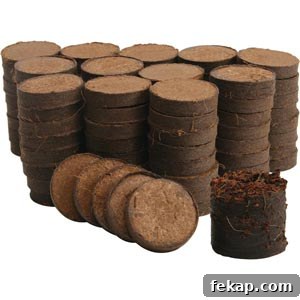
I found the coir pellets particularly convenient for small-scale sowing because they make handling seedlings easy and tidy. They retain moisture well while providing a loose structure for young roots to expand into. When the time comes to pot on, the whole pellet can be placed into a larger container or into the garden soil, leaving the delicate roots undisturbed. Based on this first experience, I would use them again for future seed batches.
The four Naga Jolokias were started using the wet tissue germination method, which often helps slow-to-germinate varieties get going. This technique involves keeping seeds on a moist paper towel in a warm environment until they sprout, then transferring the tiny seedlings gently into a growing medium. Naga seeds can be slow and variable in germination, so the wet tissue method gives me a better chance of coaxing them to sprout quickly and uniformly.
Moving forward I’ll continue to monitor light distance, humidity and moisture. I’ll lower the CFL gradually and watch for any signs of heat stress or bleaching. If stems continue to stretch despite the increased light, I’ll plant the seedlings deeper at potting-on time and consider adding gentle air movement to strengthen stems. A small oscillating fan on low can simulate outdoor breezes and encourage sturdier growth without harming young plants.
Overall, the plan is simple: increase quality light early, reduce stress during transplanting, and stagger sowings for a reliable succession of chilli plants. I’ll keep an eye on germination rates and seedling vigour and report back with updates on how the Naga Jolokias and the other varieties progress over the next few weeks.