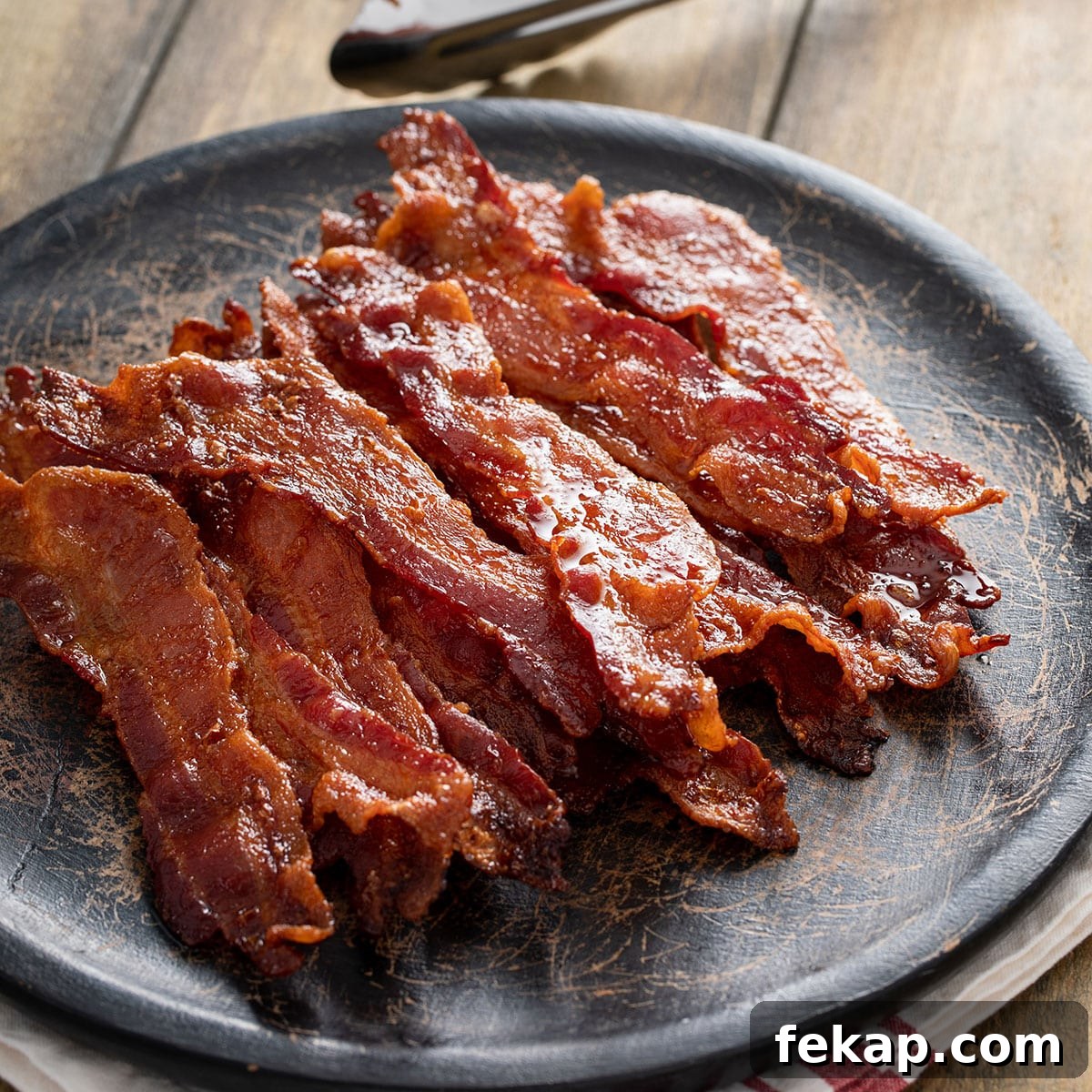
Cooking bacon in the oven delivers evenly cooked, crispy strips with far less splatter and mess than pan-frying. Whether you prefer thick-cut, regular, extra-crispy, or turkey bacon, baking it on a rimmed sheet pan is an easy, hands-off method that reliably produces excellent results for small or large batches.
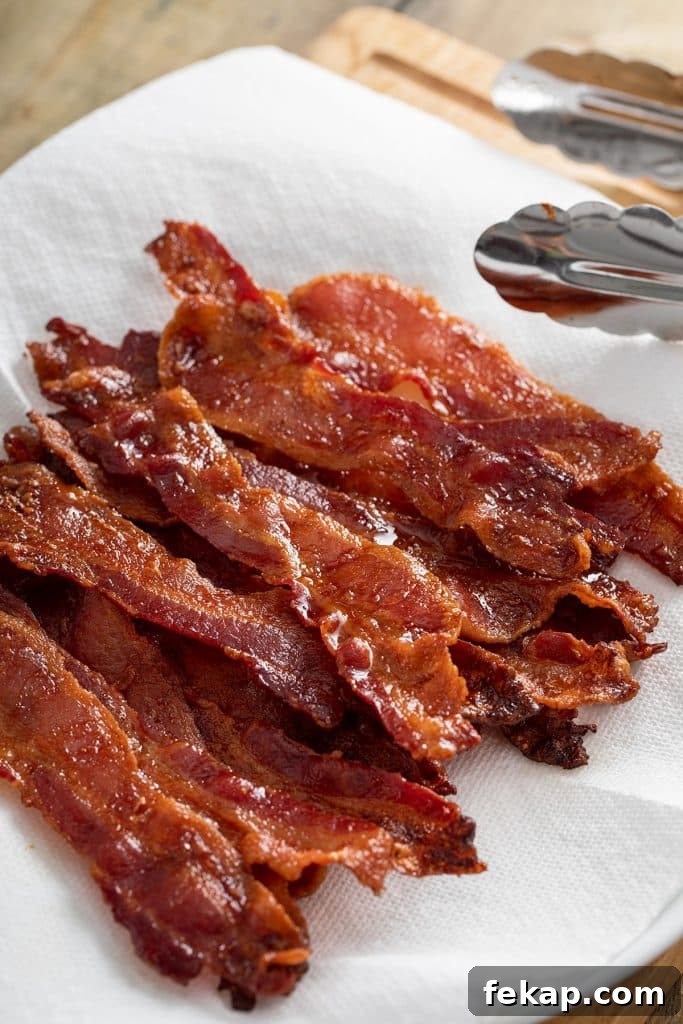
✔️ Oven Baked Bacon
I first mastered oven-baked bacon in culinary school and it changed how I make bacon at home. The stove-top method can be messy and unpredictable — hot grease splatters, hot spots in the pan can leave some pieces chewy while others burn, and clean up is a hassle. Baking bacon removes every one of those problems.
Oven-baked bacon works for every style and thickness. From thin strips for salads to thick-cut slices for breakfast sandwiches, the oven delivers consistent texture and color with minimal effort.
⭐️ Is Oven Baked Bacon Better?
No matter the cut or the quantity, the oven is the most reliable method for excellent bacon. Key benefits include:
- Hands-off cooking: Lay the slices in a single layer on a lined rimmed baking sheet and let the oven do the work.
- Even results: Heat circulates around the strips, producing a uniform crispness without flipping.
- Less mess: Baking keeps grease contained on the sheet pan so counters and stovetops stay cleaner.
- Scaleable: You can cook just a few slices or multiple pans at once — the method is the same restaurants use to prepare large batches.
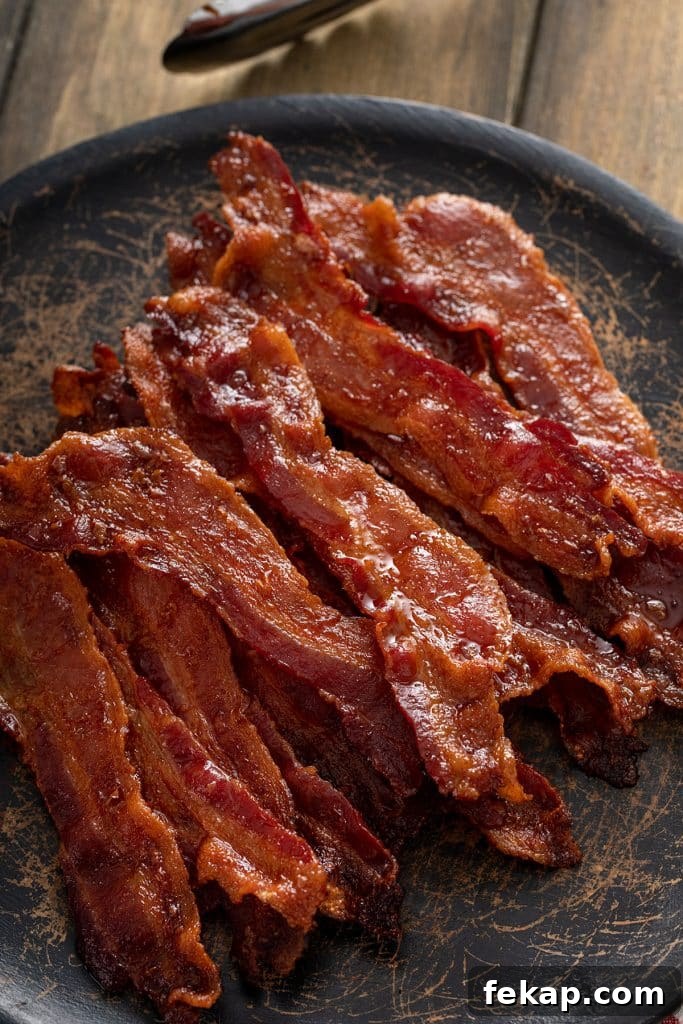
🔎 What you’ll need for Baking Bacon in the Oven
You only need bacon and a few basic tools. Below are the items that make the process quick and easy.
- Bacon: Any style works — thin, regular, or thick-cut. Choose a quality product for better flavor and texture.
Tools and Equipment
- Rimmed baking sheet: A half-sheet pan is perfect for most home needs.
- Aluminum foil or parchment paper: Line the pan for easy cleanup; heavy-duty foil makes removal of cooled fat simple.
- Oven-safe wire rack (optional): Use this if you want the bacon lifted from the pan, though it isn’t required.
- Kitchen tongs: Helpful for transferring hot bacon from the pan to a plate.
- Paper towels and a plate: For draining excess fat after baking.
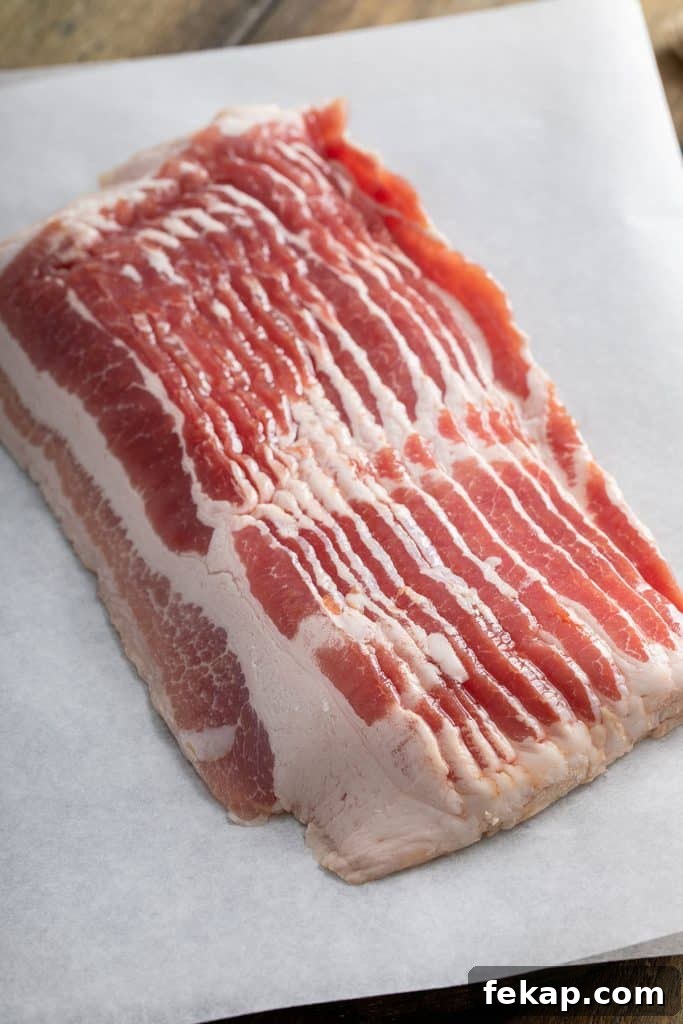
🔎 How to Cook Bacon in the Oven?
✔️ Method 1 (Preferred) – Lay Bacon Directly on the Baking Sheet
- Preheat the oven to 400°F (204°C). Line a rimmed baking sheet with aluminum foil or parchment for easy cleanup.
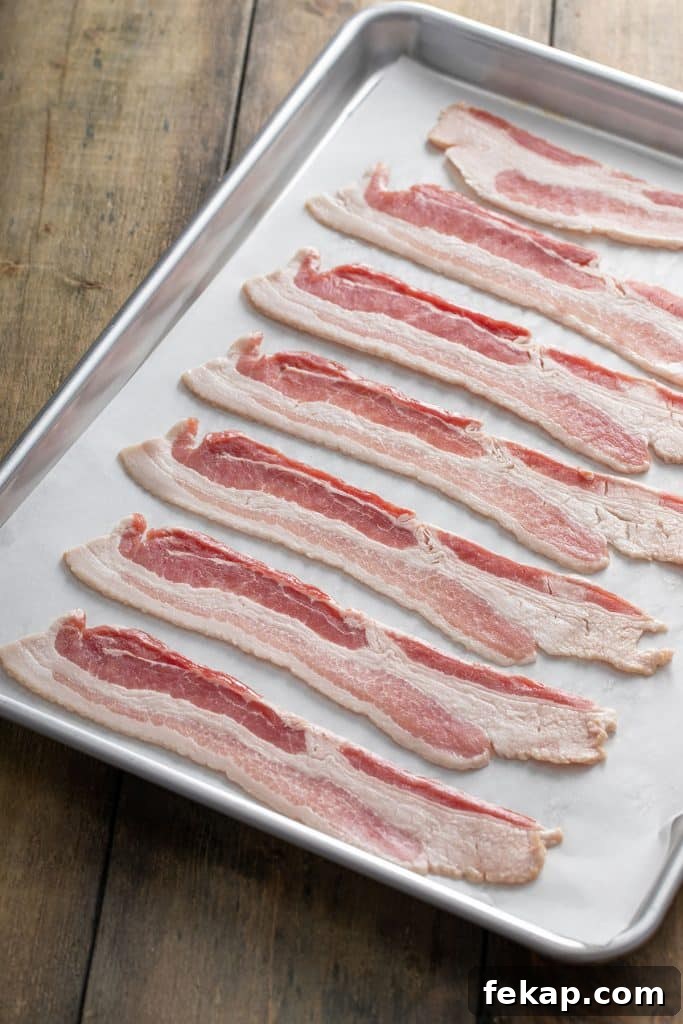
- Arrange bacon slices in a single layer so they do not overlap.
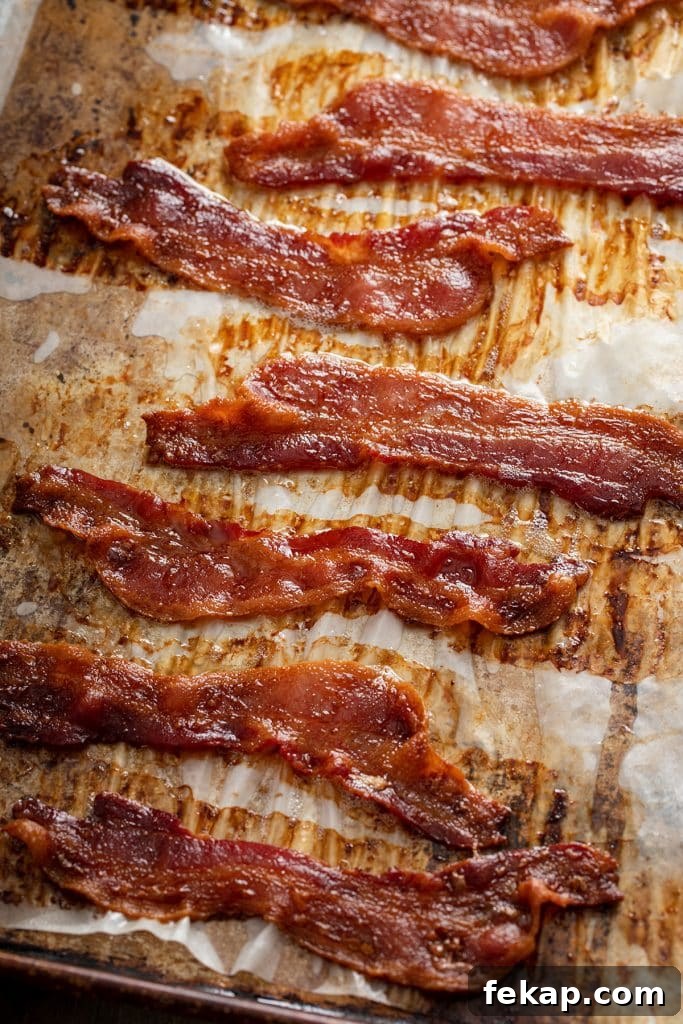
- Bake until the bacon reaches your desired crispness. Thin slices may finish in 12–15 minutes; regular slices typically take 16–20 minutes; thick-cut can take 20–25 minutes. Oven temperatures and bacon thickness vary, so begin checking around 10–12 minutes.
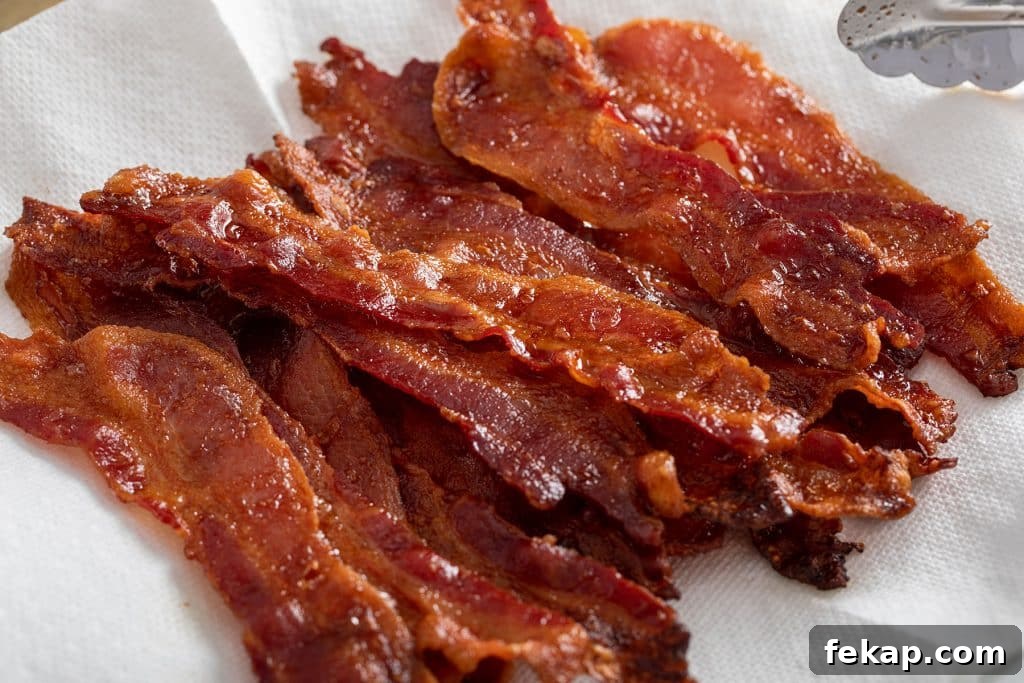
- Remove the pan and let it sit 2–3 minutes. Use tongs to transfer bacon to a paper towel-lined plate to drain excess grease before serving.
✔️ Method 2 – Use a Wire Rack on the Baking Sheet
- Preheat the oven to 400°F (204°C) and line a rimmed sheet pan. Place a wire rack on the pan and arrange bacon slices on the rack without overlapping.
- Follow the same baking times as above. The rack lifts the bacon for air circulation, but it’s optional and adds another item to clean.
✔️ Baking Bacon in Oven FAQs
🔎 Should I Use a Wire Rack When Baking Bacon?
I offer both methods, but using a wire rack isn’t necessary. The benefits are minimal and it adds extra cleanup. Bacon cooks evenly in its own rendered fat on a lined sheet pan, and many cooks prefer the simplicity of skipping the rack.
- Both methods produce excellent bacon, so choose what’s most convenient.
- Bacon cooked directly on the sheet cooks in its own fat, which helps prevent dried or chewy spots.
- Using foil and tossing it after the fat cools makes cleanup straightforward — no scrubbing between rack wires.
🔎 What Temperature Should I Bake Bacon At?
400°F (204°C) is an ideal temperature for oven-baked bacon. It crisps the meat without burning quickly when monitored.
🔎 How Long to Bake Bacon at 400°F?
Cooking time depends on thickness and your desired texture. Remember bacon continues to crisp slightly after coming out of the oven:
- Thin-cut: About 12–15 minutes
- Regular/medium-cut: About 16–20 minutes
- Thick-cut: About 20–25 minutes
🔎 Do You Flip Bacon in the Oven?
Flipping is unnecessary. I don’t flip; I sometimes rotate the pan halfway through if my oven has a hot spot. That’s usually all that’s needed to ensure even browning.
🔪 Tips for Making Bacon in the Oven
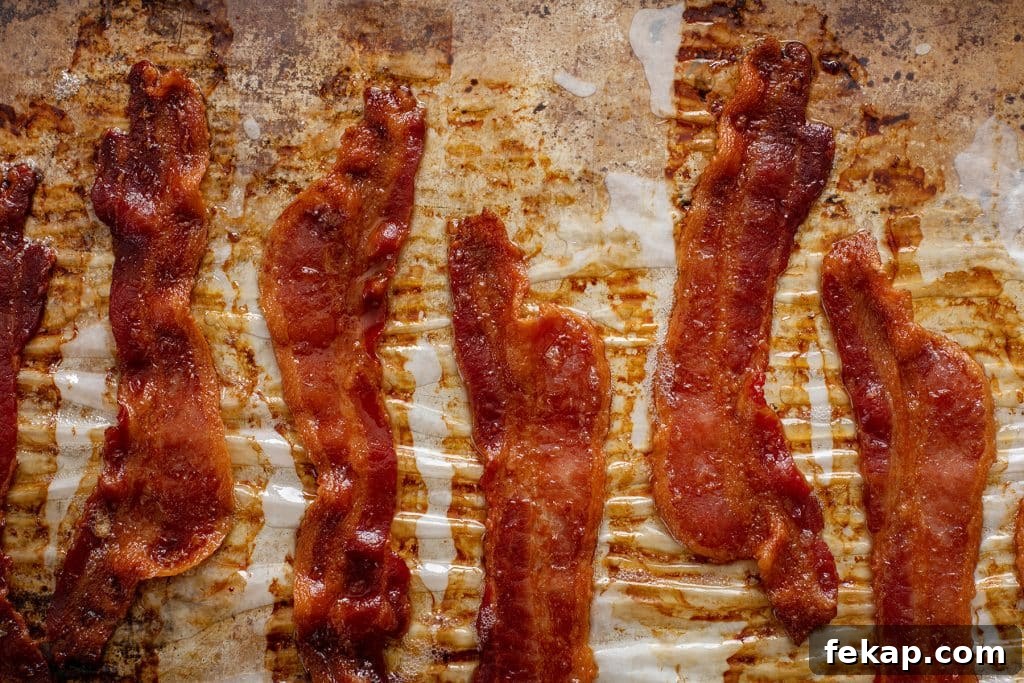
- Line the pan with foil or parchment for easy clean up; heavy-duty foil makes removing cooled fat simple.
- A wire rack is optional — it doesn’t make the bacon healthier and may not noticeably change texture.
- Although baking is mostly hands-off, keep an eye on the bacon near the end; it can go from golden to burnt quickly.
- Always drain baked bacon briefly on paper towels to remove excess grease before serving or storing.
- Choose high-quality bacon when possible — it cooks and tastes better.
👀 What is Bacon Anyway?
Bacon is a salt-cured pork product, most commonly made from pork belly or back cuts. Varieties include smoked or unsmoked, and producers often offer center-cut and thick-cut options.
✔️ Storing Baked Bacon
🔎 Can I Bake Bacon Ahead of Time?
Yes. Cooked bacon keeps in an airtight container in the refrigerator for up to 5 days.
🔎 How to Store Cooked Bacon?
Cool the bacon completely, then store in a sealed container in the fridge for up to 5 days. Lay strips flat or between layers of parchment to prevent sticking.
🔎 Can I Freeze Baked Bacon?
Yes. Cool strips, separate with parchment or wax paper, and store in a freezer-safe bag with as much air removed as possible. Freeze up to 3 months for best quality.
🔎 How to Reheat Bacon?
Reheat briefly in a hot oven or in the microwave between paper towels. Bacon warms quickly — watch it closely to avoid overcooking.
🔎 What To Do With Bacon Grease? Should You Save It?
Rendered bacon fat is a flavorful cooking fat. If you use it, strain out solids while hot using a fine mesh sieve lined with paper towel or cheesecloth, then store the cooled fat in a glass jar in the refrigerator.
✔️ How To Render and Store Bacon Grease
After baking, transfer bacon to a plate and strain the pan drippings through a fine sieve into a heatproof glass container. Refrigerate in a lidded jar; avoid storing hot grease in thin plastic.
🔎 Uses for Bacon Grease
Bacon fat has a relatively high smoke point and adds savory depth to many dishes. Use it for frying eggs or hash browns, sautéing vegetables like green beans or asparagus, adding to beans or stews, making gravies or pan sauces, or replacing some butter in savory biscuits and cornbread.
If you prefer to discard the grease, let it cool slightly so it solidifies on the foil for easy removal and disposal.
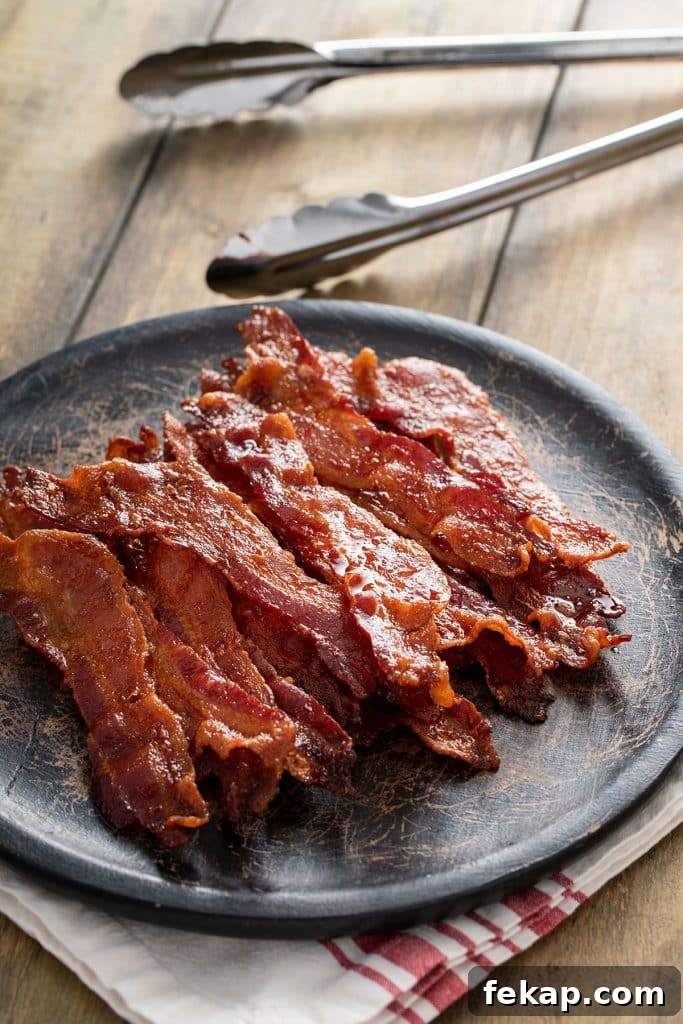
Air fryer bacon can give similar crisp results but typically holds fewer slices at once compared to an oven sheet pan.
Other recipe ideas that pair well with bacon include breakfast pancakes, savory quiches, baked beans, pasta salads, and shrimp and grits.
Making Bacon in the Oven — Recipe
Yield: about 8 servings | Prep: 5 mins | Cook: 15–20 mins depending on thickness
Ingredients
- 1 pound good-quality bacon (thin, regular, or thick-cut)
Instructions
- Preheat oven to 400°F (204°C). Line a rimmed baking sheet with foil or parchment.
- Arrange bacon in a single layer without overlapping.
- Bake until desired crispness: 12–15 minutes for thin, 16–20 for regular, 20–25 for thick. Start checking around 10–12 minutes.
- Remove from oven, let rest 2–3 minutes, then transfer to a paper towel-lined plate to drain.
- Serve immediately or store cooled bacon in an airtight container in the fridge up to 5 days, or freeze up to 3 months.
Notes
- You don’t need to flip the bacon. Rotate the pan halfway if your oven has hot spots.
- Use a lined pan for easy clean up and always drain cooked bacon on paper towels.
- High-quality bacon tastes better and often contains less excess fat.
Nutrition (per serving, approximate)
Calories: 236 kcal | Protein: 7 g | Fat: 22 g | Sodium: 375 mg