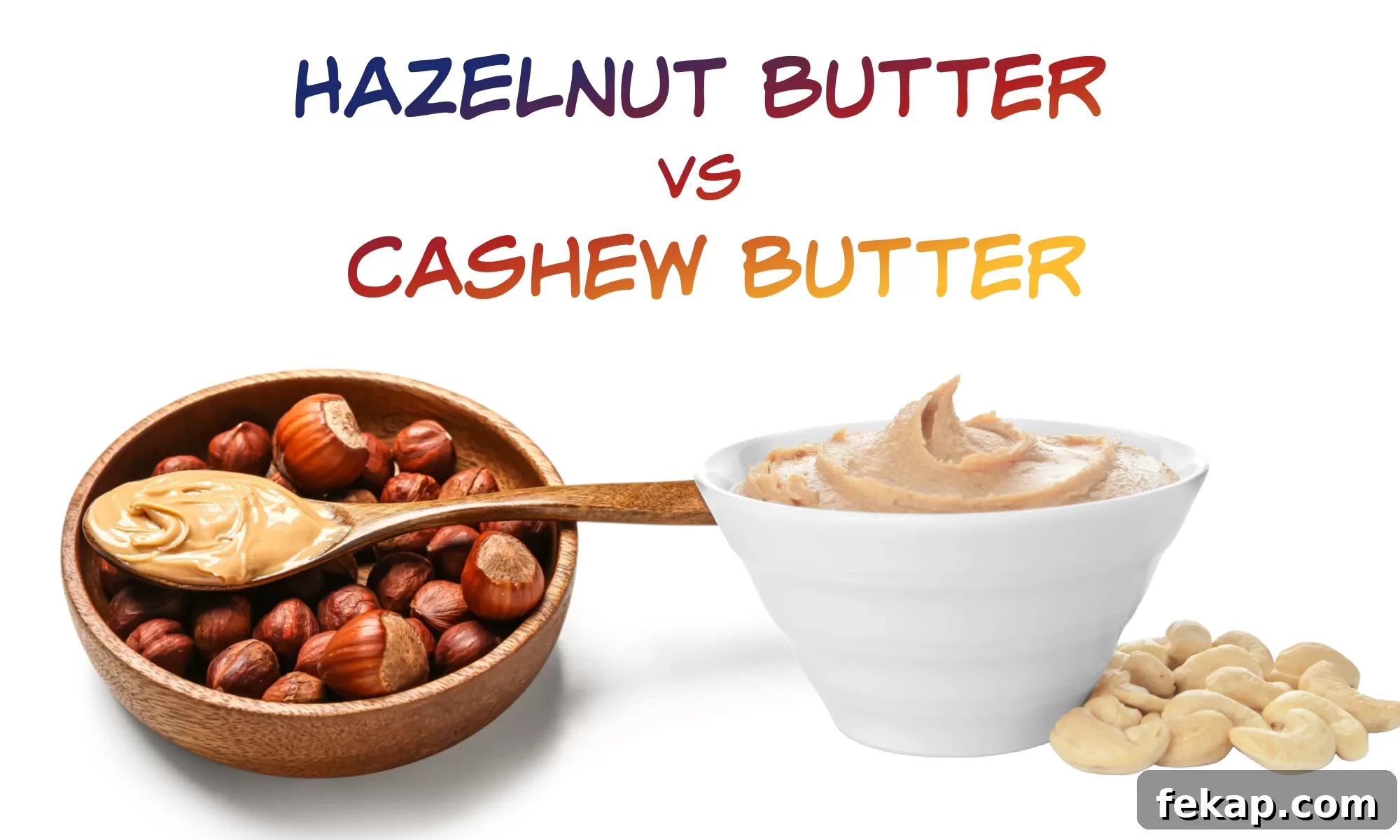
Today’s face-off is a tasty one: hazelnut butter vs cashew butter. Both spreads are nutrient-dense, versatile, and delicious, but they differ in flavor, texture, and some nutritional details. This article compares their characteristics, uses, nutrition, storage, and which one might be the better choice depending on your needs.
Hazelnut butter offers a dense, smooth texture and a rich, slightly sweet flavor—think of Nutella as a popular chocolate-hazelnut variation. Cashew butter delivers a thick, creamy consistency with a mild, sweet, and delicate nutty taste that blends well with many foods.
Let’s compare these two popular nut butters and help you decide which is right for your pantry.
Comparing hazelnut butter vs cashew butter
Hazelnut butter is made from hazelnuts and cashew butter from cashews—both are tree-nut spreads and allergens for those with nut sensitivities. They share similar uses and both can fit into vegan and paleo diets when unsweetened. Hazelnut butter generally suits low-carb and keto diets better than cashew butter.
Both have relatively low glycemic impacts compared with high-carb spreads, which can make them preferable for anyone watching blood sugar—consult your healthcare provider for personalized advice.
| Hazelnut butter | Cashew butter | |
| Taste | Rich, nutty, slightly sweet | Mild, nutty, sweet |
| Texture | Dense, smooth | Thick, creamy |
| Allergens | Tree nuts | Tree nuts |
| Vegan? | Yes | Yes |
| Paleo? | Yes | Yes (if unsweetened) |
| Keto? | Yes | No |
| Glycemic index (GI) | Hazelnuts = 0 | 1 oz cashews = 25 |
What is hazelnut butter?
Hazelnut butter is made by grinding roasted or raw hazelnuts into a rich, smooth paste. Roasting enhances the nutty flavor and deepens the aroma. Variations range from pure, unsweetened butter to chocolate-hazelnut spreads that include cocoa and added sweeteners. Homemade versions are simple to make with a food processor and your choice of roasted or raw hazelnuts.
What is cashew butter?
Cashew butter is produced by grinding cashews into a creamy, spreadable butter. It often has a naturally sweet, mellow flavor. Some commercial cashew butters include added sugar or oil, so check labels if you prefer a purer product. Like hazelnut butter, you can make cashew butter at home using raw or roasted nuts.
Differences between hazelnut butter and cashew butter
The main differences are flavor and texture. Hazelnut butter tends to be richer and more pronounced in flavor, while cashew butter is milder and creamier. These nuances affect pairing choices—hazelnut butter works beautifully with chocolate and bold flavors, while cashew butter complements fruit, smoothies, and subtle spices.
Nutritionally, hazelnut butter typically offers more healthy fats and slightly higher fiber, while cashew butter contains more net carbohydrates. These factors may influence your choice depending on dietary priorities.
How to use hazelnut butter vs cashew butter
Both spreads are versatile. Use them as a spread on toast, pancakes, or waffles; stir into oatmeal, smoothies, or yogurt; blend into sauces for noodles or salads; or dip fruit and vegetables for a quick snack. Hazelnut butter pairs well with chocolate, bananas, and baked goods; cashew butter shines in creamy sauces, smoothies, and lighter, fruit-forward recipes.
Nutrition: Hazelnut butter vs cashew butter
Per a typical 2-tablespoon serving, hazelnut butter is higher in calories and healthy fats and provides slightly more protein and fiber. It also contributes a modest amount of iron. Cashew butter has fewer calories, a bit less fat and protein, but more net carbohydrates and, in some commercial varieties, added sugar. Compare labels when choosing a store-bought option.
| Serving size: 2 tbsp | Hazelnut butter | Cashew butter |
| Calories | 210 | 190 |
| Total fat (saturated) | 20 g (2 g) | 16 g (3 g) |
| Total carbs | 6 g | 10 g |
| Net carbs (fiber) | 3 g (3 g) | 9 g (1 g) |
| Total sugars (incl. added) | 2 g (0 g) | 3 g (4 g) |
| Protein | 5 g | 4 g |
How to store hazelnut butter and cashew butter
Store both nut butters in the refrigerator to extend shelf life and reduce oil separation. Most natural nut butters last about 2–3 months after opening when refrigerated. Always follow the manufacturer’s storage recommendations and check best-before dates for commercial jars.
Hazelnut butter vs cashew butter: Which is better?
Both spreads are excellent choices; the best one depends on taste preferences and dietary goals. Hazelnut butter stands out for its richer flavor, slightly higher healthy fat and iron content, and lower net carbs, making it a better option for keto or low-carb diets. Cashew butter offers a milder, creamier profile that works well in smoothies, sauces, and lighter recipes.
If forced to choose a winner based on nutrition and versatility, hazelnut butter takes a slight edge for its texture, iron contribution, and adaptability in both sweet and savory dishes. That said, keeping both on hand provides the most culinary flexibility.
FAQs
Nutella is a chocolate-hazelnut spread made from hazelnuts along with cocoa, sugar, and other ingredients—it’s a flavored variation rather than a pure hazelnut butter.
Hazelnut butter provides about 5 grams of protein per serving versus 4 grams in cashew butter. The difference is small, but hazelnut butter also adds more healthy fats, fiber, and iron, which can be beneficial in smoothies.
Hazelnut butter is lower in net carbs and is the better choice for keto diets between the two.