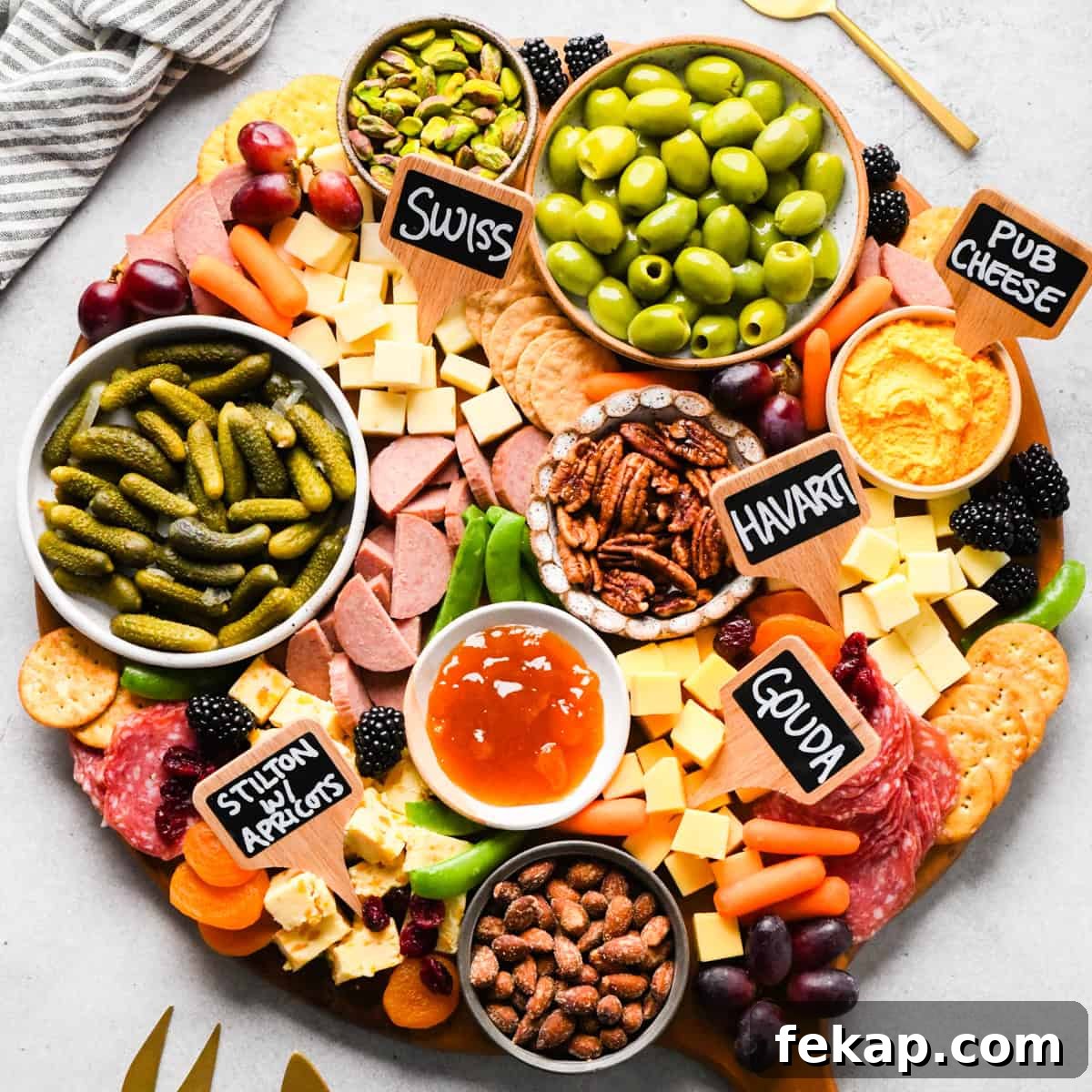
Learn how to make a stunning charcuterie board that will impress your guests. This clear, practical guide covers equipment, ingredient amounts, preparation, assembly, storage, and helpful tips to create the best charcuterie board for any occasion.
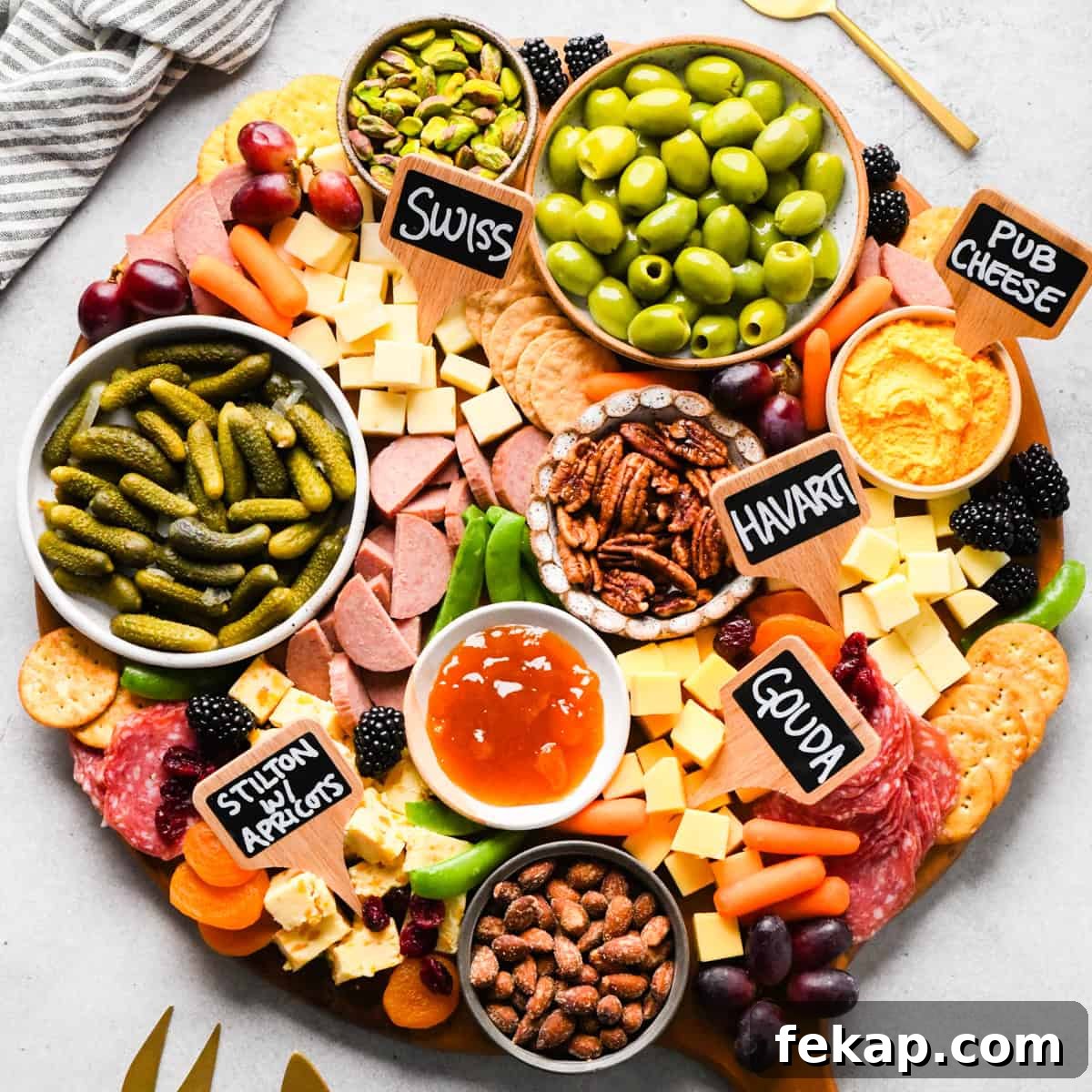
There’s nothing more satisfying when entertaining than presenting a charcuterie board that looks beautiful and tastes delicious. Whether it’s a holiday, a casual get-together, a dinner party, or simply a midweek treat, a well-composed board always delights.
This post provides step-by-step advice for assembling a balanced, attractive board: the equipment you need, ingredient suggestions and amounts, preparation tips, and assembly guidance to make serving easy and enjoyable.
Charcuterie Board Equipment
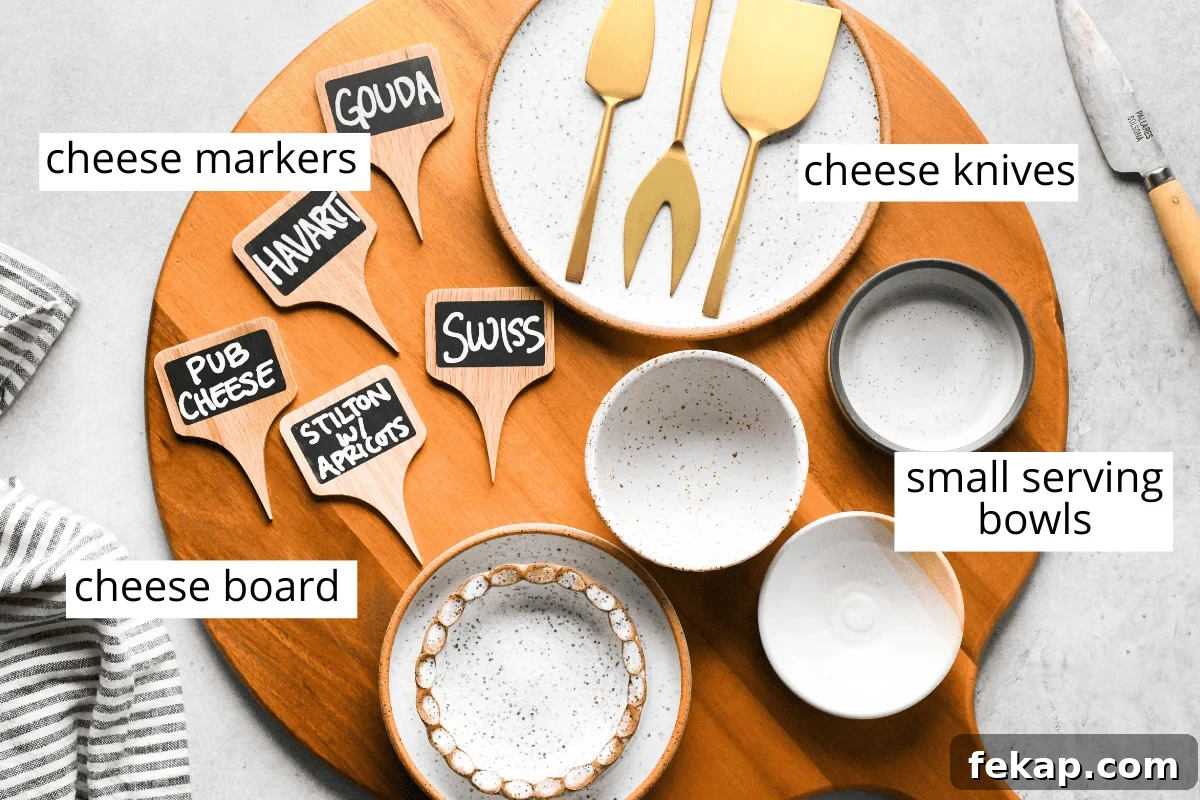
- Cheese board. A round wooden board is classic, but rectangular or slate boards work well too. Choose a board large enough to hold all components with some breathing room for styling.
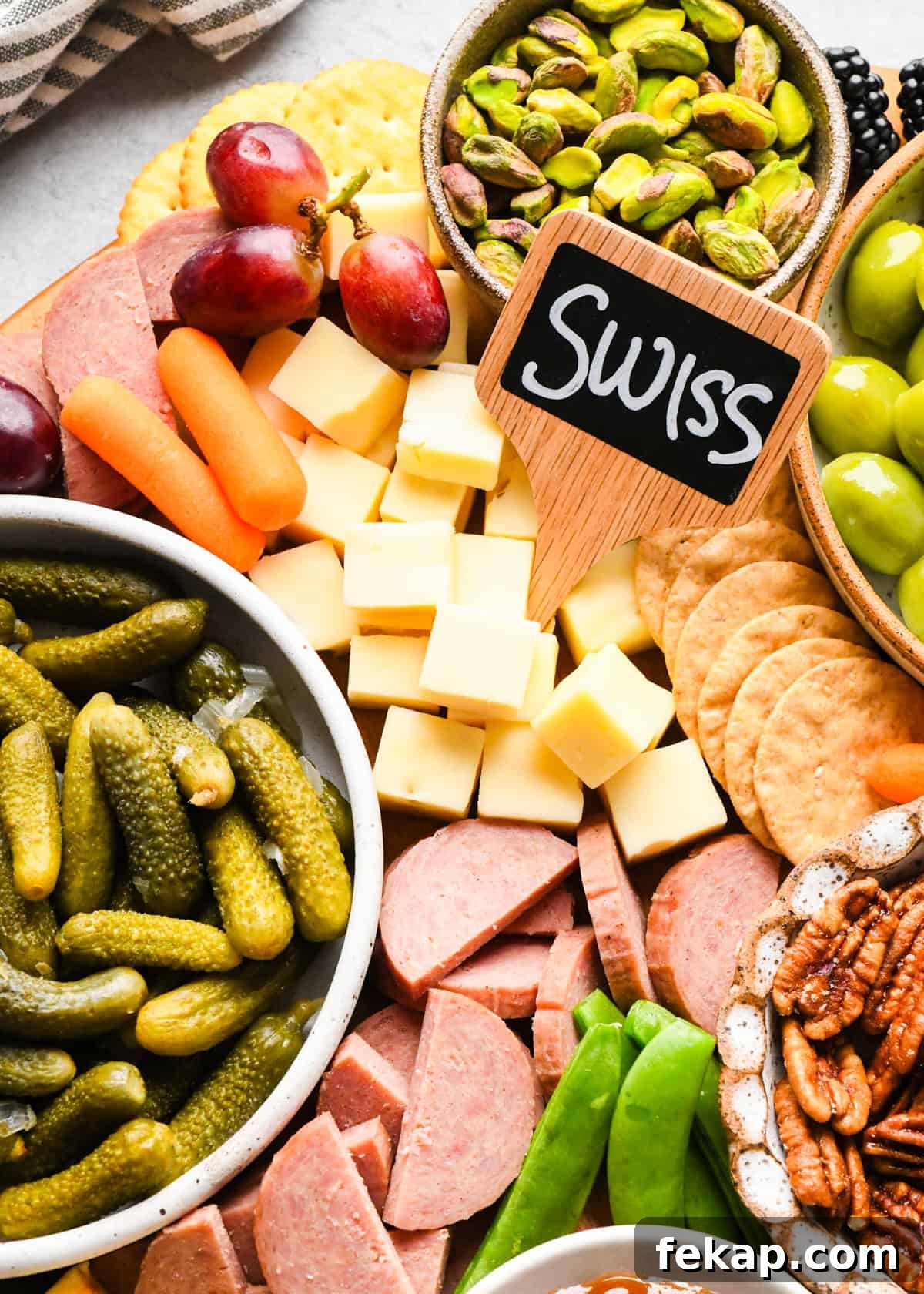
- Cheese markers. Small labels help guests identify cheeses, especially when offering multiple varieties.
- Cheese knives. A few different knives for soft, semi-soft, and hard cheeses make serving easier and look polished.
- Small bowls. Use bowls for olives, pickles, jams, nuts, and anything with juices so they don’t spread across the board.
- Cutting board and chef’s knife. For slicing meats, cubing cheeses, and prepping fruit and vegetables.
Charcuterie Board Ingredients
I often shop at specialty grocers and mainstream stores; pick the items you enjoy. Below are reliable choices that create contrast and balance on the board.
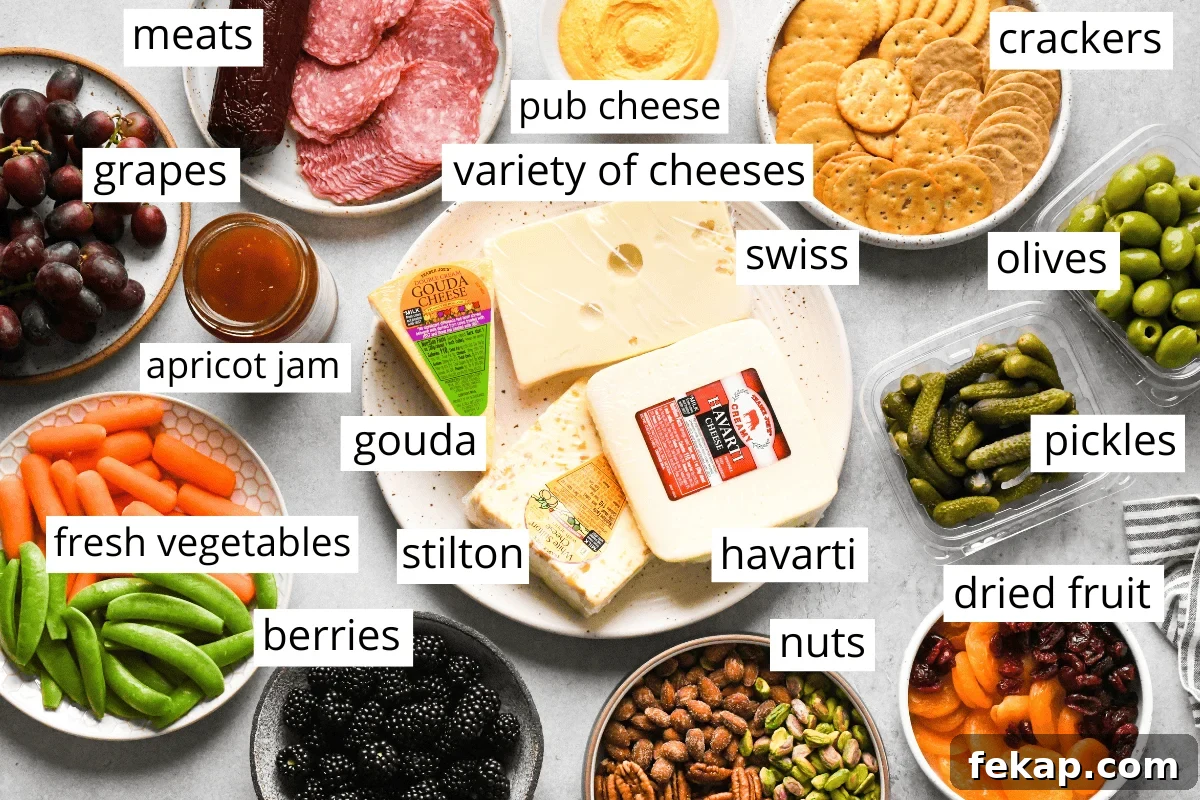
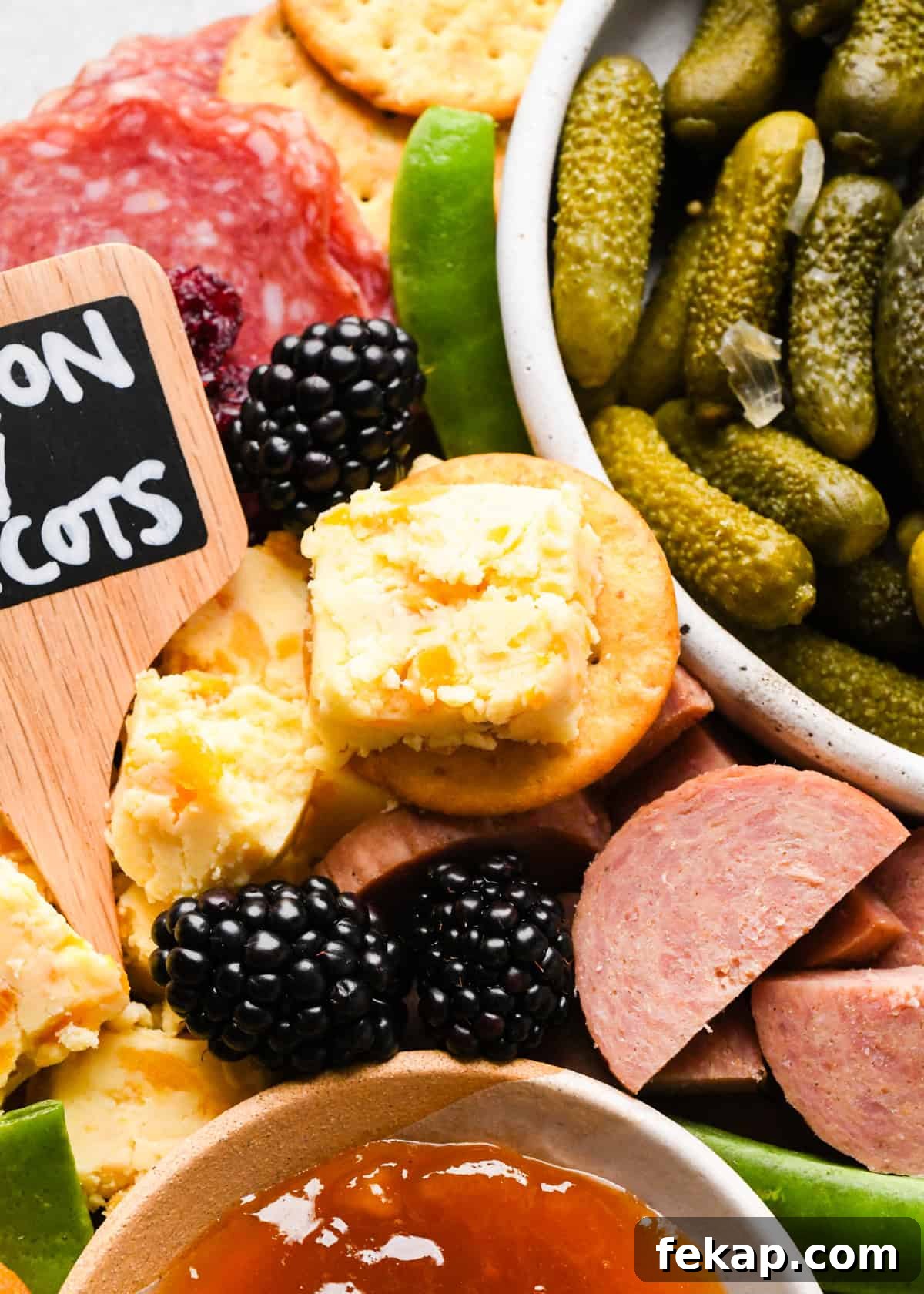
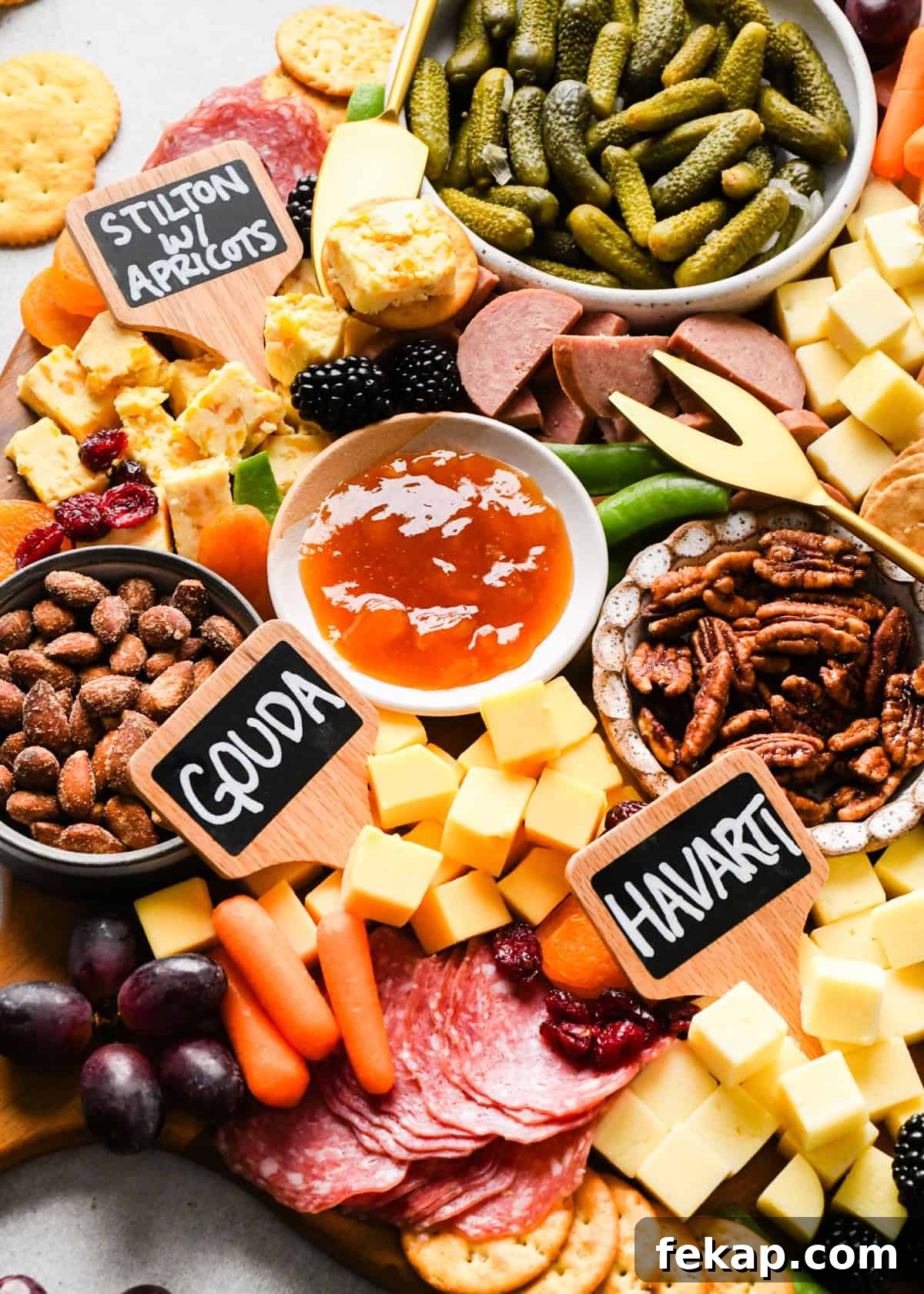
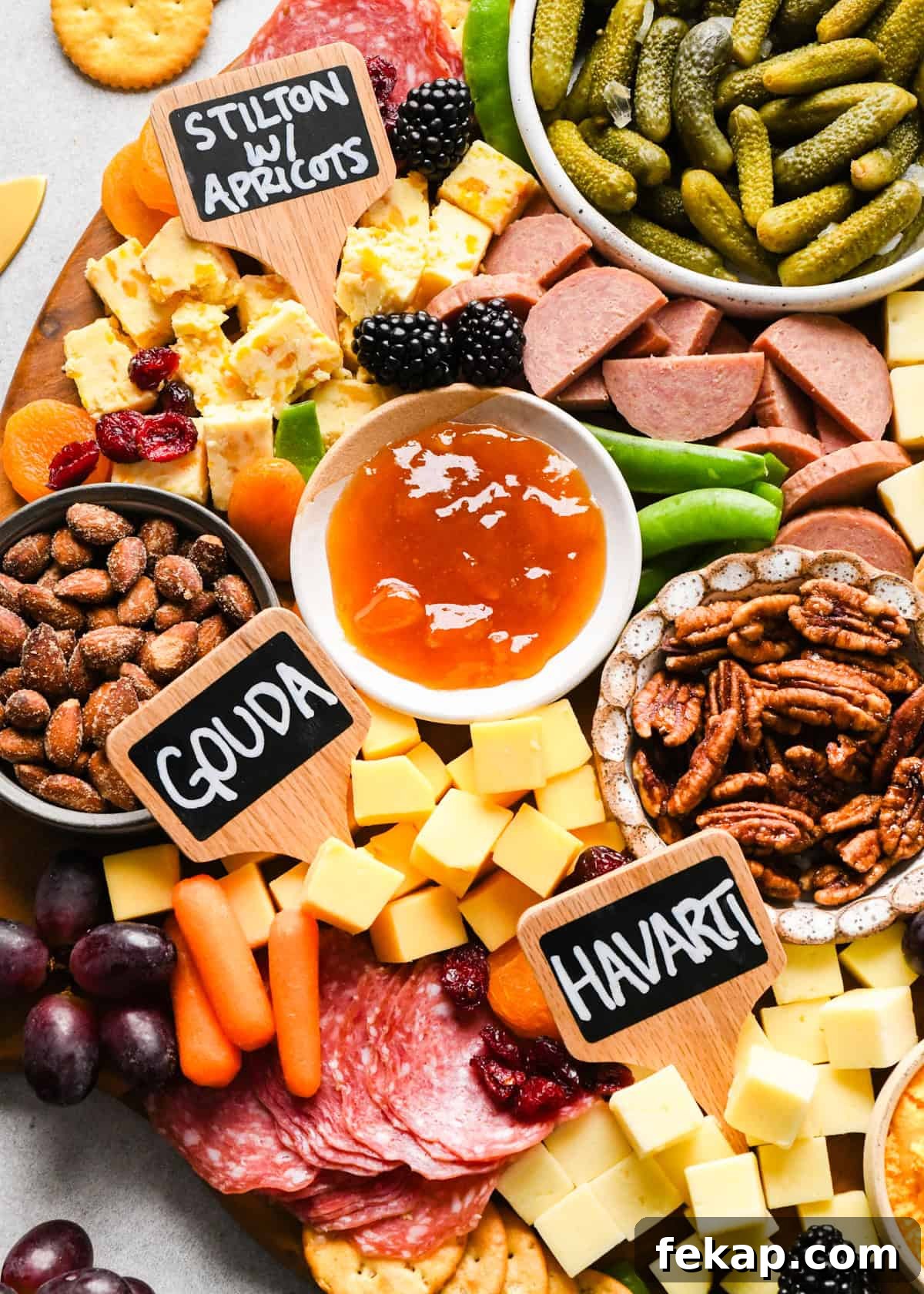
- Cheese. Combine a few textures and flavors: a semi-firm (Gouda), a nutty Swiss, a creamy Havarti, a sharp cheddar or spreadable pub cheese, and one specialty cheese such as a white stilton with fruit.
- Meat. Dry salami, sliced summer sausage, prosciutto or pepperoni add savory richness. Offer at least two varieties for variety.
- Olives and pickles. One olive variety and a small cornichon or pickle selection are ideal. Serve them in bowls to contain brine.
- Fresh fruit. Grapes, berries, apple or pear slices, and stone fruit are popular. Serve fruit in bite-sized portions so guests can easily grab them.
- Vegetables. Sliced cucumbers, baby carrots, and snap peas add freshness and crunch; serve cut and ready to eat.
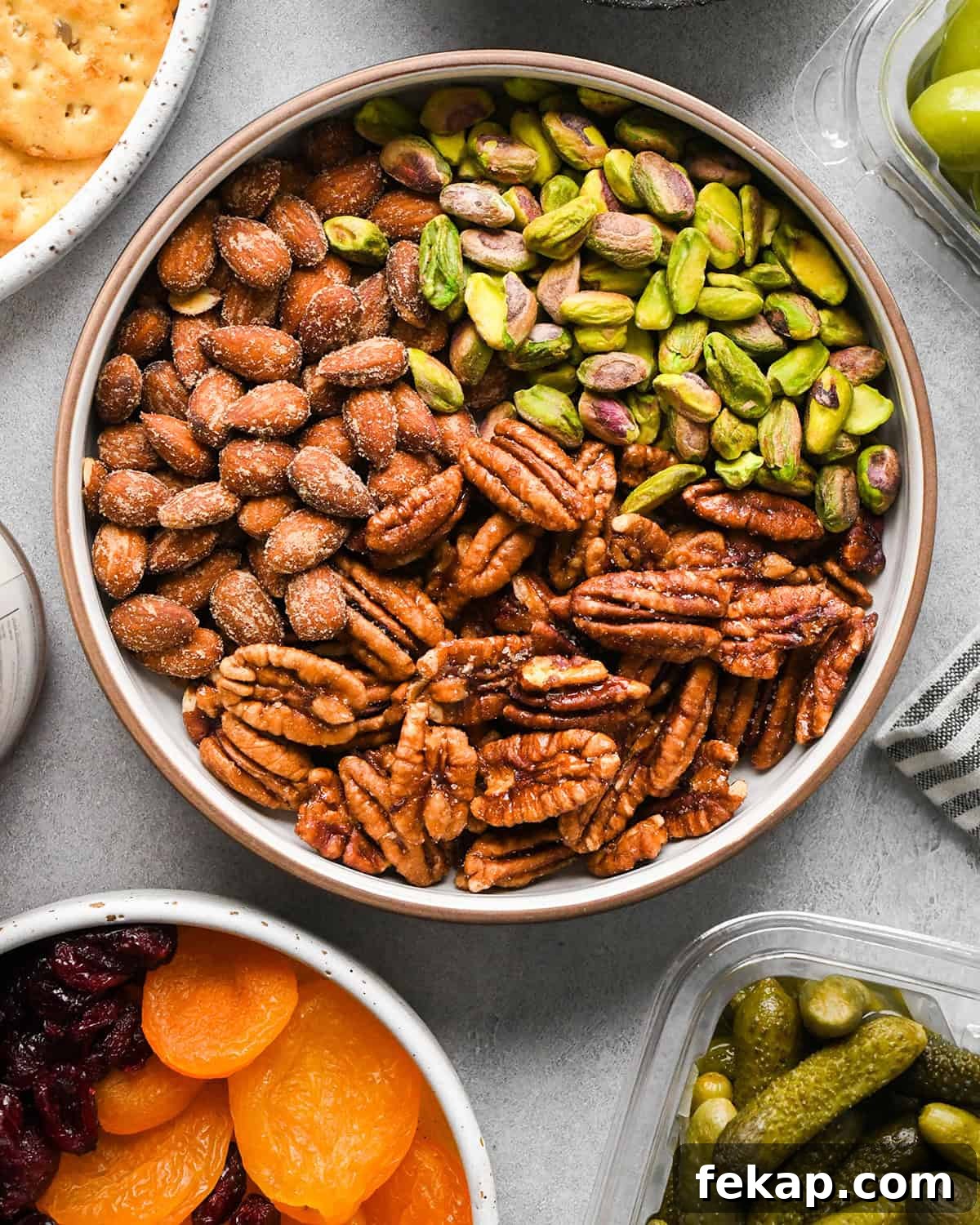
- Dried fruit and nuts. Dried apricots, cranberries, pistachios, smoked almonds, and candied pecans add texture and sweetness. Keep nuts in bowls to prevent sogginess.
- Jam or chutney. Apricot jam pairs beautifully with many cheeses and adds a sweet counterpoint.
- Crackers and bread. Offer a selection of crackers, crispbreads, or sliced baguette. Consider serving crackers separately if space is tight to keep them crisp.
How to Make a Charcuterie Board
There’s no single “right” way to build a charcuterie board, but following a few basic steps ensures a balanced, attractive result that’s easy for guests to enjoy. Below are practical preparation and assembly tips that streamline the process.
Prepare the Charcuterie Board Ingredients
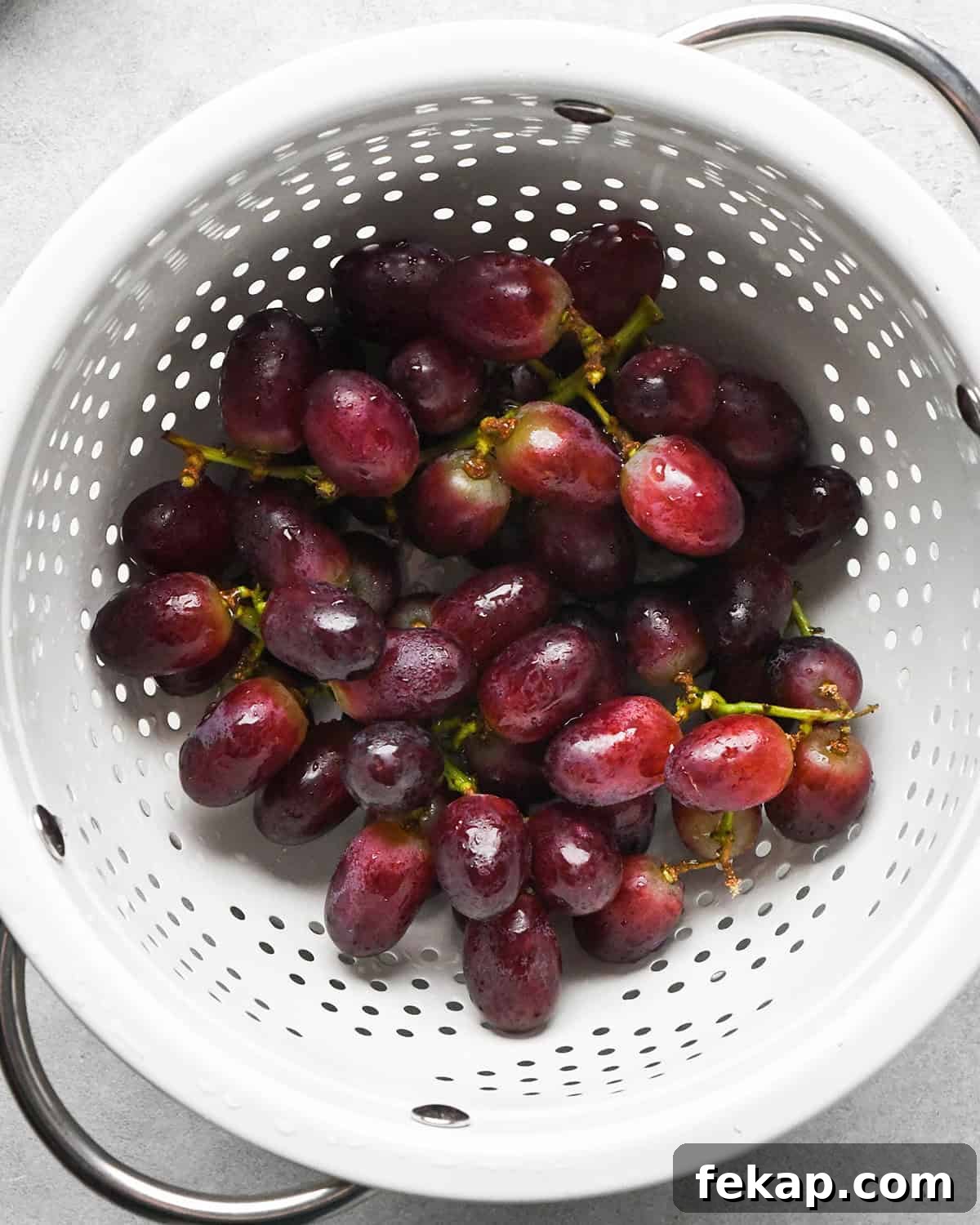
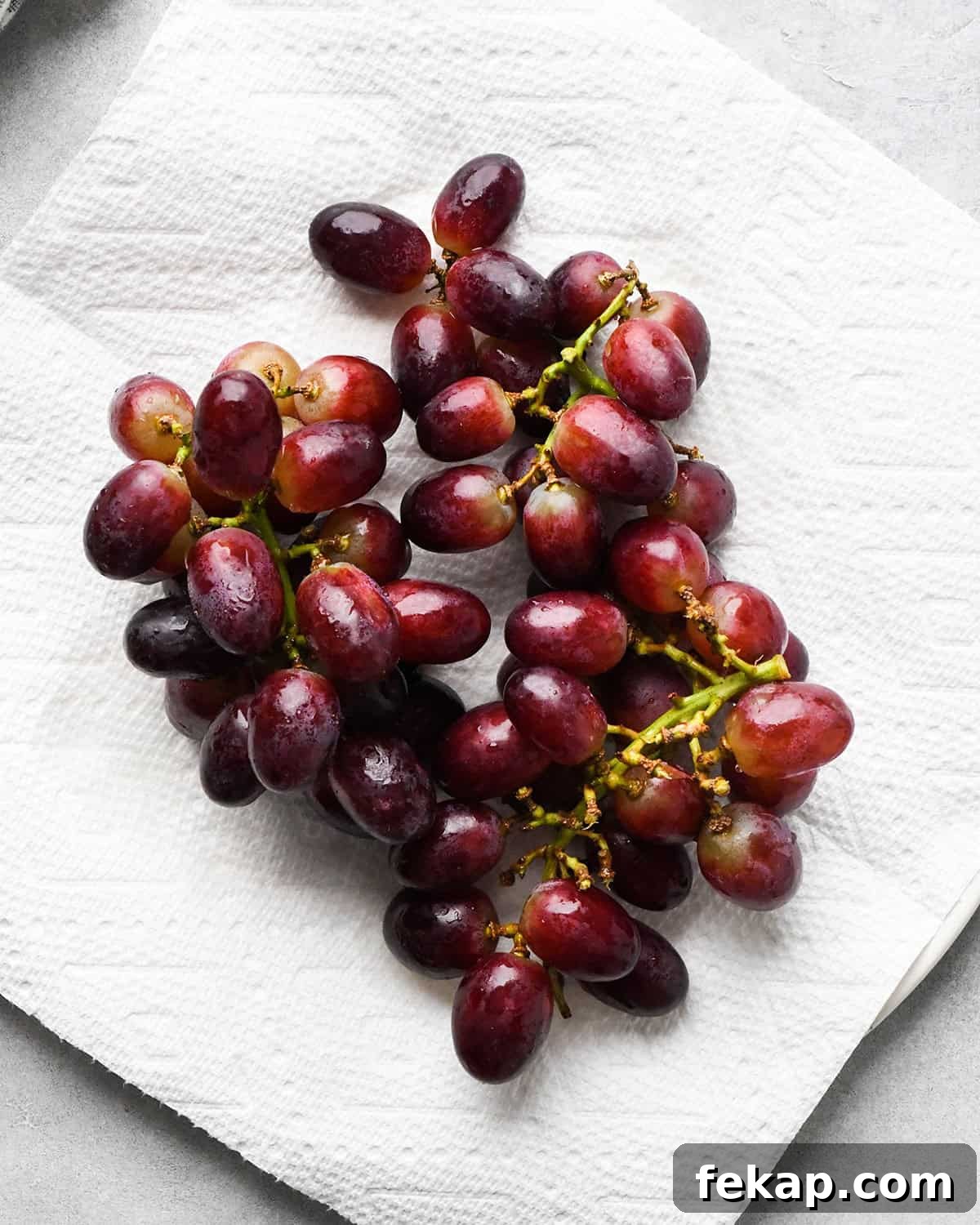
Wash and thoroughly dry fresh fruit such as grapes and berries so they don’t make other items soggy. Rinse and pat dry olives and pickles, then place them in small bowls to keep their liquids contained.
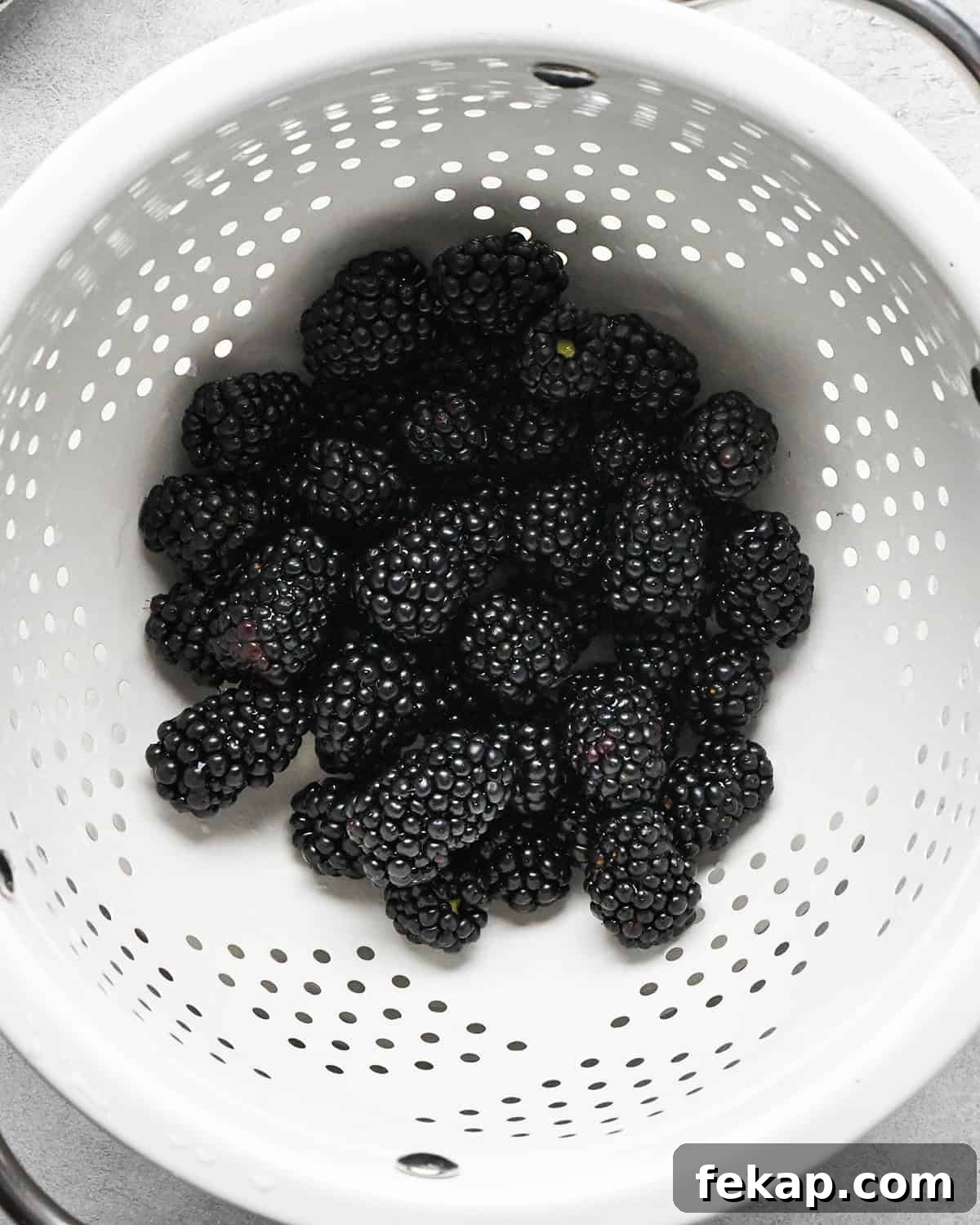
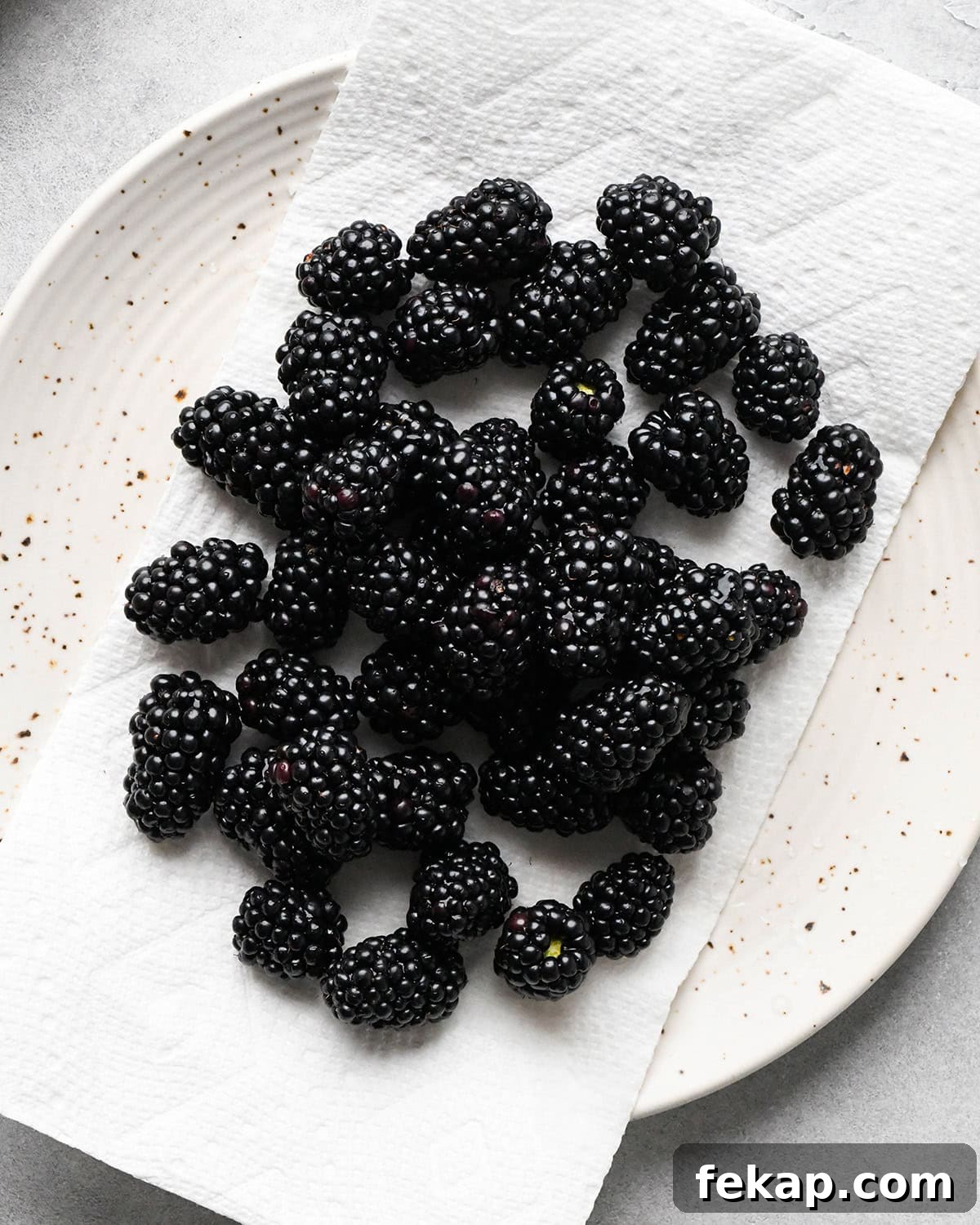
Move nuts and dried fruit into small bowls to keep them crisp. Cut meats and cube or slice cheeses into bite-sized portions so guests can serve themselves easily; you may leave a couple of whole wedges with knives if you prefer a rustic look.
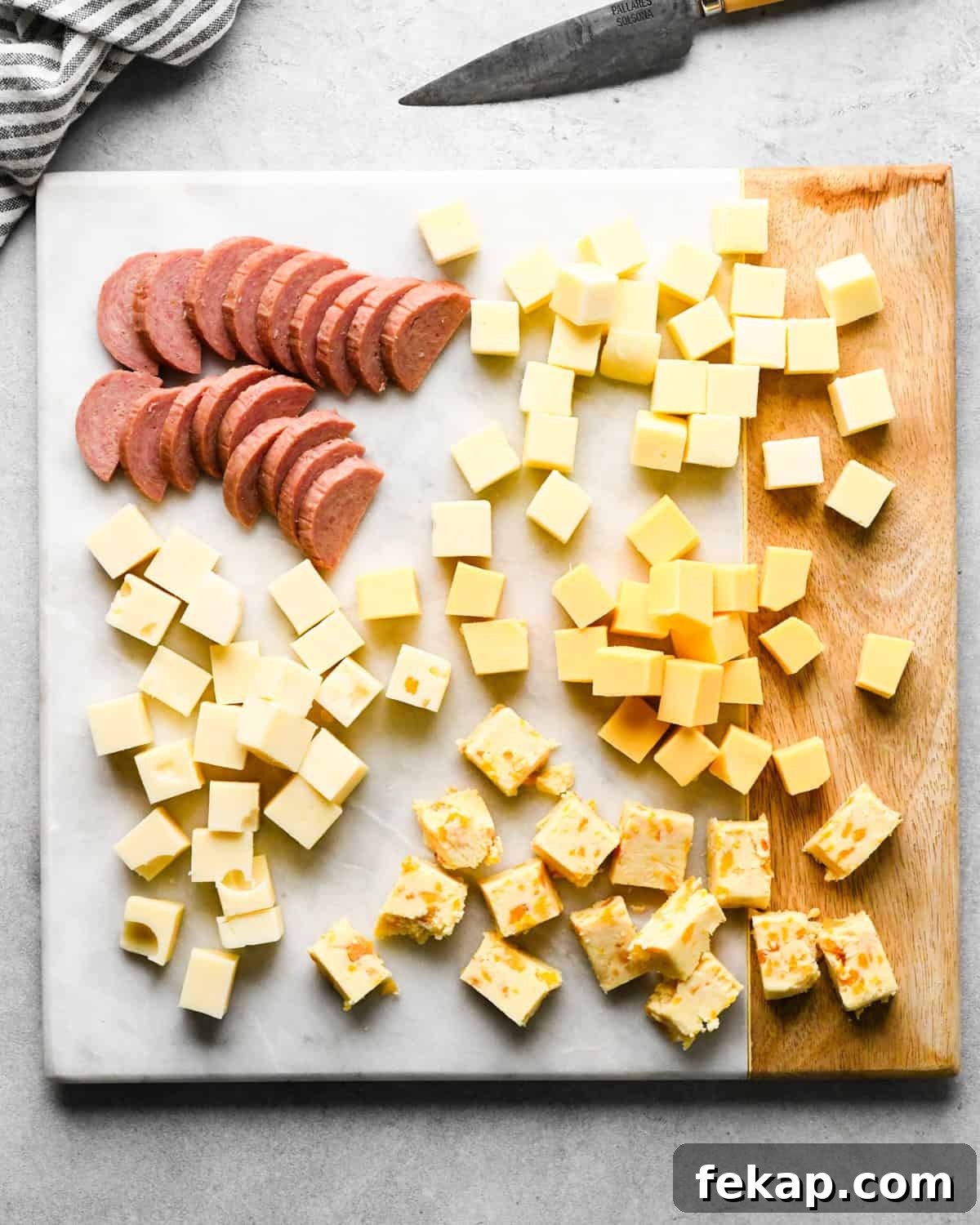
Assemble the Charcuterie Board
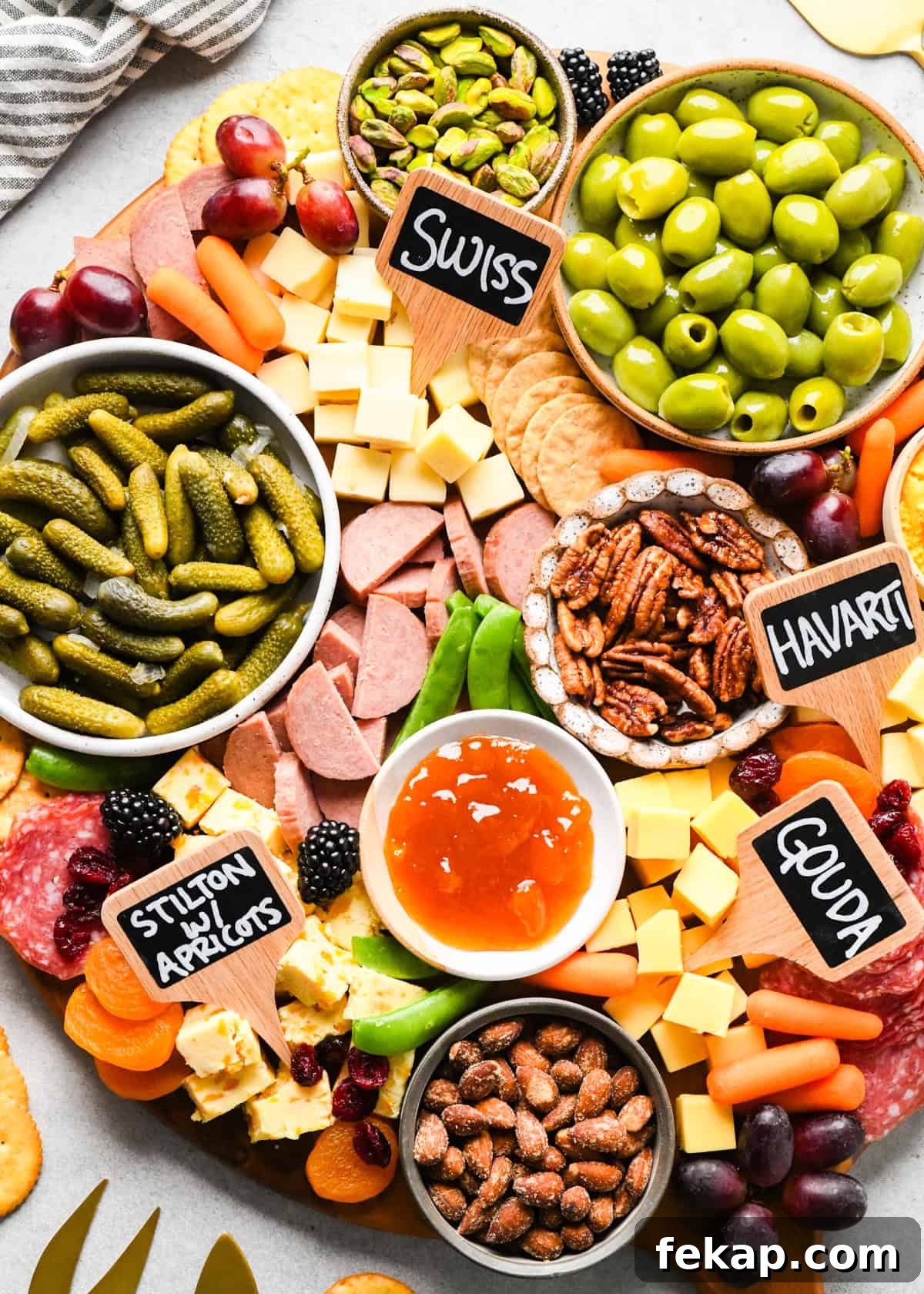
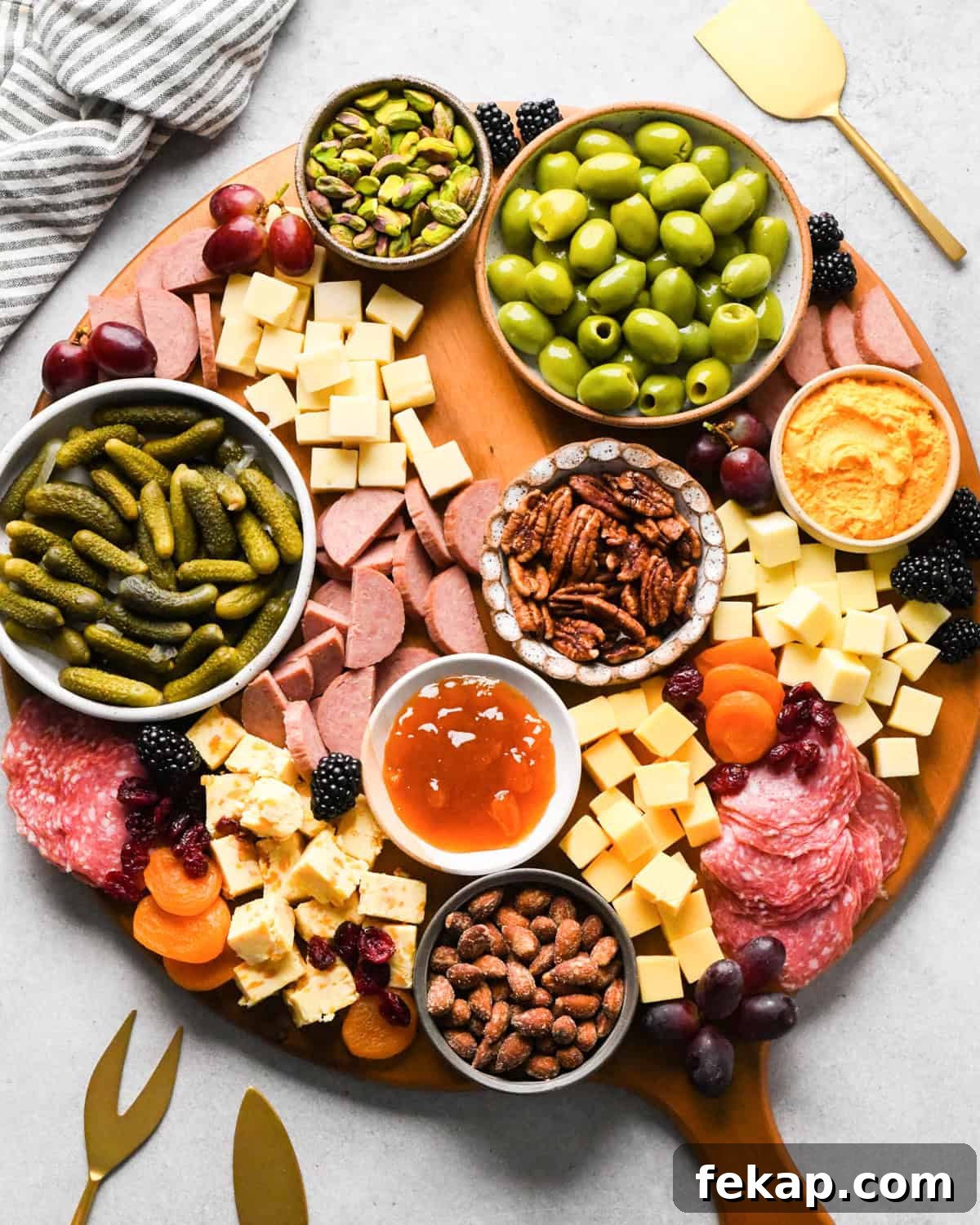
You can assemble the board up to one hour ahead if cheeses are cut; keep it covered in the refrigerator until serving. Start by spacing cheese varieties evenly around the board so different flavors remain distinct. Next, arrange meats near the cheeses; folded or rolled slices create height and visual interest and can act as a “barrier” between cheese varieties.
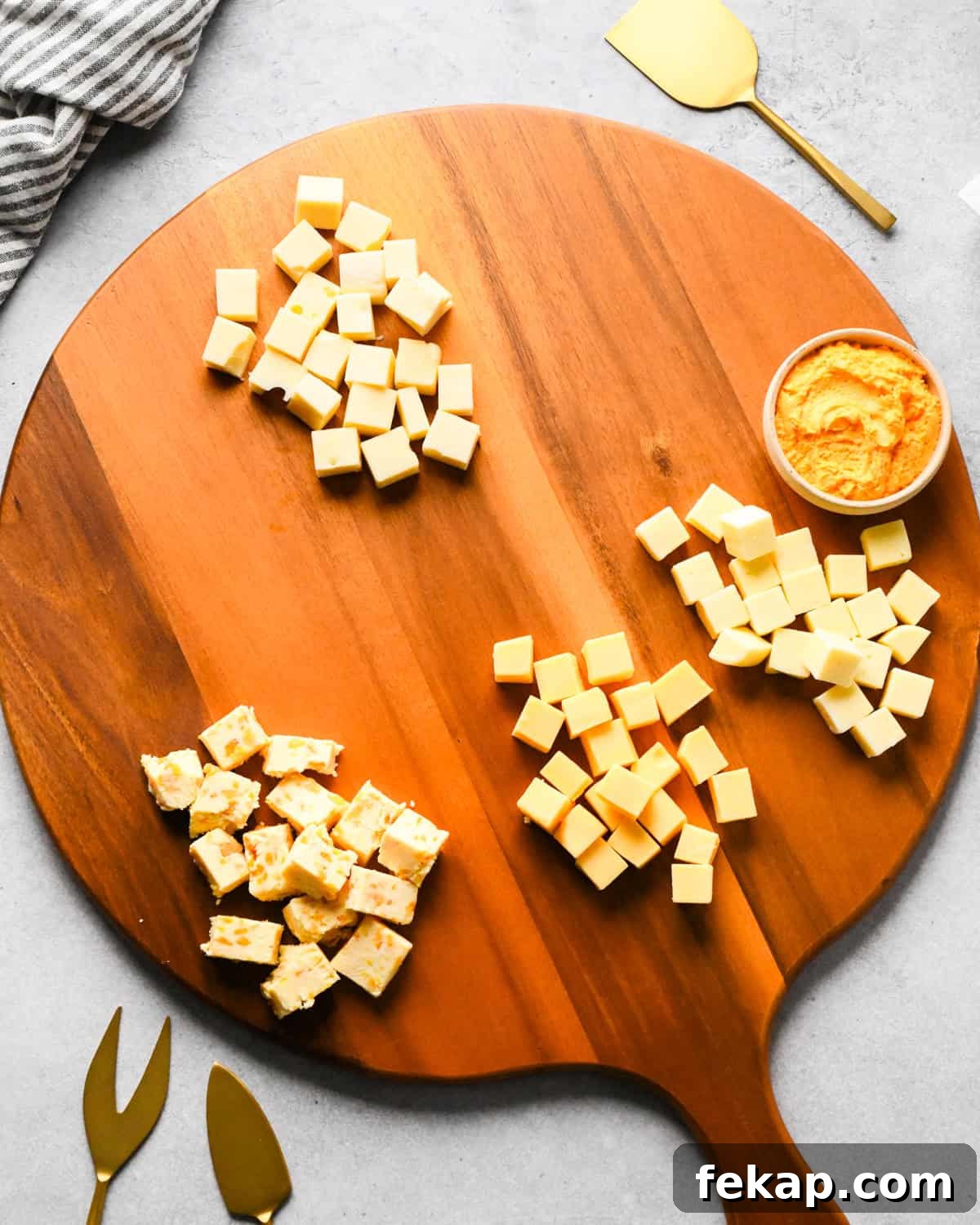
Place bowls of olives, pickles, jam and spreadable cheeses between groups of meats and cheeses. Fill gaps with fresh fruit, vegetables, dried fruit and nuts, distributing colors and textures evenly. Add crackers to the board or offer them on the side if you need extra space.
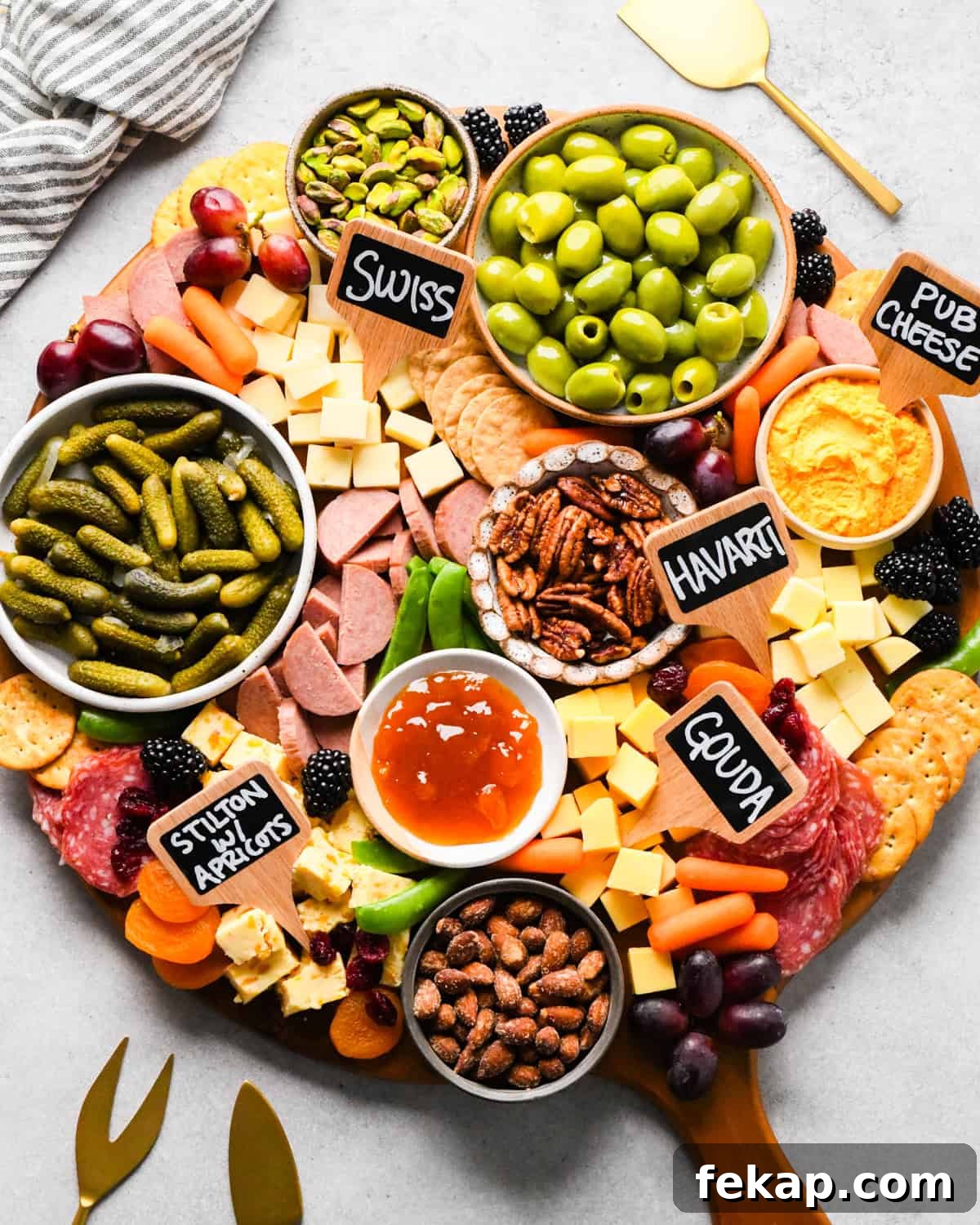
Serve
Provide small plates and a few cheese knives so guests can serve themselves comfortably. A charcuterie board works well as an appetizer before a main course, or it can be the main event for a casual dinner. Keep napkins and small tongs nearby for convenience.
Store
Leftovers store well if kept separate: place cheeses, meats, fruit, and nuts in airtight containers in the refrigerator. Jams and spreads stay best in sealed jars. Store crackers in a cool, dry place to maintain crunch.
Charcuterie Board FAQs
Begin with cheeses and meats, then place bowls with wet or loose items. Fill remaining spaces with fruit, vegetables, nuts and crackers, paying attention to color and texture balance.
A balanced board includes: cheese, meats, fresh fruit, vegetables, dried fruit, nuts, a jam or chutney, and crackers.
As an appetizer, plan about 3 ounces of cheese and 3 ounces of meat per person. For a main-course grazing board, increase to 4–6 ounces of each. Quantities can be adjusted based on your guest list and what else you are serving.
Yes. Prep ingredients up to two hours in advance and refrigerate covered. Add crackers and delicate items just before guests arrive.
If you try these tips and enjoy this board, consider leaving feedback where you found the recipe. Share photos of your board to celebrate your creation and inspire others.
Equipment
- Cheese board (round or rectangular)
- Cheese markers
- Cheese knives
- Small bowls
- Cutting board and chef’s knife
Ingredients (example amounts for ~20 people)
- 10 oz Swiss cheese
- 8 oz Gouda
- 8 oz Havarti
- 8 oz white stilton with apricots
- 9 oz cheddar cheese spread (pub cheese)
- 8 oz green olives
- 12 oz pickles (cornichons)
- 1/2 cup pistachios
- 1/2 cup candied pecans
- 1 cup smoked almonds
- 1 cup dried apricots
- 1/2 cup dried cranberries
- 8 oz dry salami
- 8 oz summer sausage
- 2 cups grapes
- 6 oz blackberries
- 1 cup baby carrots
- 1 cup snap peas
- 16 oz assorted crackers
- Apricot jam
Instructions
Prepare the Ingredients
- Wash and dry grapes and berries thoroughly.
- Drain and rinse olives and pickles; place them in small bowls.
- Transfer nuts and dried fruit to bowls to keep them crisp.
- Cube cheeses and slice meats into bite-sized portions.
Assemble the Board
- Place cheese varieties evenly around the board so they don’t touch.
- Arrange meats adjacent to cheeses, folding or rolling slices for texture.
- Add bowls of olives, pickles, jams, and spreads between cheese and meat sections.
- Fill gaps with fresh fruit and vegetables, distributing color and texture evenly.
- Add cheese markers and serve with crackers on the board or on the side.
Notes
- Choose cheeses and meats you and your guests enjoy — the board is highly adaptable.
- Always serve wet items in bowls to protect other components.
- Serve fruit and vegetables in individual, grab-ready portions.
- Keep crackers separate if you expect moisture or limited space.
- Apricot jam is a flavorful, complementary sweet element to many cheeses.
Nutrition (approximate per 4 oz serving)
Calories: 389 kcal | Carbohydrates: 15 g | Protein: 20 g | Fat: 29 g | Fiber: 3 g