
This Irish Soda Bread without Buttermilk is an easy, no-yeast, no-rise loaf that pairs beautifully with soups and stews. Ready in under 45 minutes, this simple homemade bread has a crisp crust, tender crumb, and a mildly sweet, wholesome flavor. It’s a great option for St. Patrick’s Day dinners or any time you want warm fresh bread without the wait.

Why You’ll Love This Recipe
- Quick and easy: No yeast or rising time required; the loaf bakes in about half an hour.
- Simple ingredients: Uses pantry staples you likely already have on hand.
- Great texture: A crunchy outer crust with a tender, slightly crumbly interior.
- Cost-effective: Homemade soda bread is affordable to make and tastes fresher than prepackaged loaves.
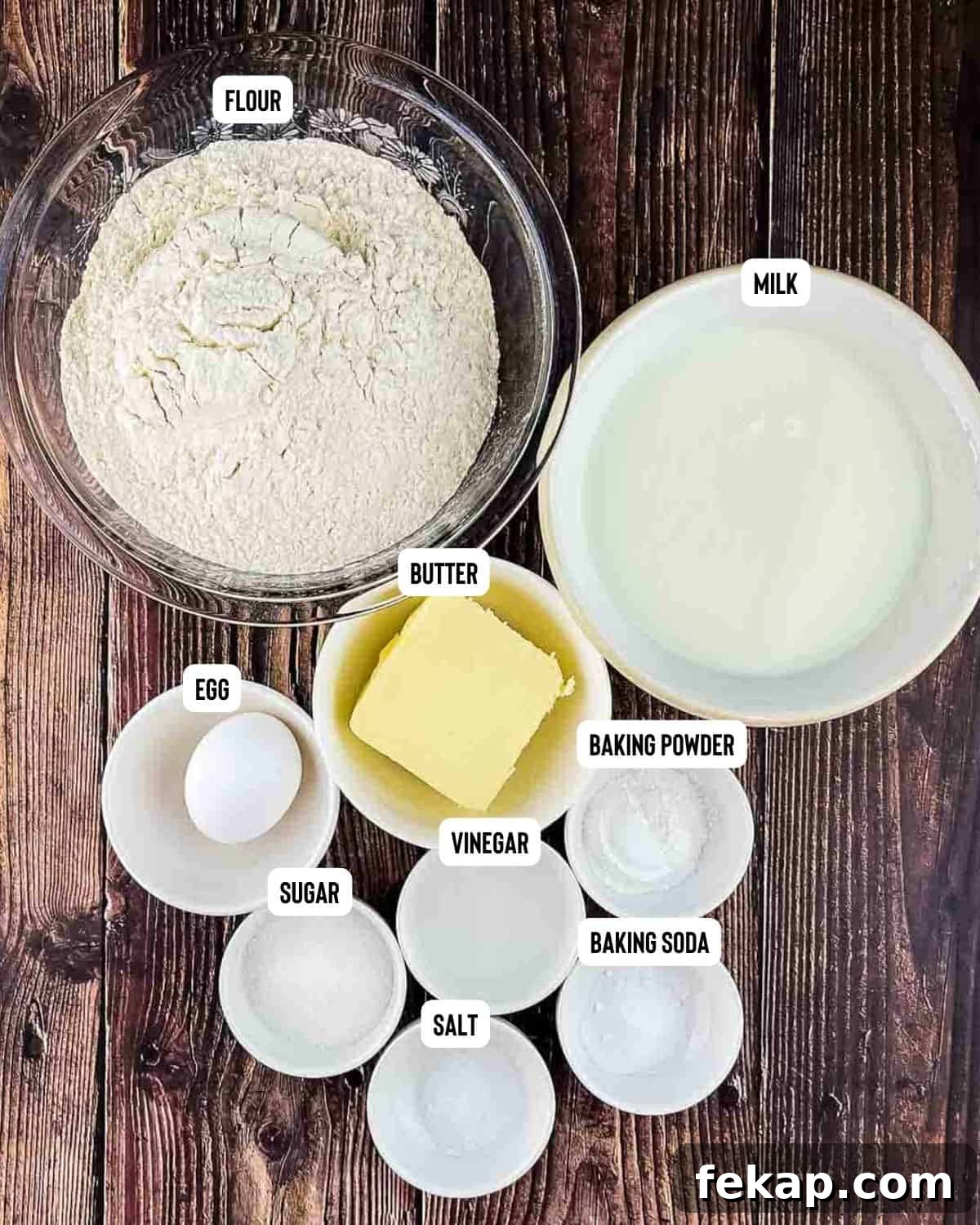
Irish Soda Bread Ingredients
*See the printable recipe card below for exact measurements and the full ingredient list.*
- Flour: Unbleached all-purpose flour works best; whole wheat will make a denser loaf.
- Butter: Cold unsalted butter, cut into small cubes.
- Milk: 1%, 2%, whole milk, or a non-dairy alternative such as almond milk.
- Vinegar: White vinegar or lemon juice mixed into milk creates a buttermilk substitute.
- Optional add-ins: Caraway seeds (1–2 tsp) or 1 cup raisins/currants for a traditional touch.
How to Make Irish Soda Bread without Buttermilk
Below are the steps summarized. Refer to the printable recipe card for exact ingredient amounts and full instructions.

- Preheat and prepare: Preheat your oven to 400°F (204°C). Place a 10-inch cast-iron skillet (or other baking vessel) in the oven while it heats so it becomes hot.
- Make the milk substitute: Combine the milk with white vinegar (or lemon juice) and let it sit a few minutes to sour slightly—this acts as a buttermilk replacement.
- Combine dry ingredients: In a large bowl, whisk together all-purpose flour, granulated sugar, baking powder, baking soda, and salt.
- Cut in the butter: Add cold butter cubes to the flour mixture and cut or rub them in with a pastry cutter, fork, or your fingertips until the texture resembles coarse crumbs.
- Mix wet ingredients: Beat an egg and add it to the soured milk. Pour the wet mixture into the dry ingredients and stir gently with a fork until just combined. Avoid overmixing to keep the bread tender.
- Shape the dough: Turn the dough onto a lightly floured surface and shape it into a round loaf about 9 inches in diameter. Use a sharp knife to cut an X about 1/2 inch deep into the top—this helps steam escape and encourages even baking.
- Prepare the heated skillet: Carefully remove the hot skillet from the oven using oven mitts and add a tablespoon of butter; tilt the pan so the melted butter coats the bottom.
- Bake: Place the shaped loaf in the skillet (or on a prepared baking sheet, in a greased casserole dish, or Dutch oven). Bake 25–30 minutes until the top is golden brown and a toothpick or skewer inserted into the center comes out clean.
- Cool and serve: Let the bread cool on a rack for 10–15 minutes before slicing. Serve warm with butter, jam, or cheese.
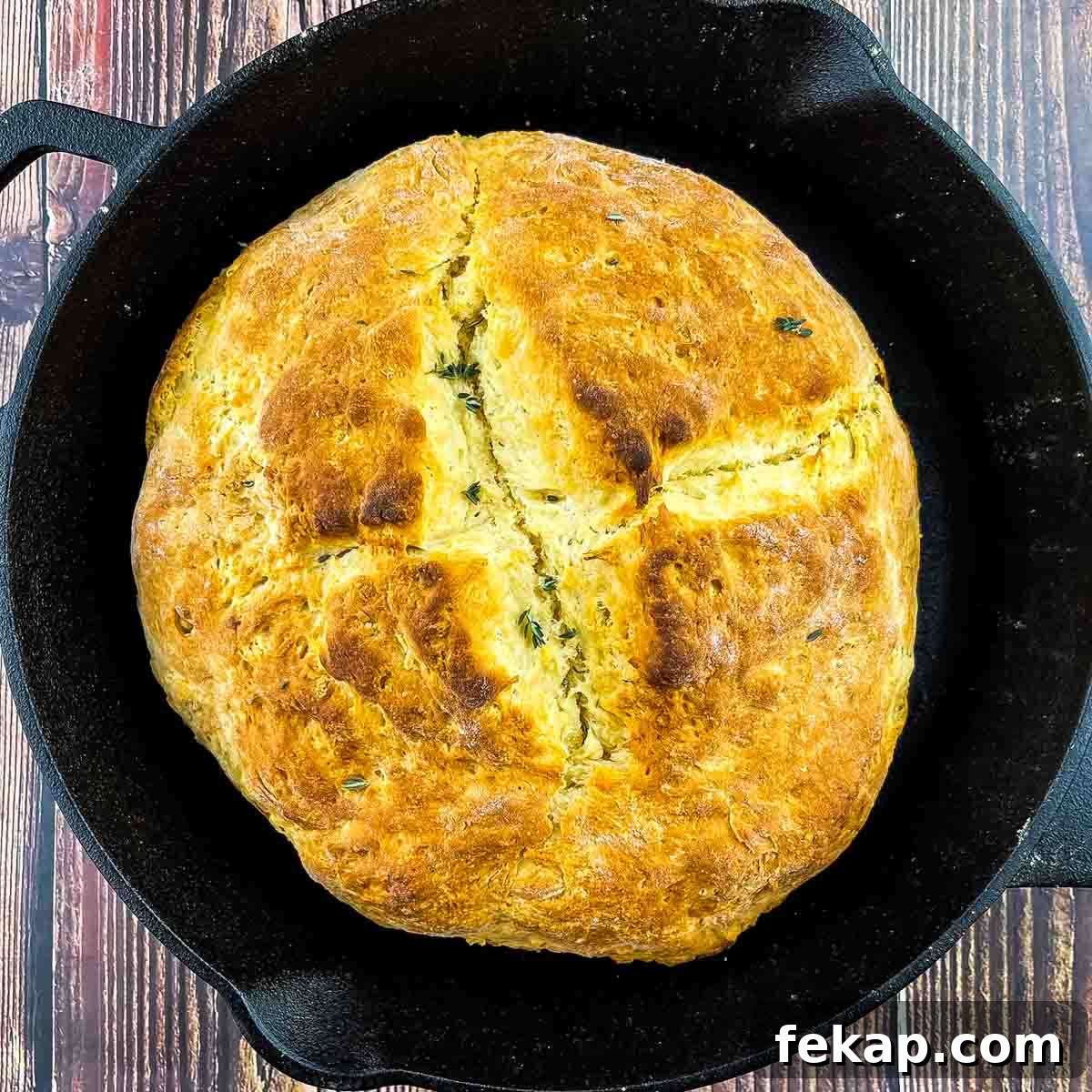
Pro tip: Flour your hands lightly when shaping the dough—soda bread can be slightly sticky, and a dusting of flour keeps it manageable without overworking the dough.
What To Serve With Irish Soda Bread
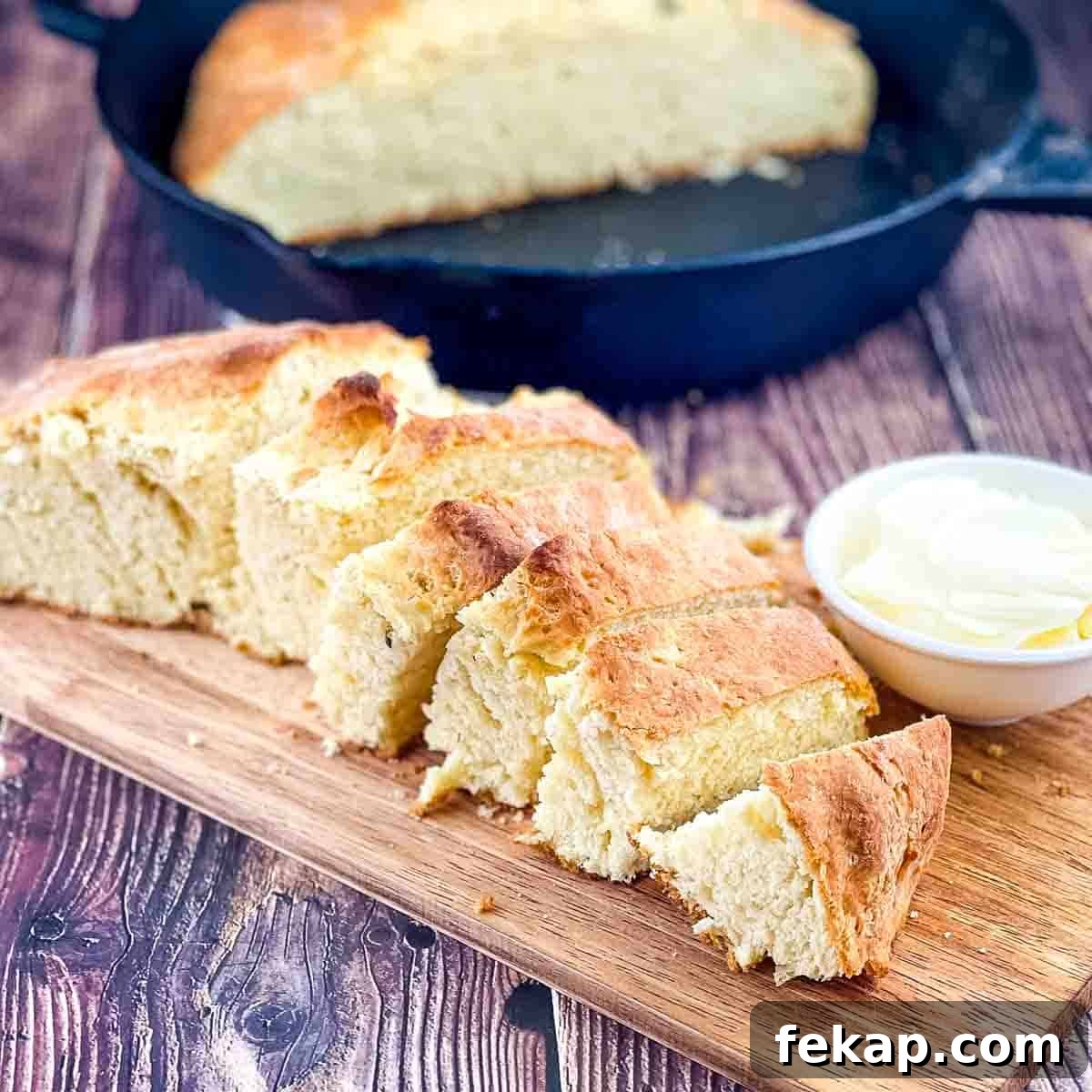
This soda bread is lovely sliced warm or at room temperature. It’s delicious with a pat of Irish-style butter, jam, honey, or slices of creamy cheese. It also makes excellent toast or grilled cheese the next day.
Recipe Variations
If you want to change things up, try one of these simple variations:
- Raisins or currants: Stir in golden raisins or currants for a traditional touch.
- Cheese: Fold in grated cheddar or another favorite cheese for a savory loaf.
- Herbs: Add fresh or dried herbs such as rosemary or thyme for aromatic flavor.
Top Tips
- Measure flour correctly: Spoon flour into the measuring cup and level with a knife—don’t pack it down.
- Don’t overmix: Stir until ingredients are just combined to avoid a tough loaf.
- Fully preheat: Make sure your oven and baking vessel are hot before the loaf goes in for the best crust.
- Best fresh: Soda bread is at its peak during the first day or two; reheat gently before serving if needed.
Storing Leftovers
- Room temperature: Wrap tightly in plastic wrap or place in an airtight container for up to three days.
- Freezer: Wrap in plastic then foil or place in a freezer-safe bag and freeze up to two months.
- Reheat: Warm in a 350°F (175°C) oven wrapped in foil for 10–15 minutes for best texture.
Recipe FAQs
- What does Irish soda bread taste like?
- It has a rustic, slightly sweet flavor similar to a biscuit but less sugary—dense and crumbly with a chewy crust.
- Why did my Irish soda bread fall apart?
- Common causes are a dough that was too dry, overmixing, or slicing the bread before it had a chance to cool.
- Why do you put a cross on Irish soda bread?
- Scoring the top with a cross allows steam to escape, helps the loaf bake evenly, and is a traditional finishing step.
More Bread Recipes To Try
- Soft Whole Wheat Bread
- Old Fashioned Fluffy Dinner Rolls
- 3-Ingredient Flatbread (no yeast)
- Super Soft Hamburger Buns
- No-Rise Pizza Dough
Printable Recipe

Recipe Summary
This Irish Soda Bread without Buttermilk is a quick, no-yeast loaf that complements soups and stews. It takes about 10 minutes to prepare and 25–30 minutes to bake for a total of roughly 38 minutes.
Details
- Prep time: 10 minutes
- Cook time: 25–30 minutes
- Total time: ~38 minutes
- Servings: 12 slices
- Calories: 240 kcal per serving (estimate)
- Author: Jeri Walker
Equipment
- 10-inch cast-iron skillet, baking sheet, casserole dish, or Dutch oven
Ingredients
- 1¾ cups milk
- 2 tablespoons white vinegar
- 4 cups all-purpose flour (spooned and leveled)
- 2 tablespoons granulated sugar
- 1 tablespoon baking powder
- 1 teaspoon baking soda
- 1 teaspoon sea salt
- 7 tablespoons cold unsalted butter, cut into cubes
- 1 large egg
- Optional: 1 cup raisins or currants, or 1–2 teaspoons caraway seeds
Instructions
- Preheat oven to 400°F (204°C) and place a 10-inch cast-iron skillet inside to heat.
- Mix milk and vinegar in a small bowl and let sit a few minutes to sour.
- In a large bowl combine flour, sugar, baking powder, baking soda, and salt.
- Cut the cold butter into small pieces and work it into the flour until the mixture looks like coarse sand.
- Beat the egg and stir it into the soured milk. Pour the wet ingredients into the dry and mix with a fork until just combined—do not overmix.
- Turn the dough onto a lightly floured surface and shape into a round about 9 inches across. Place the loaf in the preheated skillet or prepared baking vessel.
- Use a sharp knife to cut an X about 1/2 inch deep into the top of the dough.
- Bake 25–30 minutes until golden and a toothpick inserted in the center comes out clean.
- Cool on a rack for 10–15 minutes before slicing and serving.
Notes
- Measuring flour: Scoop flour into the measuring cup with a spoon and level it with a knife to avoid packed measurements.
- Mixing: Mix only until combined to keep the bread tender.
- Preheat: Make sure the oven and skillet are fully preheated for the best crust.
- Freshness: Consume within the first day or two for the best texture; reheat if serving later.
Nutrition (approximate per serving)
Calories: 240 kcal | Carbohydrates: 36 g | Protein: 6 g | Fat: 8 g | Saturated Fat: 5 g | Sodium: 464 mg | Fiber: 1 g | Sugar: 4 g
Note: Nutrition information is an estimate and not guaranteed to be exact.
Recipe update: This recipe was originally published in March 2023 and has been updated with clearer instructions and extra tips; the recipe itself remains unchanged.