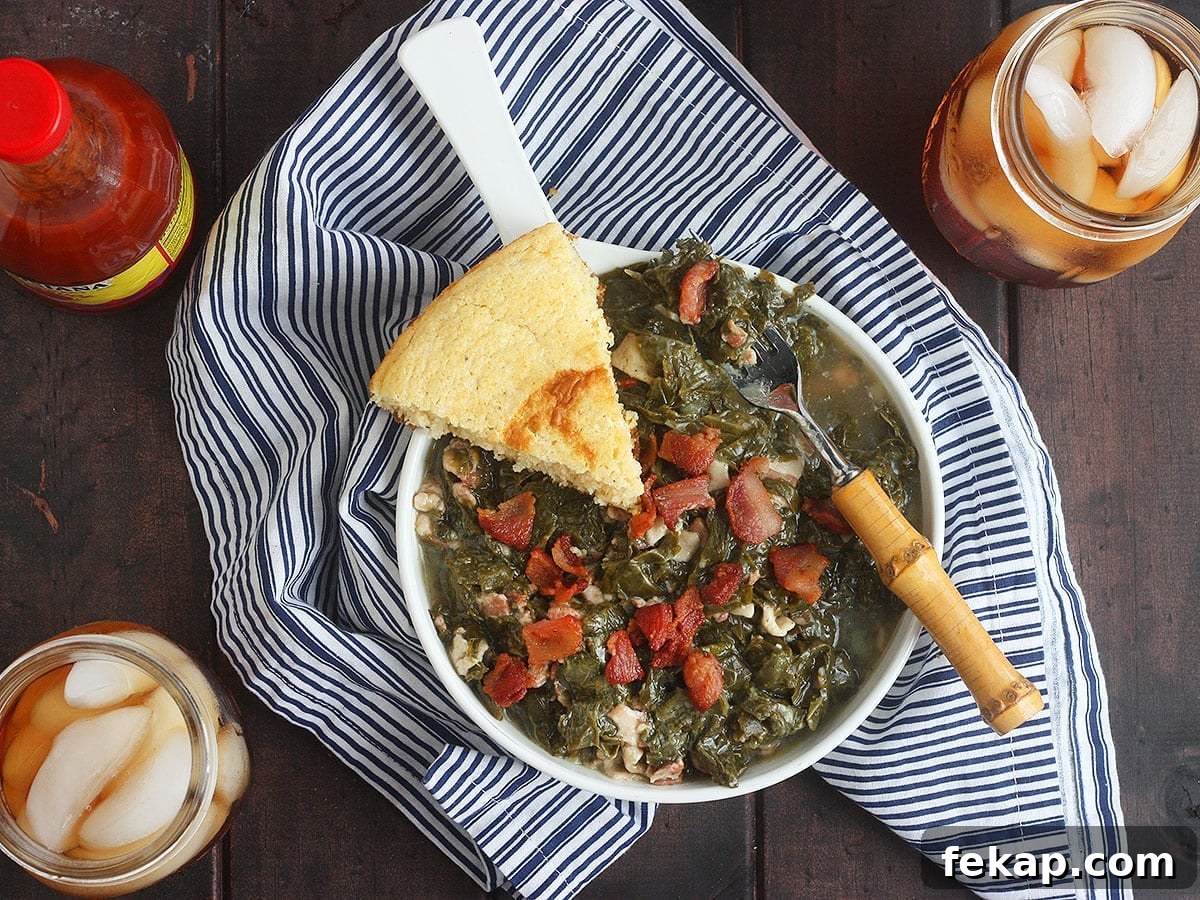
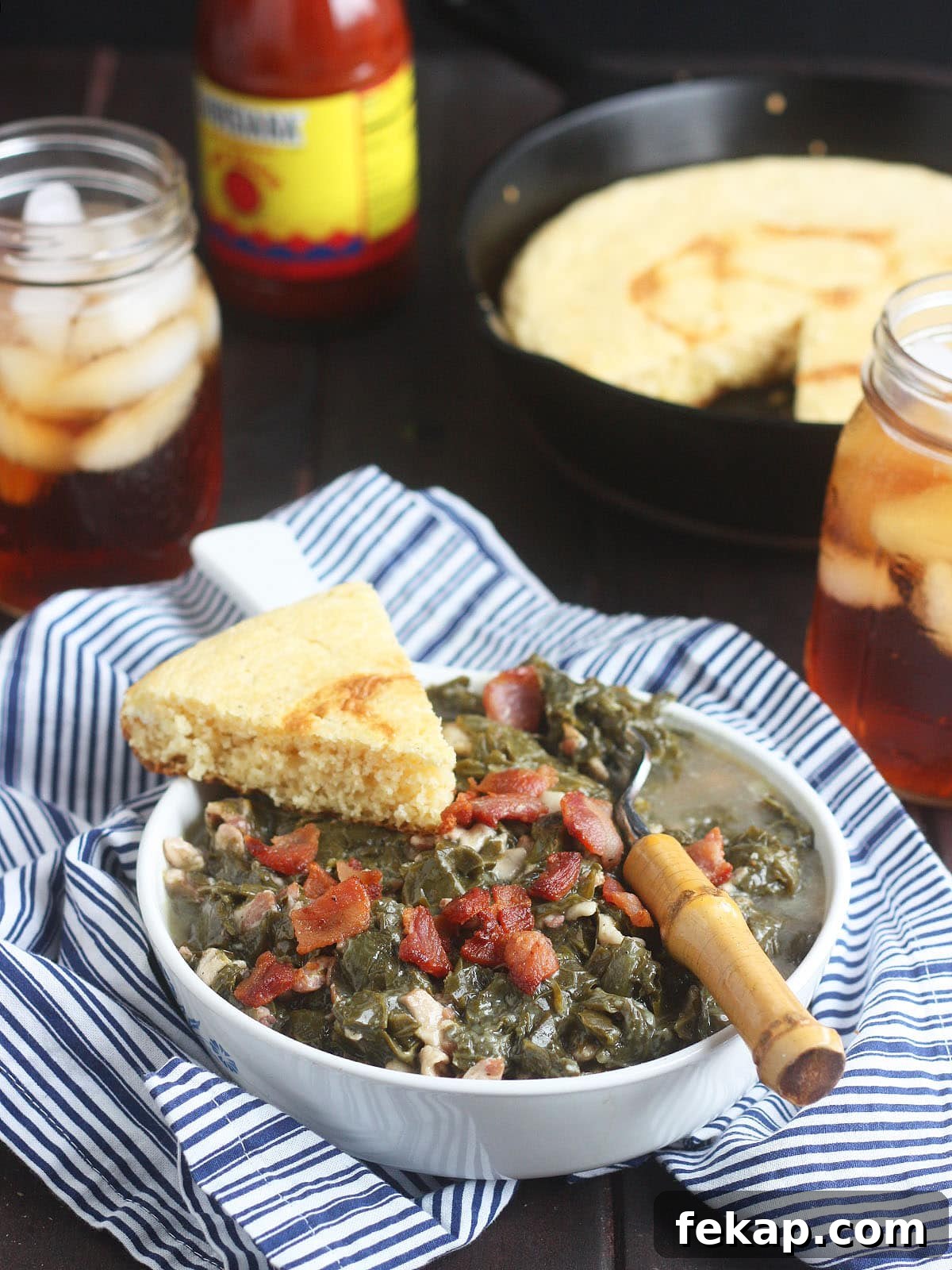
This Southern-style turnip greens recipe is a warm, comforting side dish that balances tender greens, smoky pork, bright apple cider vinegar, and a touch of sweetness. The greens are slow-simmered to develop deep flavor and soft texture—an ideal soul-food side you’ll want to make again and again.
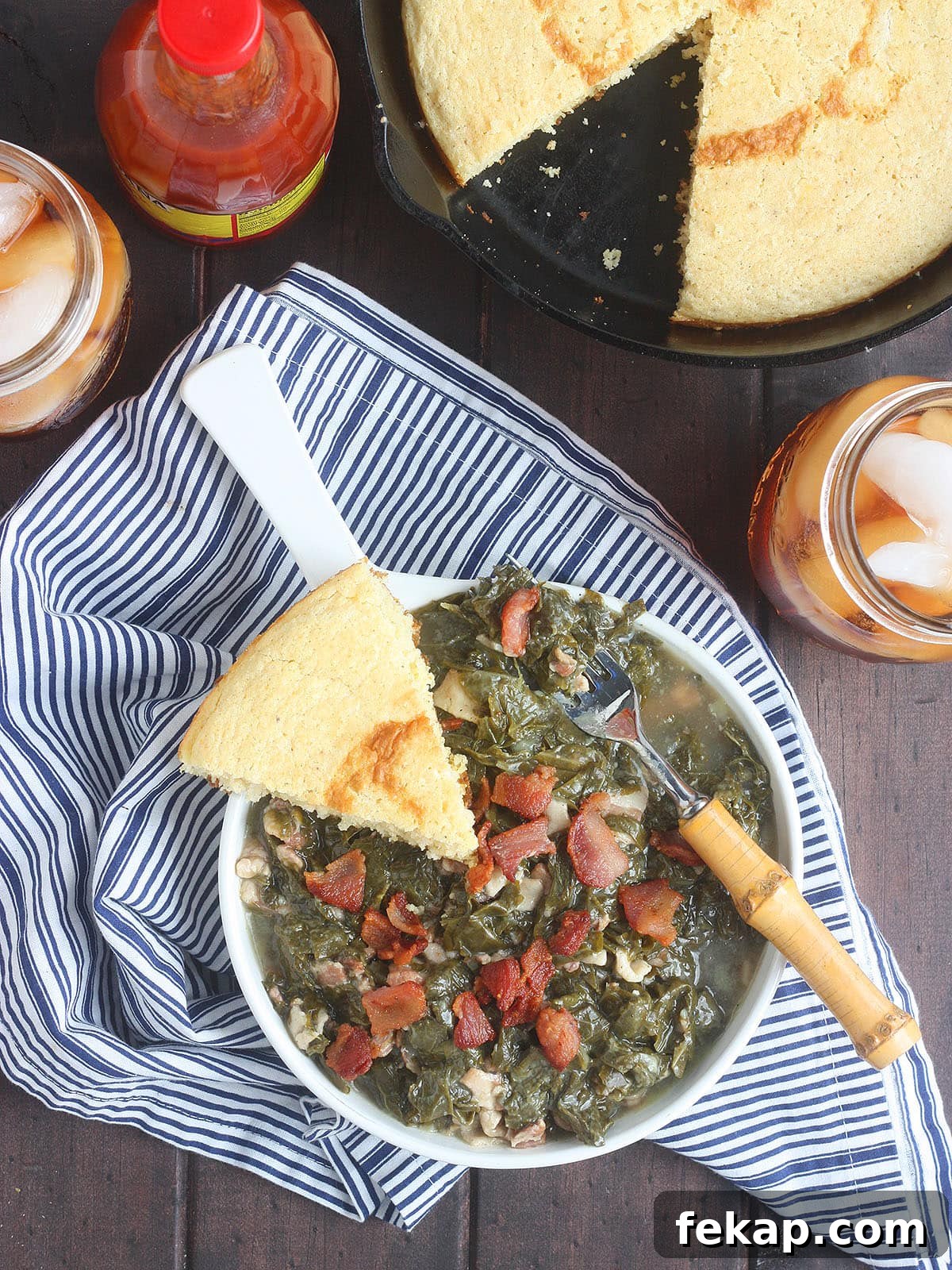
I remember my first New Year’s after getting married. I told my husband what I planned to cook and he quickly stopped me—“No, on New Year’s Day you eat hog jowls and turnip greens, or it’s bad luck.”
I stared at him like he’d lost his mind. I may be Southern-born, but my Midwestern parents never served anything like that. I didn’t even know what hog jowls were, let alone how to cook them. That first year we compromised with cabbage and ham. Since then I’ve come a long way—I learned to make turnip greens myself, and now they’re a regular favorite in our home.
I’ve never made turnip greens before. This post was very helpful. The greens turned out great!
– Peggie R.
Recipe at a Glance
- Classic Southern comfort food with deep, smoky flavor
- Slow-simmered for tender greens and rich pot likker
- Simple ingredients and easy prep — mostly hands-off cooking
- Perfect balance of tangy, savory, and slightly sweet flavors
- Freezer-friendly and often better the next day
Summarize and save this content on
Use your preferred tool to save or summarize the recipe for personal reference.
Ingredients and tools you will need
A classic Southern turnip greens recipe made simple — perfect for weeknights or holiday meals. To make these flavorful greens you will need:
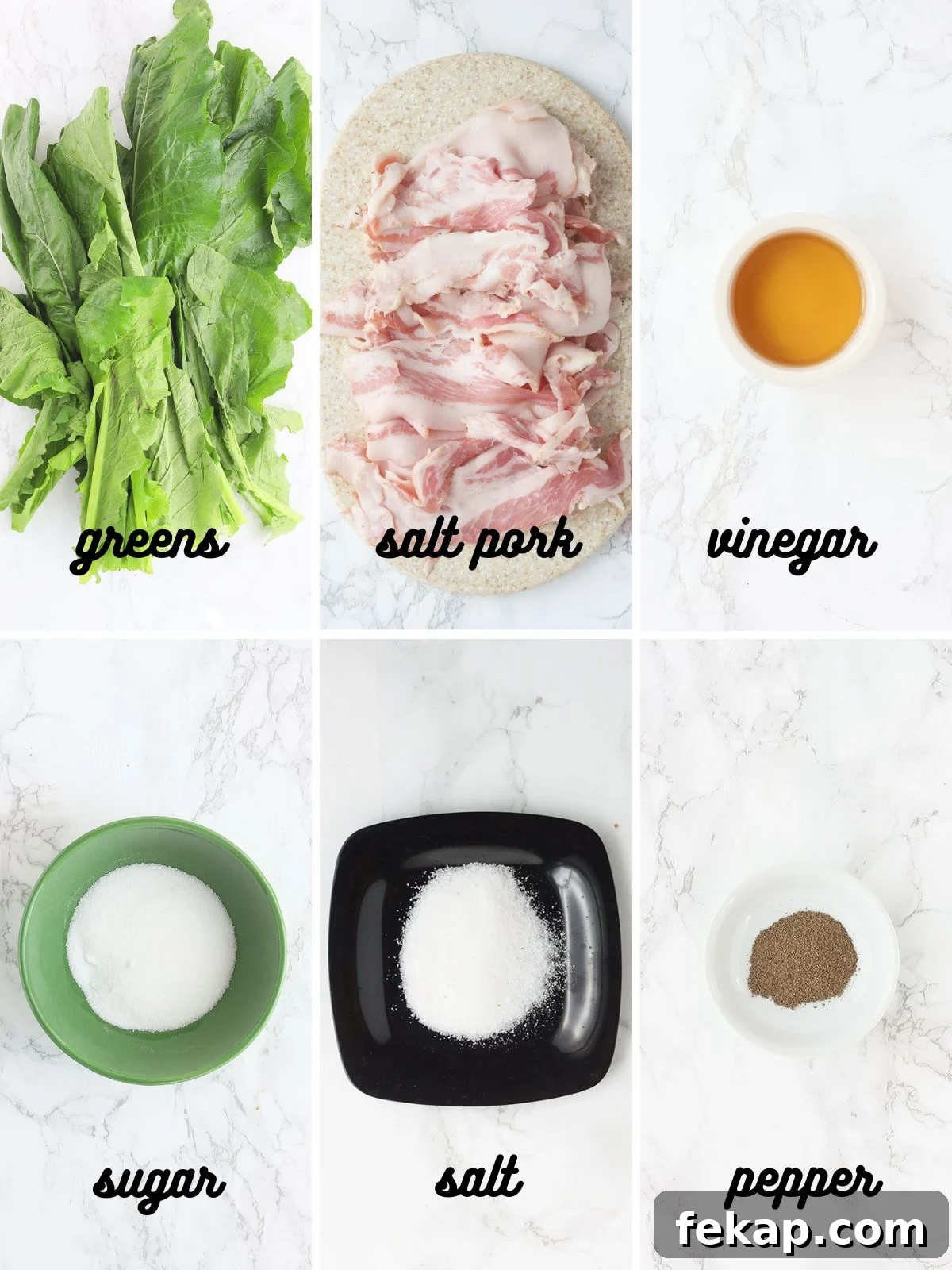
See the recipe card below for full ingredient amounts and the step-by-step instructions.
- Turnip greens (4 bunches): Fresh greens are naturally bitter but mellow when slowly simmered.
- Salt pork (12 ounces): Adds smoky, savory richness to the broth.
- Water (4 cups): The base for the flavorful potlikker (cooking liquid).
- Apple cider vinegar (½ cup): Brightens the dish and reduces bitterness.
- Salt (1 teaspoon): Enhances flavors and balances the acidity.
- Sugar (1 teaspoon): A touch of sweetness to round the flavor.
- Black pepper (½ teaspoon): Adds warm spice to finish.
- Large stock pot: The greens will take up a lot of room at first and will cook down significantly.
Substitutions and variations
- Swap the greens: If turnip greens aren’t available, collards are a good substitute.
- Pork alternatives: Bacon, smoked ham hocks, pork belly, pork neck bones, or smoked turkey wings can replace salt pork.
- Use chicken broth: Substitute chicken broth for water to deepen the potlikker flavor.
- Vinegar adjustment: Reduce apple cider vinegar to ¼ cup for less tang, or substitute white vinegar or lemon juice.
- Sweet note: Use brown sugar or a little honey instead of granulated sugar for a different nuance.
- Vegetarian version: Use vegetable broth and add smoked paprika or a drop of liquid smoke for smokiness.
- Make it spicy: Add red pepper flakes, sliced jalapeño, hot sauce, or Cajun seasoning for heat.
How to Wash and Prep Turnip Greens
Washing greens thoroughly is essential — they often contain dirt, sand, or grit from growing close to the ground. Rinse to remove debris and any lingering residue so the finished dish is clean and enjoyable.
Step 1: Fill a clean sink or a large bowl with cold water. Submerge the greens and gently swish them to loosen dirt and grit.
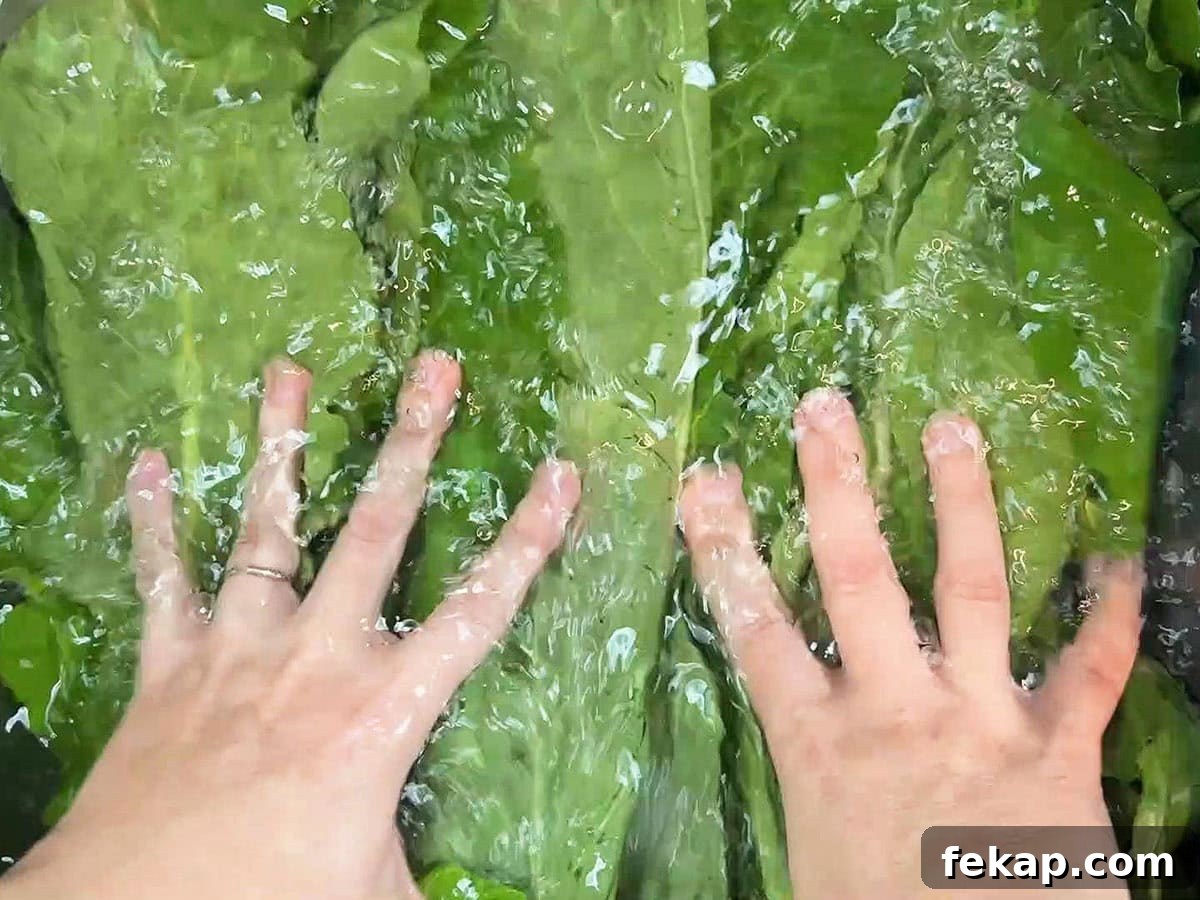
Step 2: Let the greens sit so grit sinks to the bottom. Lift the greens out and repeat the rinse 2–3 times until the water runs clear. Shake off excess water.
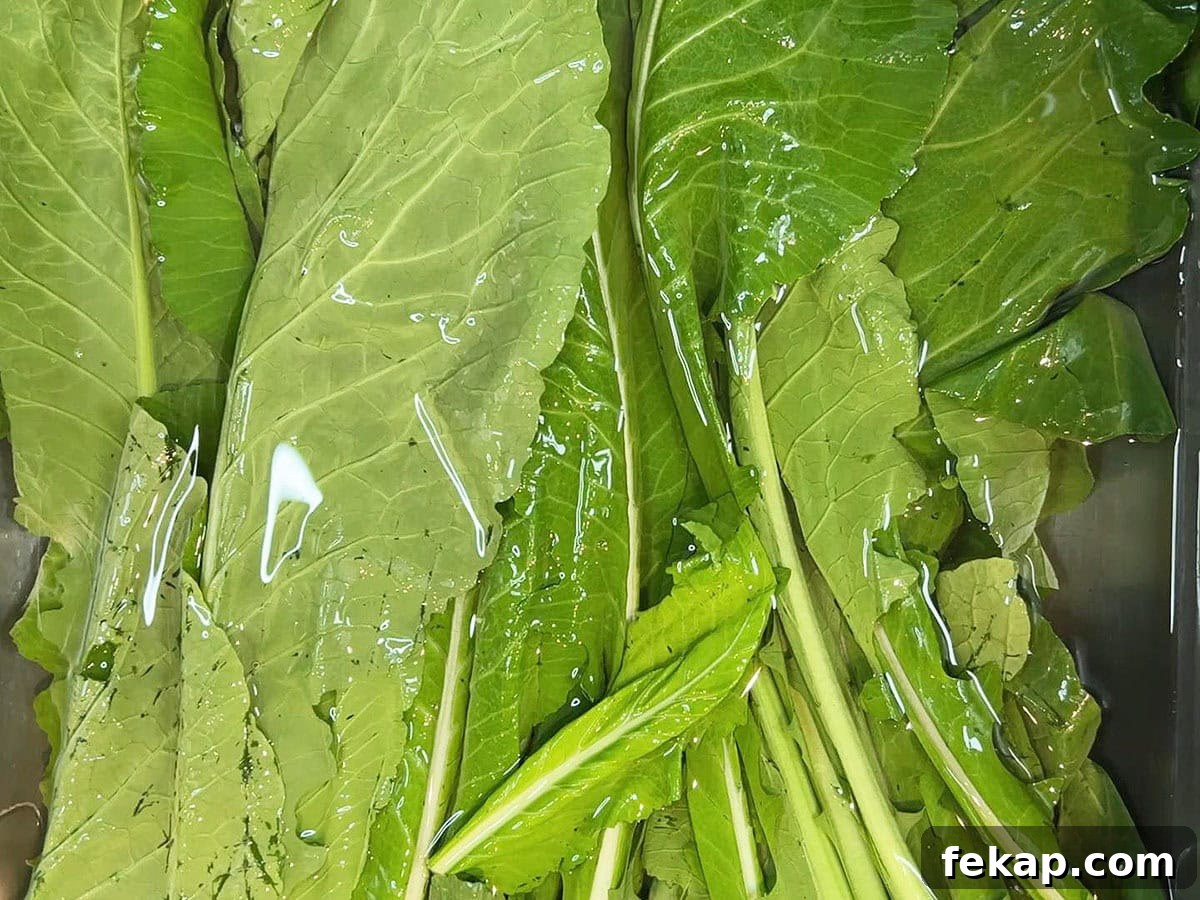
Step 3: Remove the tough center stems by tearing or cutting them away; leave the thinner tender stems if desired.
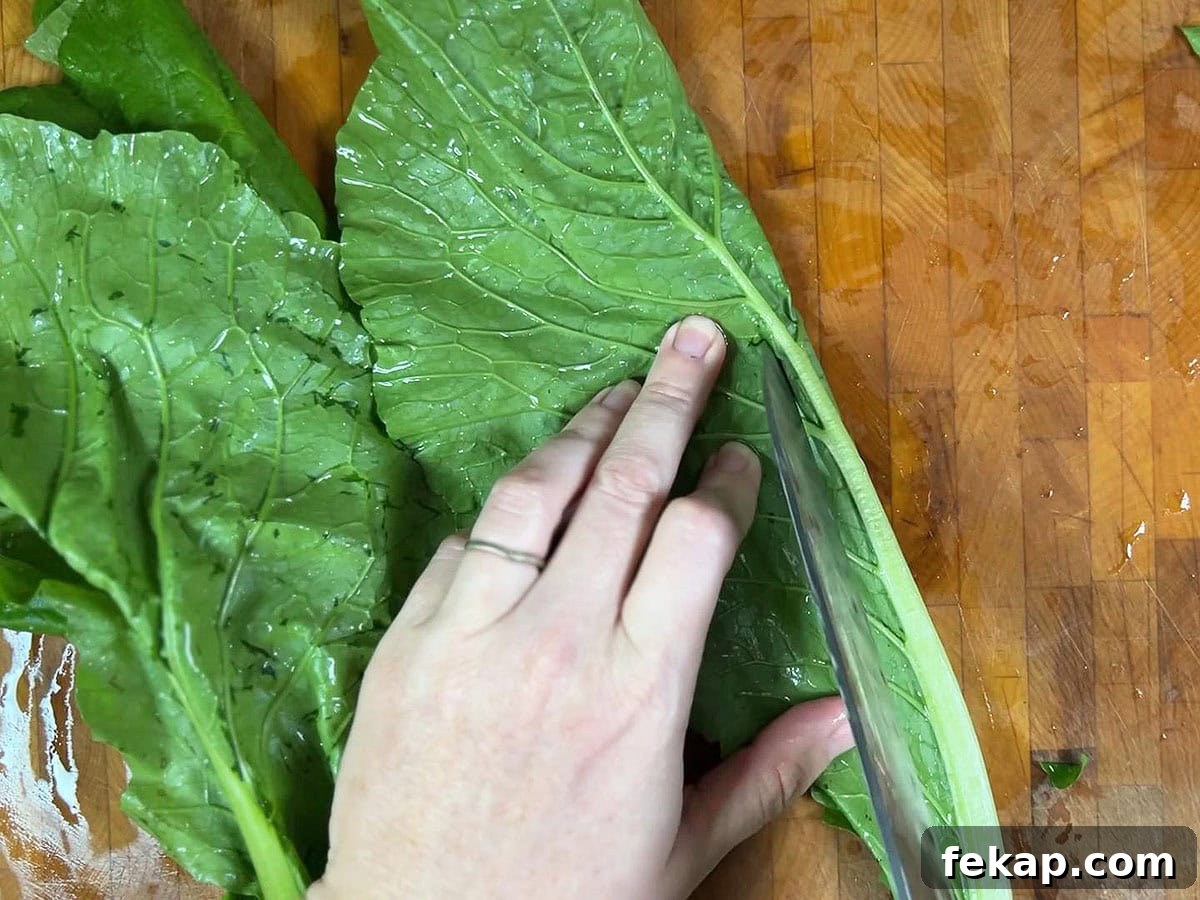
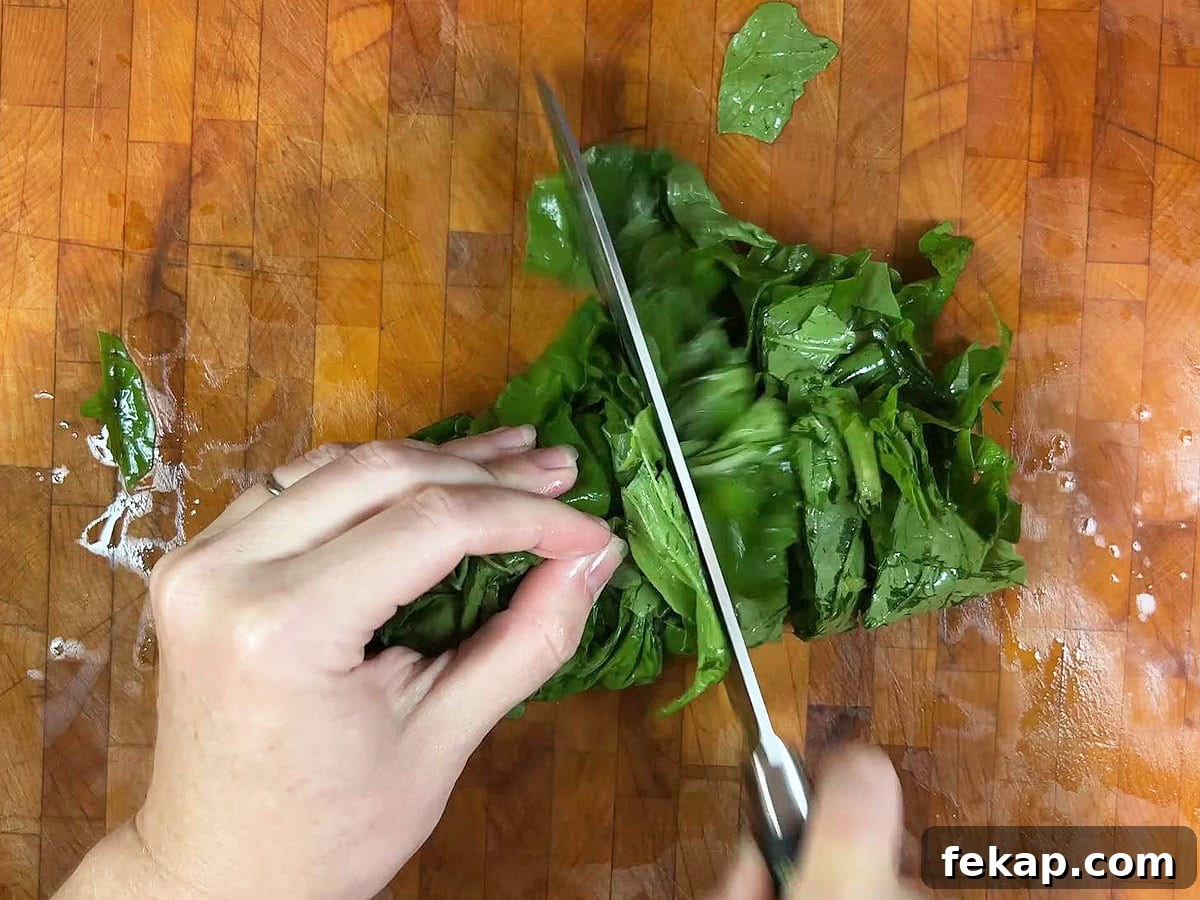
Step 4: Roughly chop the leaves into bite-sized pieces with kitchen shears or a sharp knife.
How to Make Southern Turnip Greens
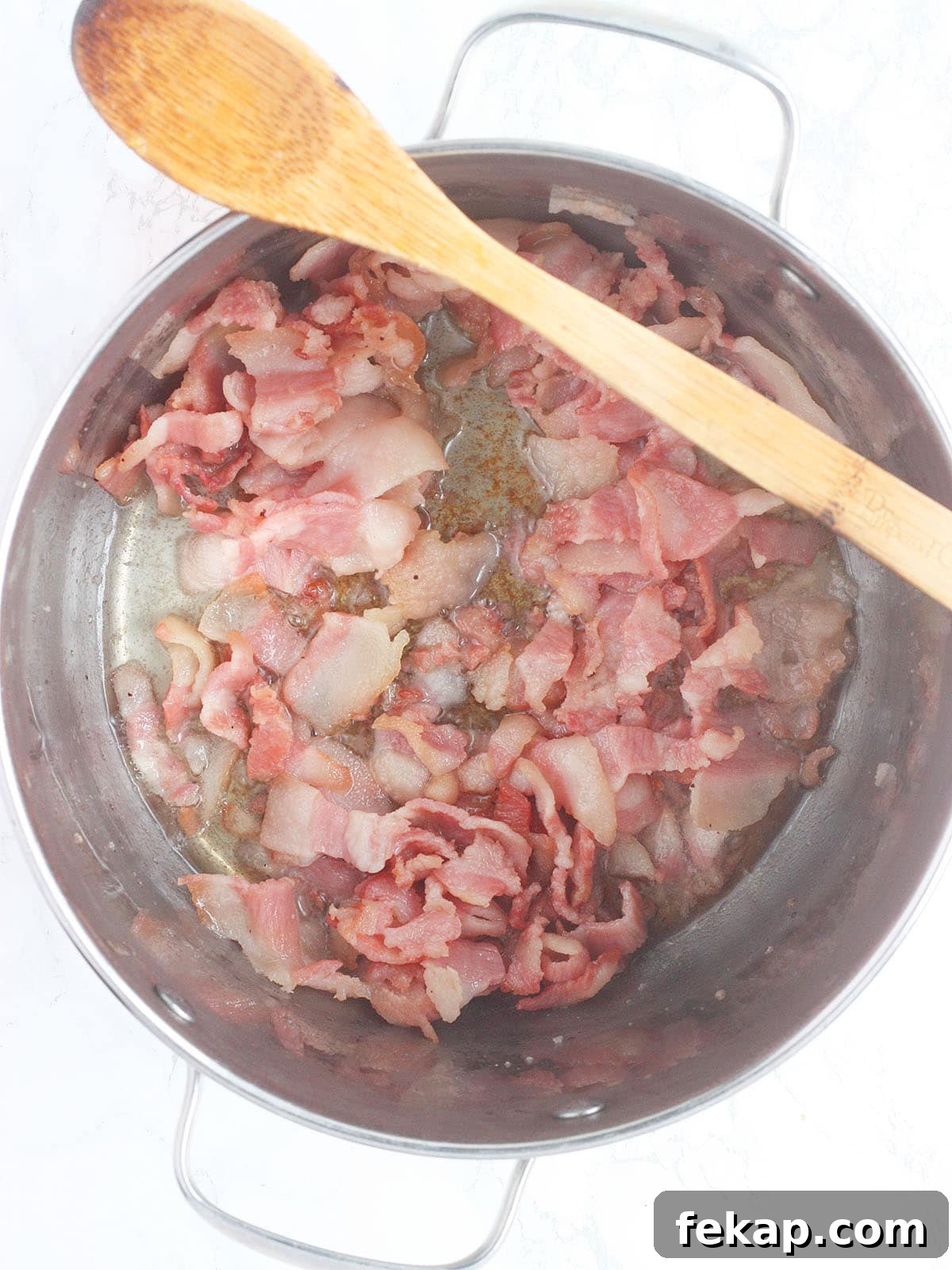
Step 1: In a large stock pot, render the salt pork over medium heat until the fat starts to melt and the meat browns lightly.
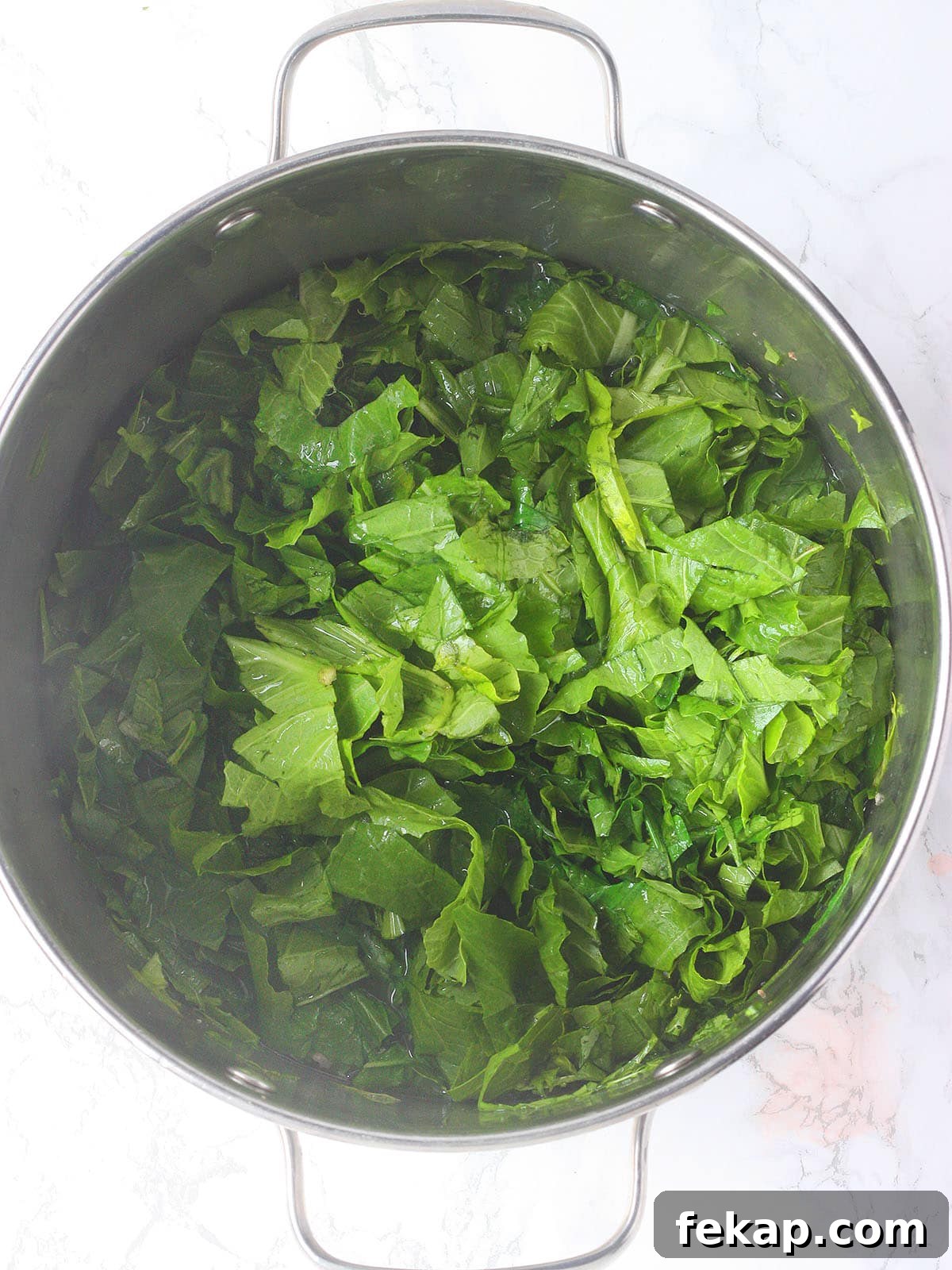
Step 2: Add the water and bring to a boil. Stir in the chopped greens, sugar, salt, pepper, and apple cider vinegar.
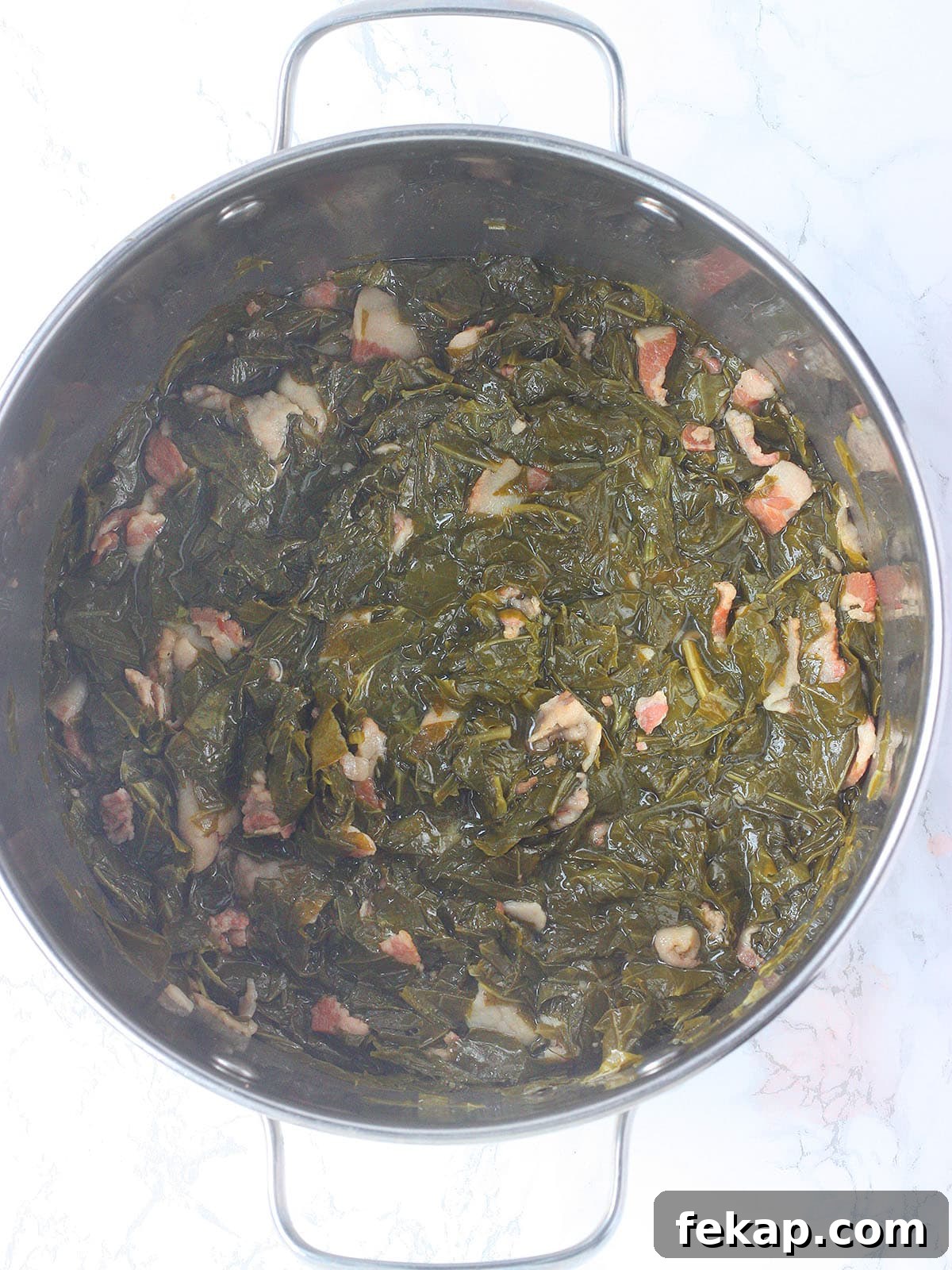
Step 3: When the pot returns to a boil, reduce heat to medium-low, cover, and simmer for at least 2 hours until the greens are very tender and flavors have melded. The longer they simmer, the deeper the flavor. Taste and adjust salt, pepper, and vinegar before serving.
If you prefer modern appliances, you can adapt this method for an Instant Pot or slow cooker; collard greens can be used interchangeably with turnip greens.
Serving Suggestions
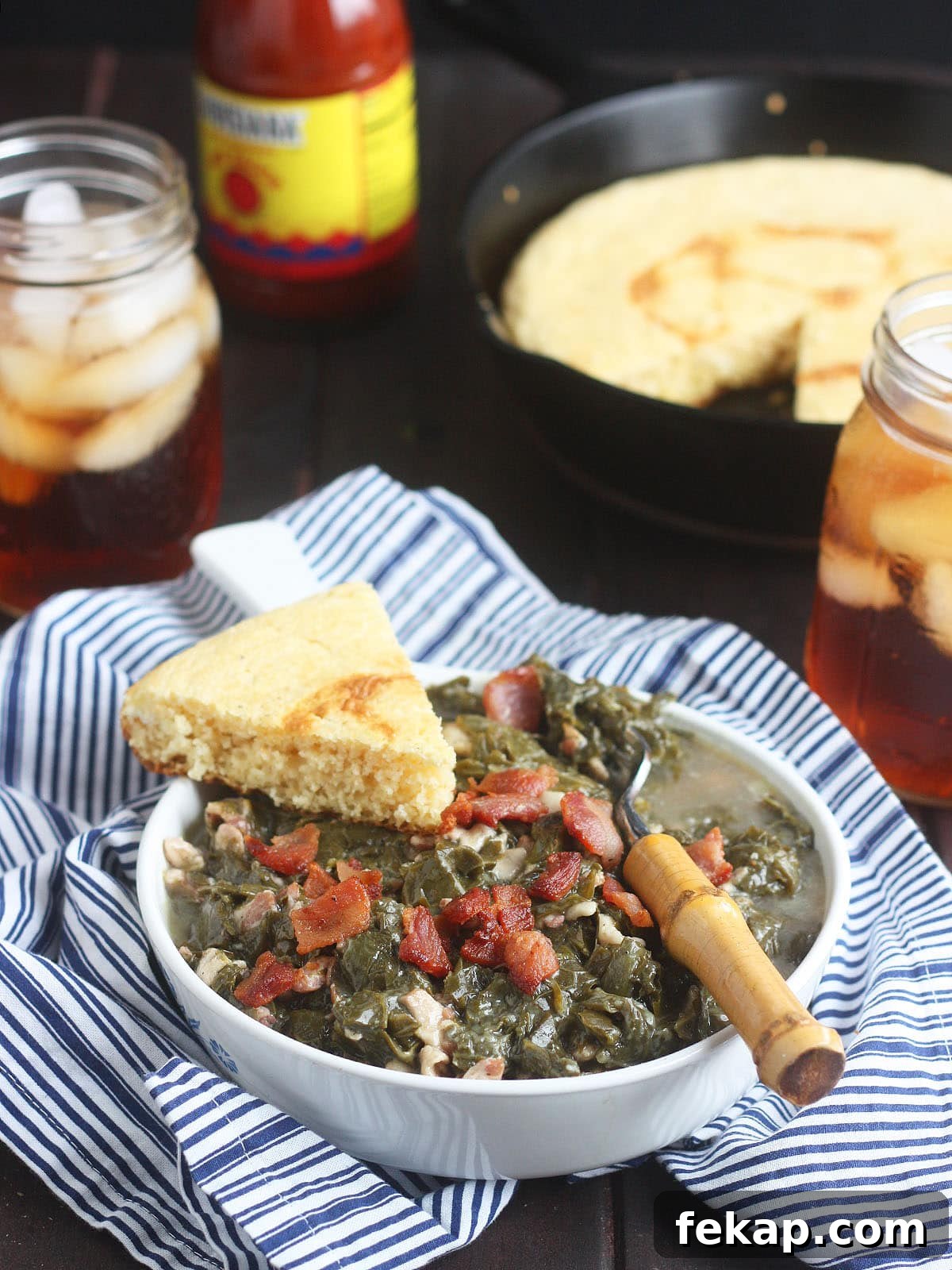
- Serve turnip greens with skillet cornbread, baked chicken, macaroni and cheese, slow-cooked pork ribs, or hoppin’ john for a full Southern comfort-food plate.
- Spoon some of the cooking liquid (the potlikker) over the greens or cornbread — it’s packed with flavor.
- Garnish with an extra drizzle of vinegar or a sprinkle of red pepper flakes for added brightness or heat.
Storage, Freezing and Reheating Instructions
Storage: Once cooled, place turnip greens and some of the cooking liquid in an airtight container. Refrigerate for 3–4 days.
Freezing: Portion into freezer-safe containers or heavy-duty freezer bags, including some of the liquid so the greens don’t dry out. Freeze up to 3 months.
Reheating: Thaw in the refrigerator overnight if frozen. Reheat gently on the stovetop over low-medium heat, stirring occasionally and adding a splash of water or vinegar if needed. If refrigerated only, warm until just simmering and serve hot.
Leftover greens can be used in soups or creamed greens recipes as a substitute for collards.
Turnip greens frequently asked questions
Turnip greens are the leafy tops of the turnip root and are related to cabbage and kale. Collard greens come from a type of cabbage, while mustard greens are from the mustard plant and have a peppery bite. Turnip and collard greens are tougher raw and require long, slow cooking to become tender. Mustard greens are softer and work well when lightly cooked or eaten raw.
Yes. Frozen greens are usually blanched before freezing, so they require much less cooking—about 30 minutes—rather than the full two hours used for fresh greens.
Yes. Mustard greens cook faster and are more delicate, so reduce the cook time to 30 minutes up to one hour depending on desired tenderness.
Yes. The greens will release liquid as they cook down, so the initial amount is sufficient.
Yes. Use a larger pot (at least 6 quarts) and be prepared to extend the simmering time by 30–60 minutes for the larger volume.
Tried This Recipe? Let Me Know!
⭐️⭐️⭐️⭐️⭐️
If you made this Southern turnip greens recipe, share how it turned out—ratings and reviews help others find and trust the recipe.
What to serve with turnip greens
-
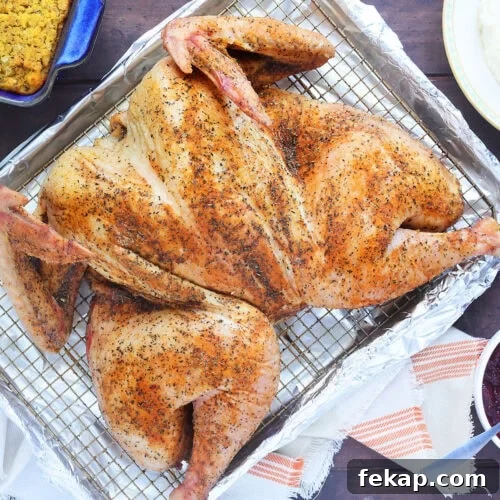
 Smoked Spatchcock Turkey on a Pellet Grill
 -
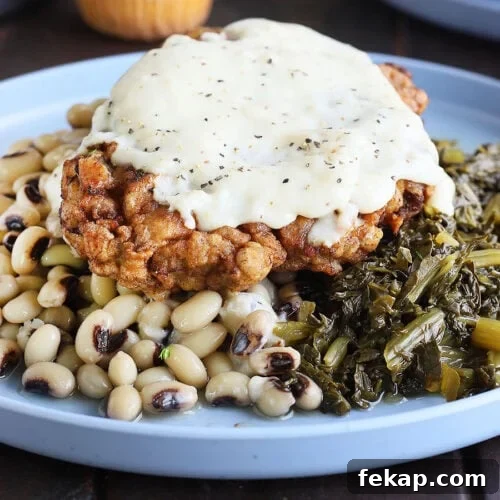
Chicken Fried Steak with Gravy
-
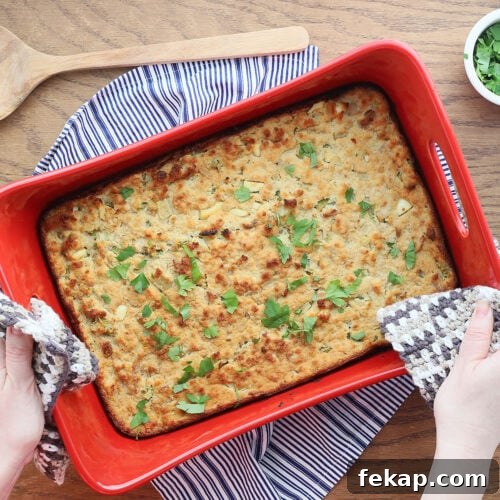
Southern Cornbread Dressing with Chicken
-
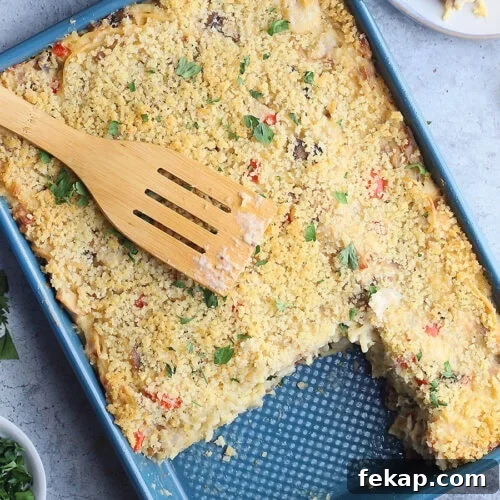
Turkey Tetrazzini
Southern Turnip Greens
Learn how to cook Southern turnip greens in this easy step-by-step guide. Greens are slowly simmered with salt pork, apple cider vinegar, salt, and pepper for a tender, tasty side dish.
Course: Side dishes | Cuisine: American, Southern
Cook Time: 2 hours 15 minutes | Total Time: 2 hours 15 minutes | Servings: 4 people
Calories: 120 kcal (per serving)
Author: Lisa Bynum
Ingredients
- 4 large bunches of turnip or collard greens, washed
- 12 ounces salt pork
- 4 cups water
- ½ cup apple cider vinegar
- 1 teaspoon sugar
- 1 teaspoon salt
- ½ teaspoon black pepper
Instructions
- Remove the center stems from the greens. Discard the stems and coarsely chop the leaves.
- Heat the salt pork in a large stock pot over medium heat for 3–5 minutes to render some grease; do not drain the fat.
- Add the water to the pot. Bring to a boil, then reduce heat to low, cover, and simmer for 10 minutes.
- Add the apple cider vinegar, sugar, salt, and pepper to the pot. Bring the pot back to a boil.
- Add the greens. Work in batches if necessary, allowing the leaves to wilt down to make room for more.
- Reduce heat to low, cover the pot again, and cook for 1–2 hours. The longer the greens cook, the more tender they become.
- Season the greens with additional salt and pepper to taste before serving.
Notes
- Don’t skip washing: Greens often hold grit and sand—wash until the water runs clear.
- Simmer low and slow: Longer cooking yields more tender, flavorful greens.
- Keep some potlikker: The cooking liquid is flavorful—serve some over the greens or with cornbread.
- Adjust vinegar: Start with the full amount of vinegar, then add more or less to taste.
- Salt pork swaps: Bacon, ham hock, smoked turkey, or fatback all work well.
- Richer potlikker: Use chicken broth instead of water for extra depth.
- Prefer heat? Add red pepper flakes, hot sauce, jalapeños, or Cajun seasoning.
Nutrition (per serving)
Serving size: 1 cup | Calories: 120 kcal | Carbohydrates: 8 g | Protein: 6 g | Fat: 7 g | Saturated fat: 2 g | Cholesterol: 15 mg | Sodium: 620 mg | Potassium: 380 mg | Fiber: 3 g | Sugar: 2 g | Vitamin A: 540 IU | Vitamin C: 30 mg | Calcium: 150 mg | Iron: 1.8 mg
Tried this recipe? Tag me today!
Mention @CookingBride or use the hashtag #CookingBride when sharing photos on social media.