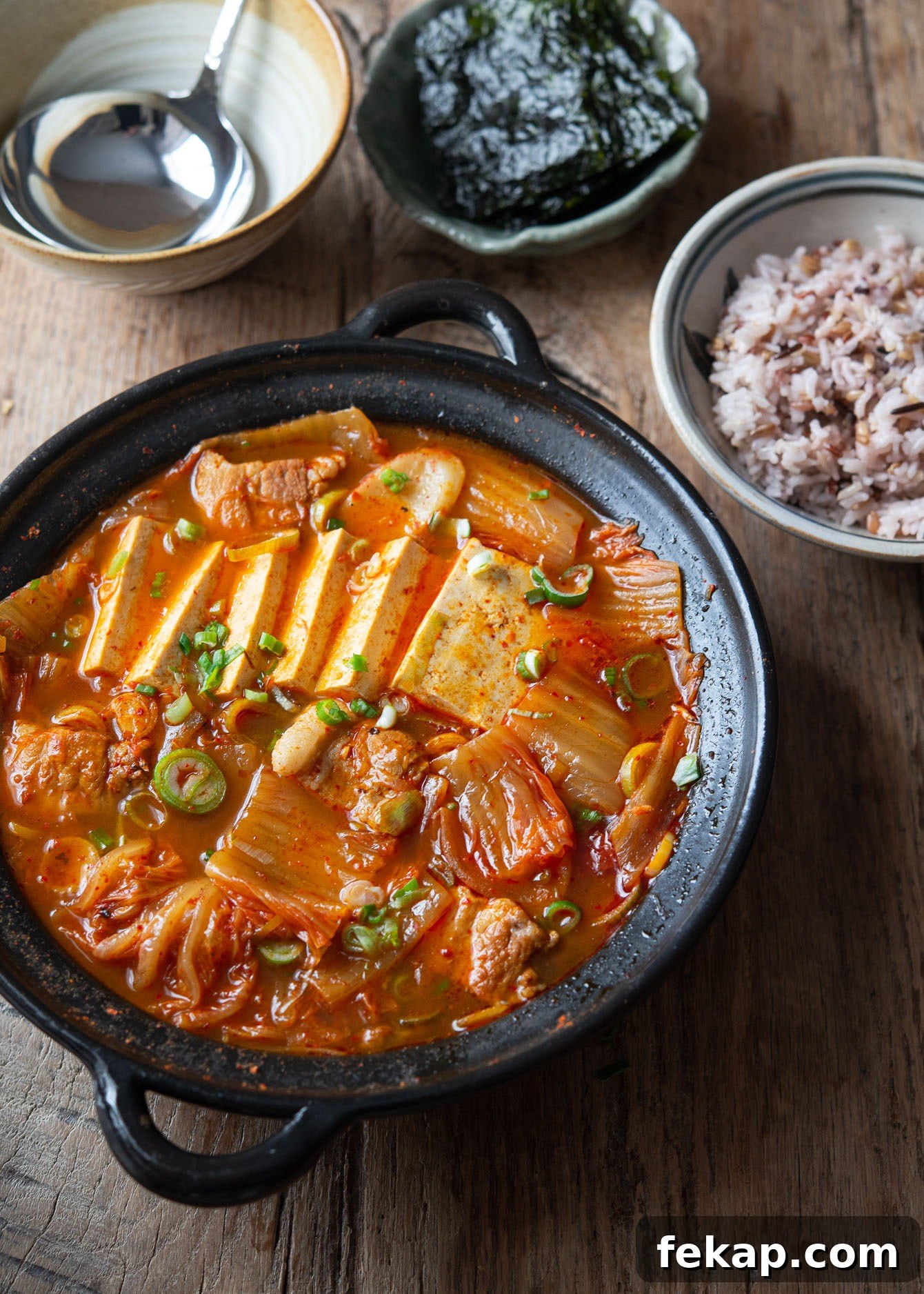
A warm, tangy kimchi jjigae made with fully fermented kimchi and rich pork belly. This Korean stew develops deep, layered flavor in about 40 minutes using simple pantry ingredients. I share an easy home-style method for a richer broth, plus tips for using rice water or rice cakes and how to finish the stew with soft tofu. Quick, comforting, and perfect with a bowl of steaming rice.
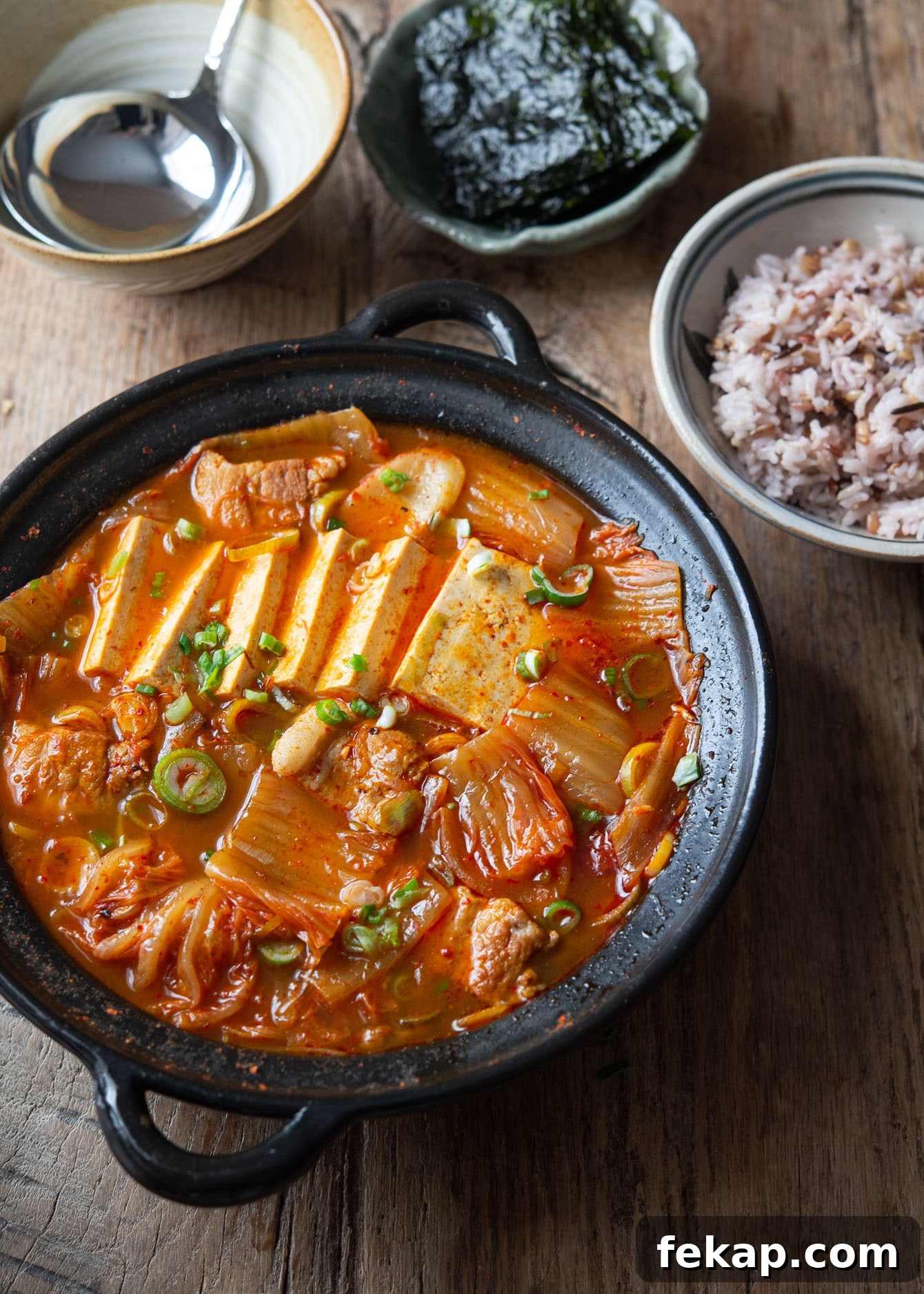
The Only Kimchi Jjigae Recipe You’ll Ever Need
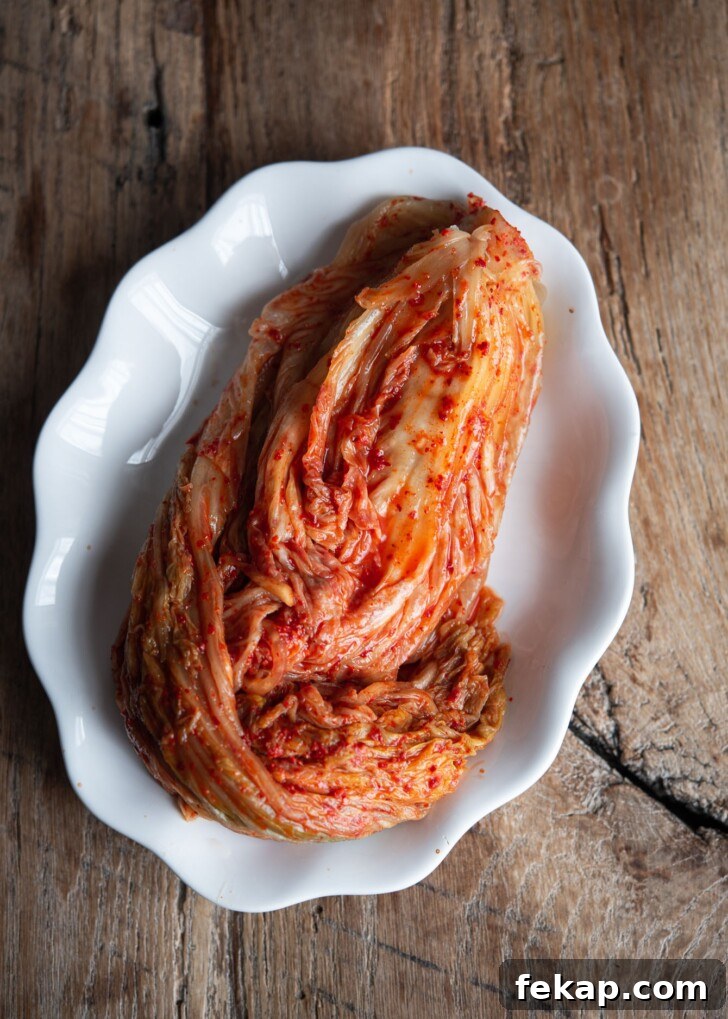
If you have a jar of old, sour kimchi tucked away at the back of the fridge—yes, the kind that makes your eyes water—don’t toss it. That sharp, fermented tang is the heart of an authentic kimchi jjigae (김치찌개). In many Korean homes, very aged kimchi is reserved for stew because its acidity and funk cut through the richness of pork and create a deeply comforting broth.
I grew up eating this stew and have made it for years, from my mother’s kitchen in Korea to my own. Rather than overcomplicating the recipe with exotic stocks, this version focuses on three essentials: sour kimchi, rendered pork fat, and a slow, patient simmer. The result is a soulful, everyday kimchi jjigae that’s simple to make and full of depth.
If you want a quicker dish with that same aged-kimchi flavor, try kimchi fried rice made with extra-aged kimchi before tackling a long simmer.
Featured Review
“I can’t thank you enough for this recipe! My favorite dish is kimchee jigae and I could never replicate it at home despite trying several recipes. This is a winner and my family all agreed. It’s easy, simple to make, and delicious.”
Kay
My 3 Rules for the Perfect Kimchi Stew
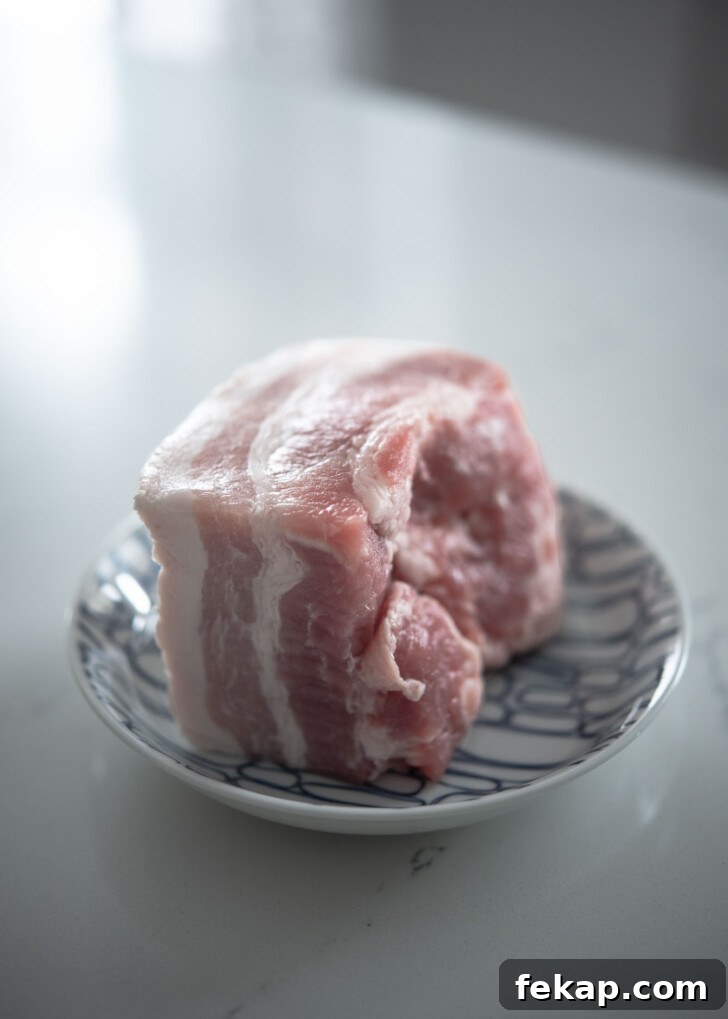
If you want your stew to taste like it came from a grandmother’s kitchen in Korea, follow these three non-negotiables:
- The kimchi must be old: Fresh, crunchy kimchi won’t give the right depth. Use aged, sour kimchi—if yours isn’t there yet, leave the jar on the counter for a day to encourage fermentation. The acidity is essential to balance the pork fat.
- Fat is flavor: Pork belly is ideal because the rendered fat enriches the broth and carries the spicy kimchi flavors. Lean pork produces a thin broth. If you’re short on time, a quick pantry version with canned meat can work in a pinch, but it won’t match the texture of pork belly.
- Rice cakes or rice water: A few rice cake rounds add chew and release starch that lightly thickens the broth. No rice cakes? Use rice-rinsing water (ssal-tteumul) instead of plain water—the residual starch gives the same comforting body to the stew.
How I Build the Flavor (Step-by-Step)
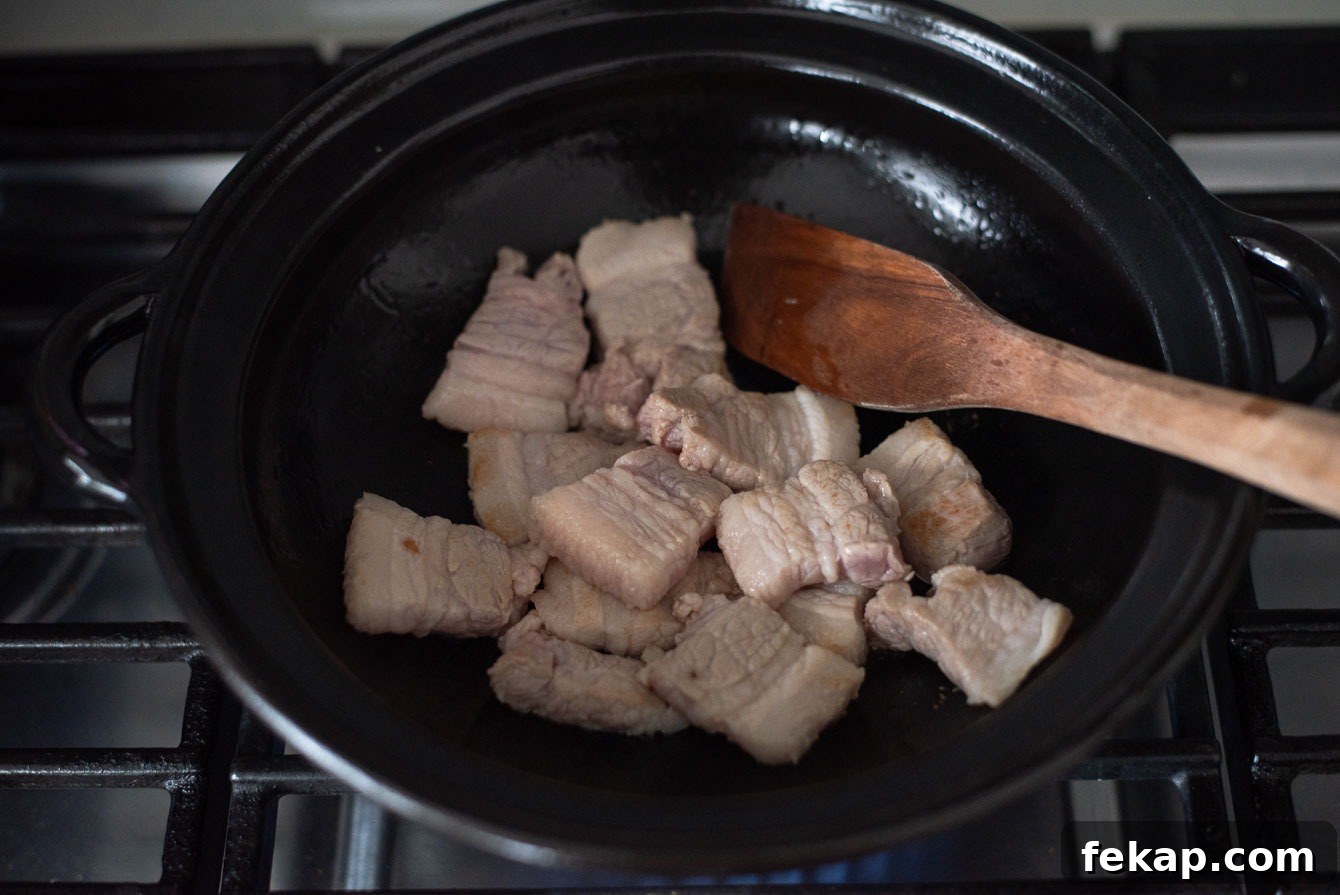
Step 1: Brown the pork
Don’t start by adding everything to cold water. Heat oil in a pot over medium-high heat and brown the pork belly slices until the fat begins to render. Add sliced onion and minced garlic and sauté briefly. Sprinkle in a tablespoon of gochugaru (Korean chili flakes) and toast them briefly in the hot fat—the toasted chili adds a smoky, deeper red base that plain water cannot provide.
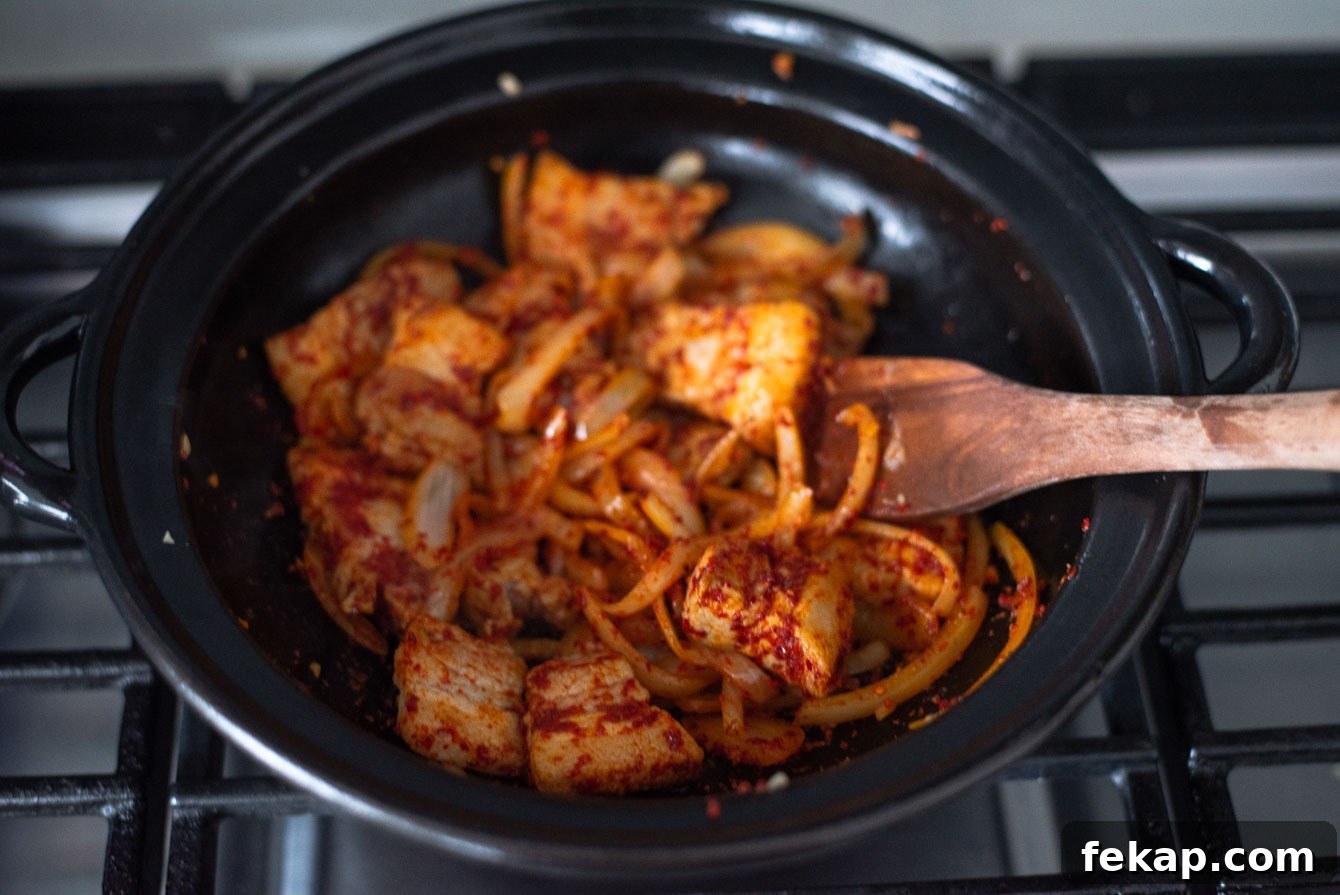
Step 2: Sauté the kimchi
Add sliced kimchi and a few tablespoons of kimchi juice. Sauté for a minute or two so the cabbage softens and the kimchi flavors bloom with the pork fond. That quick sauté deepens the stew’s flavor far more than simply adding cold kimchi to boiling water.
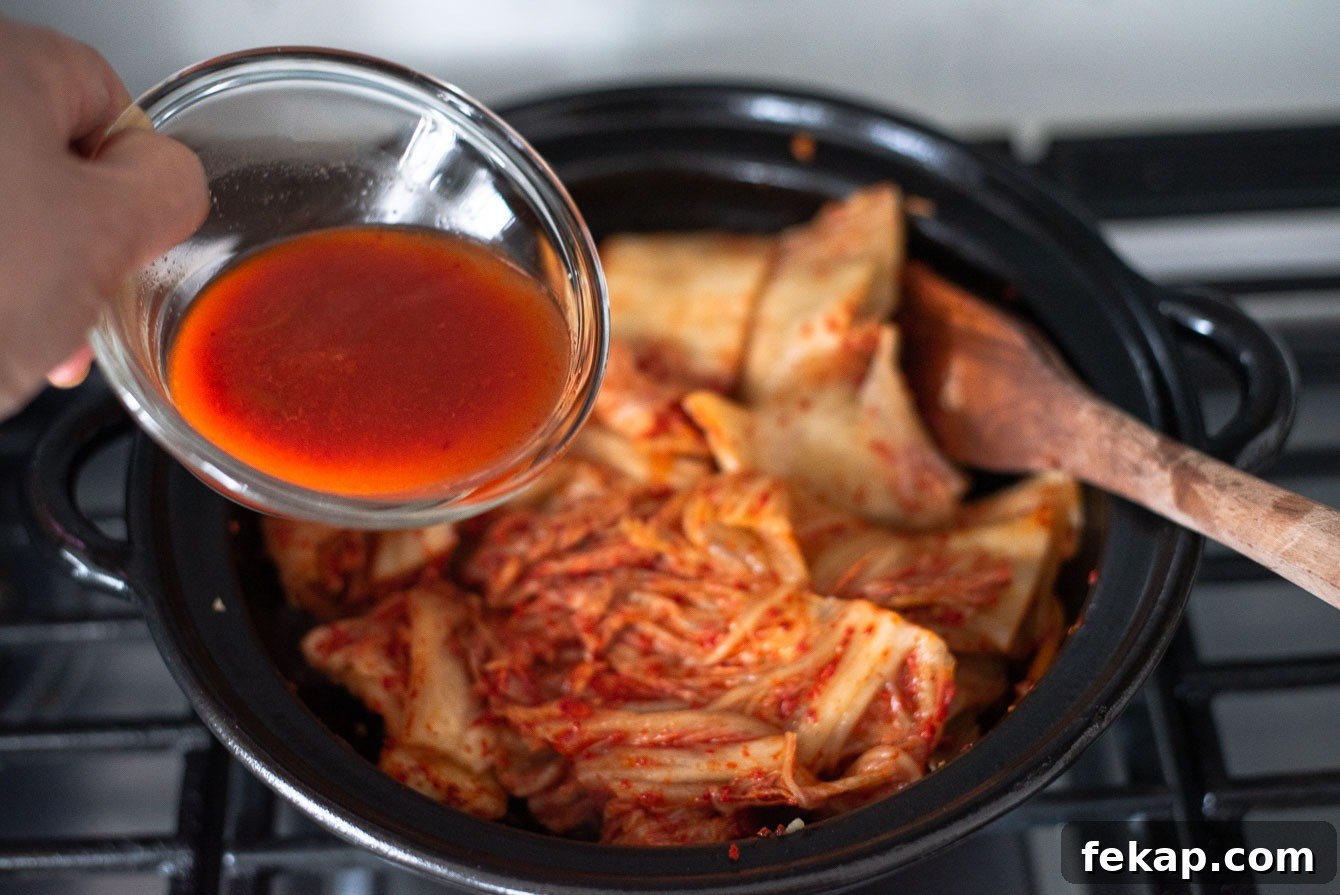
Step 3: Simmer slowly
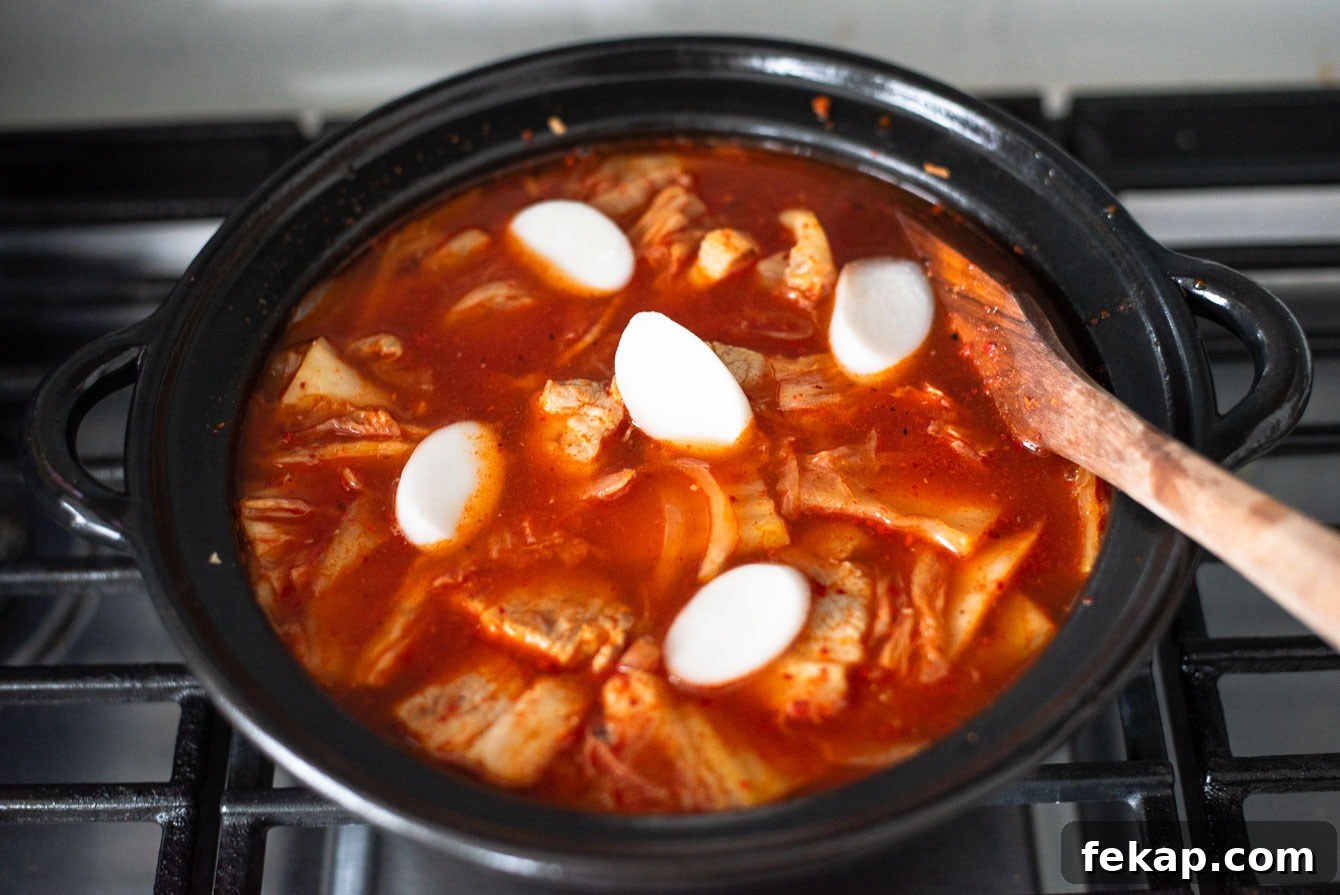
Pour in water (or rice-rinsing water) and add rice cakes if using. Bring to a boil, then reduce to low and simmer, covered, for at least 20 minutes. The kimchi should turn translucent and tender; taking time to simmer allows the flavors to meld so the broth tastes unified rather than a collection of separate ingredients.
Step 4: Finish with umami and tofu
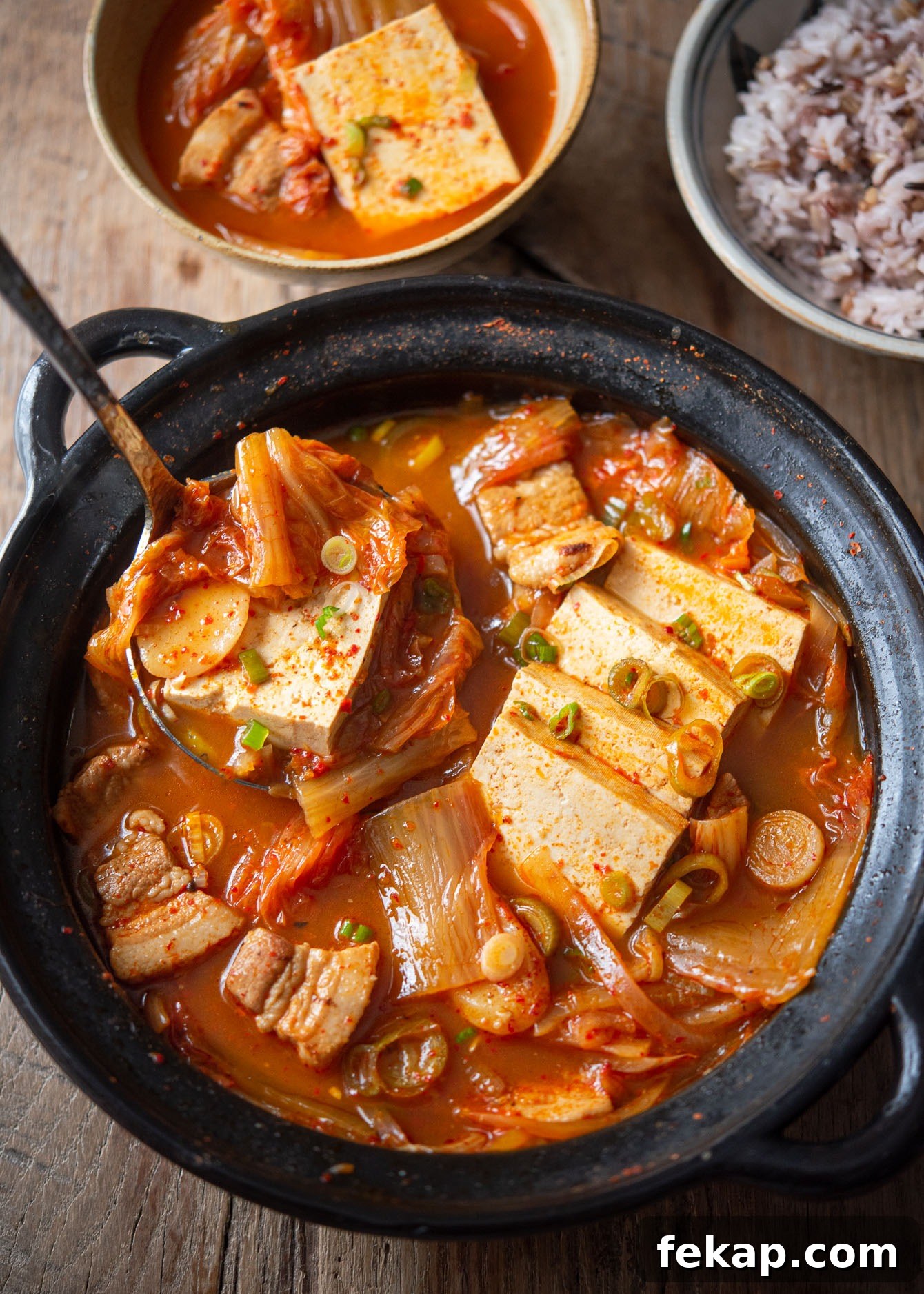
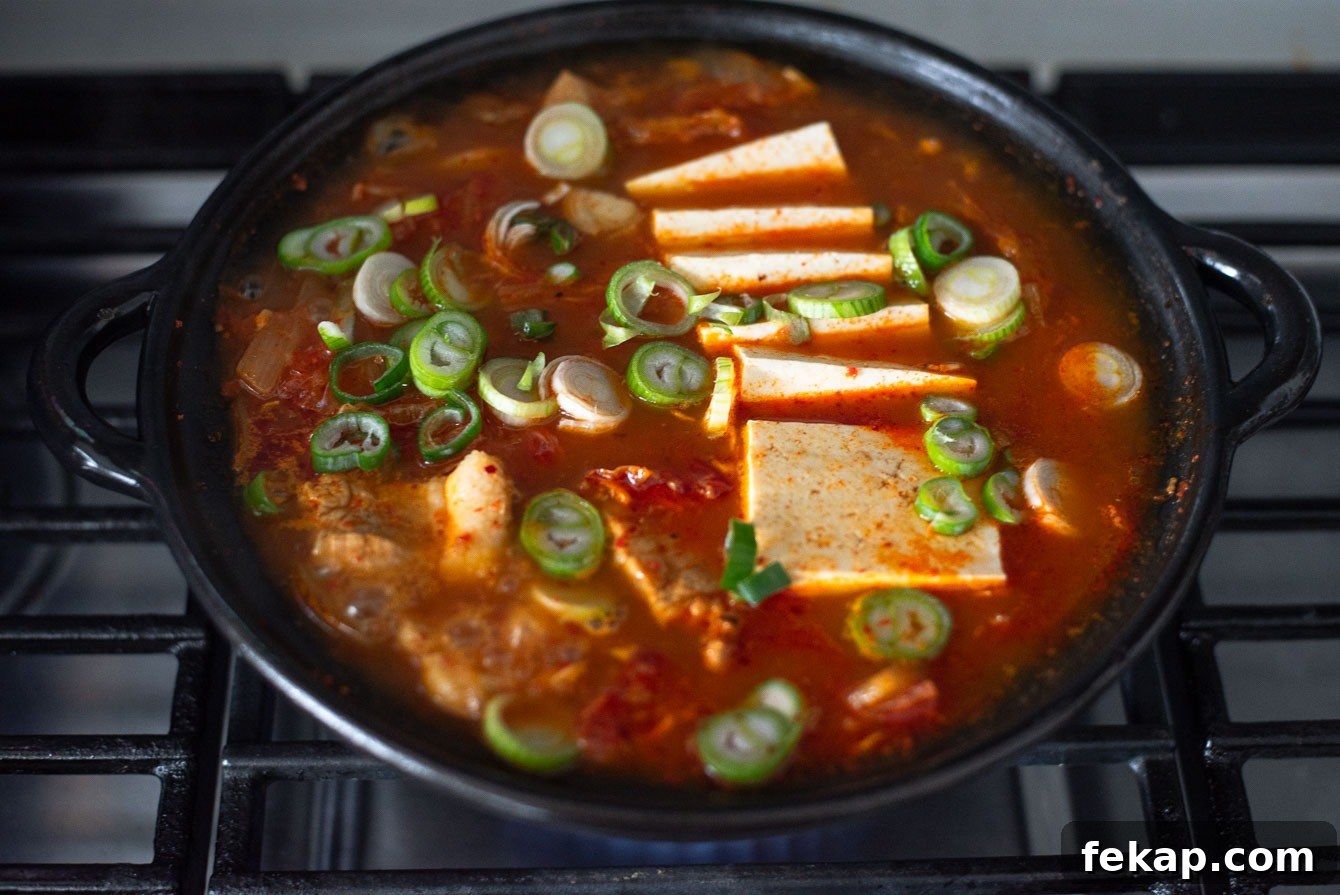
Stir in a small spoon of Korean salted shrimp (saeu-jeot) and a splash of soup soy sauce to round out the broth; these fermented seasonings add savory depth that plain salt can’t replicate. Gently slide in soft tofu slices and simmer five more minutes so the tofu warms through and soaks up flavor. Finish with chopped green onion.
What to Serve with Kimchi Jjigae
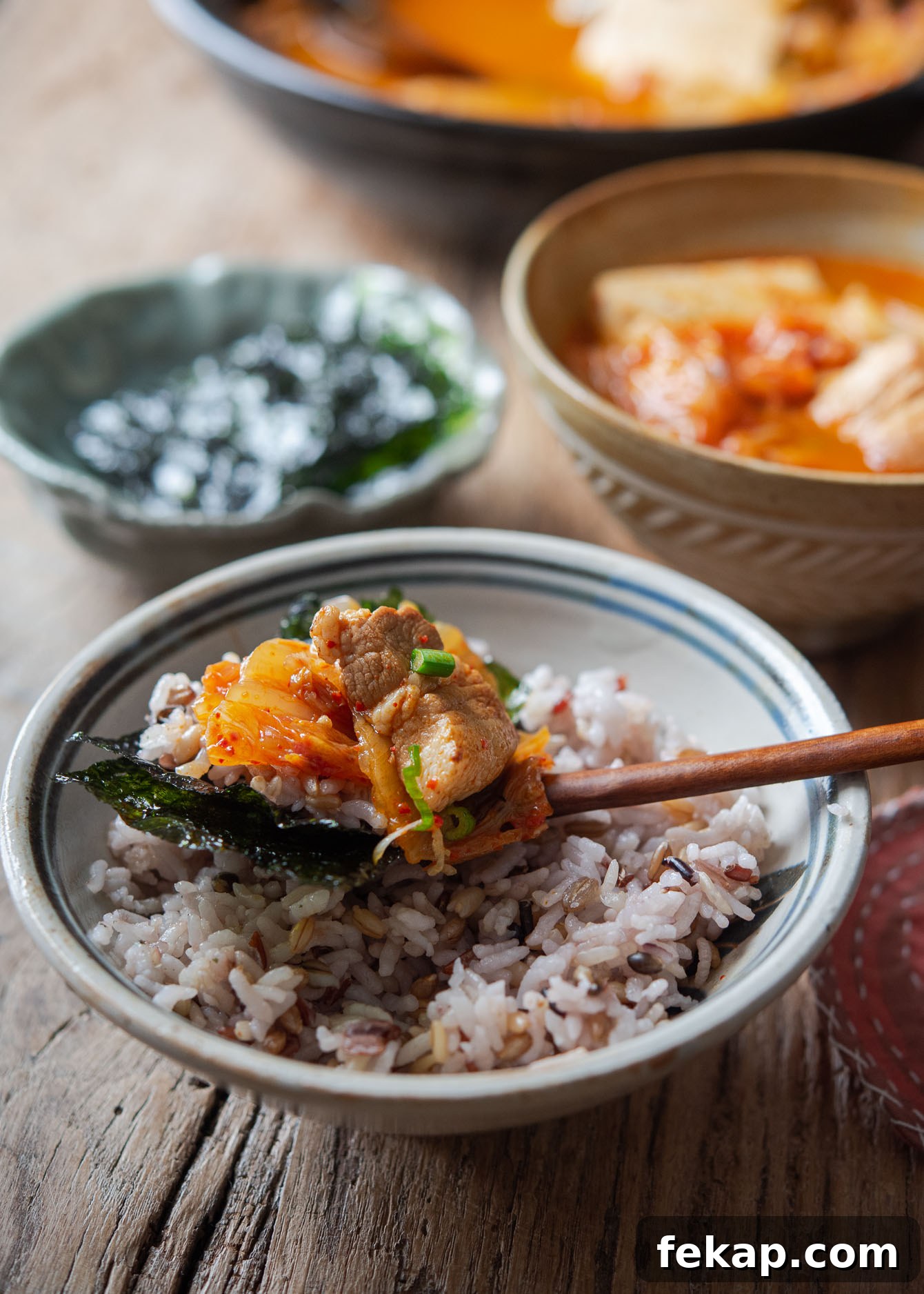
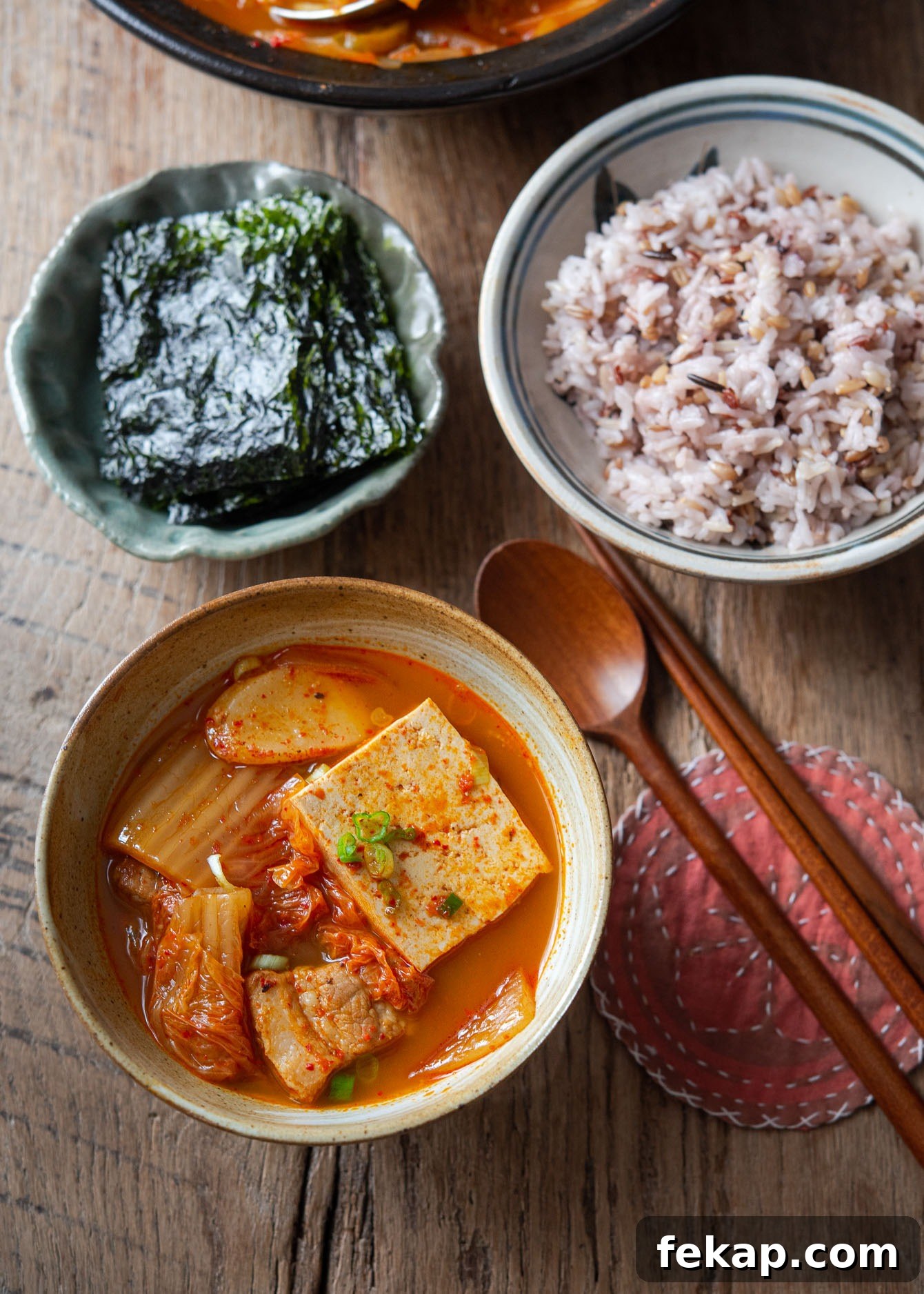
At my table this is a one-bowl meal. Serve the stew piping hot with steamed rice and a sheet of roasted seaweed for wrapping. For a perfect bite, put a spoonful of rice on a piece of roasted seaweed, top with pork and kimchi from the stew, fold, and enjoy. Leftovers often taste even better the next day, when the broth deepens and the kimchi softens.
Love this recipe? Rate it below and share your experience in the comments. If you post your dish on social media, tag @beyondkimchee so I can see your version.

Kimchi Jjigae with Pork (Korean Kimchi Stew)
Ingredients
- 1 tbsp oil
- 1/2 lb (225 g) pork belly, sliced
- 1/2 medium onion, sliced
- 2 cloves garlic, finely minced
- 1 tbsp Korean chili flakes (gochugaru)
- 1 lb (450 g) sour kimchi, sliced
- 4 tbsp kimchi juice
- 2 1/2 cups (600 ml) water (or rice-rinsing water)
- 5 rice cake rounds (optional)
- 1 tsp Korean salted shrimp (saeu-jeot)
- 1 tbsp Korean soup soy sauce (gukganjang)
- 1/2 lb (225 g) soft tofu, sliced
- 1 green onion, chopped
- Salt to taste
Instructions
- Cook the pork: Heat oil in a pot over medium-high heat. Add pork belly and brown until the fat renders. Add onion and garlic and sauté 1 minute. Sprinkle in gochugaru and toss to coat.
- Add kimchi and simmer: Add sliced kimchi, kimchi juice, water (or rice water), and rice cakes if using. Bring to a boil, reduce heat, and simmer covered for 15–20 minutes.
- Season the stew: Stir in the salted shrimp and soup soy sauce. Taste and adjust seasoning with salt if needed.
- Add tofu and finish: Gently add tofu slices and simmer 5 more minutes. Garnish with chopped green onion and serve hot with steamed rice.
Notes
- If you don’t have rice cakes, use rice-rinsing water (ssal-tteumul) instead of plain water to add a gentle starch and fuller body to the broth.
- Kimchi jjigae often tastes better the next day after flavors meld. Store leftovers in an airtight container in the refrigerator and reheat gently.
Nutrition (per serving, approximate): Calories: 392 kcal; Carbohydrates: 5 g; Protein: 12 g; Fat: 36 g; Sodium: 611 mg.