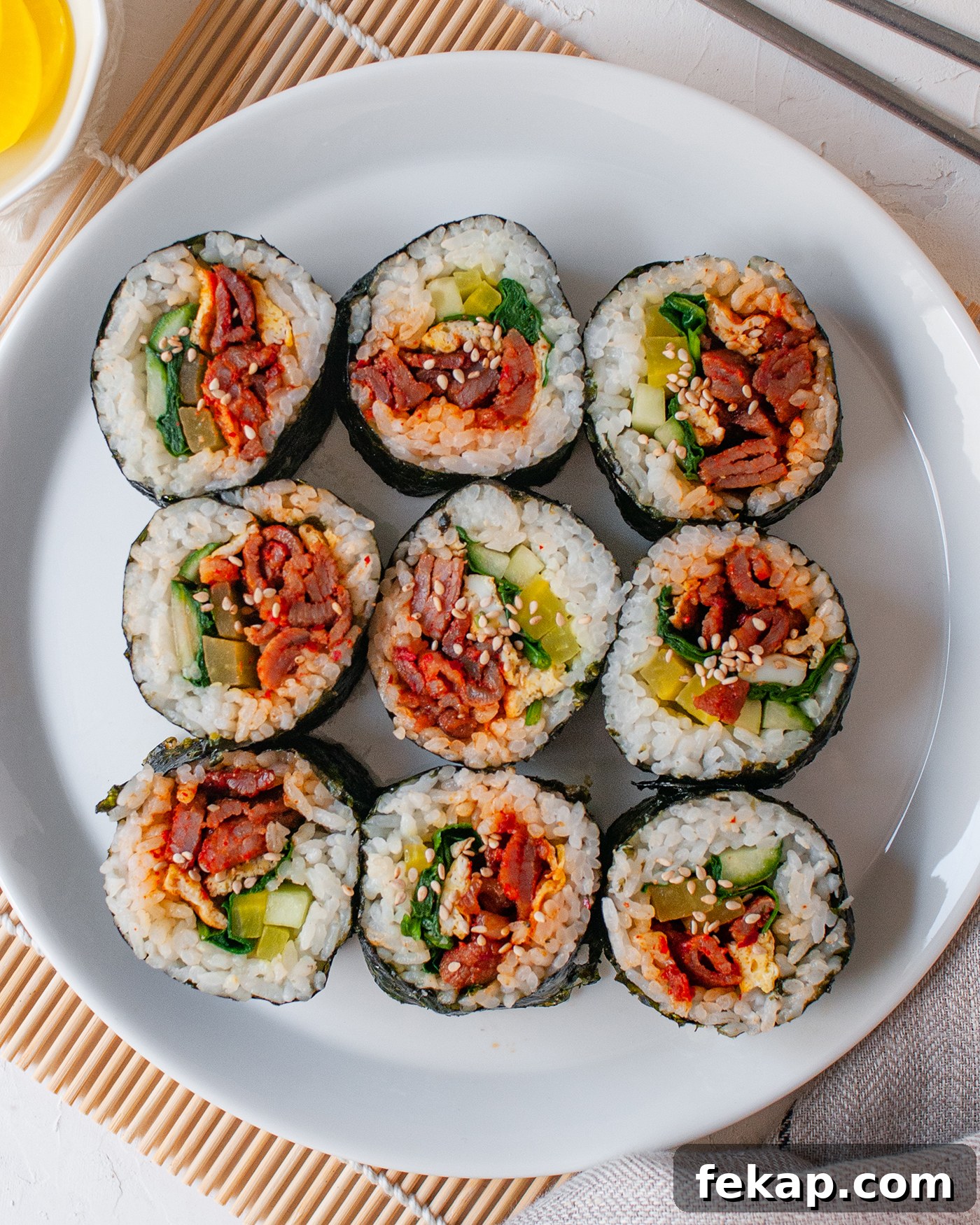
Hey Sporks! Today we’re diving into the delicious world of Korean food to show you how to make Bulgogi Kimbap at home.
Bulgogi Kimbap is a Korean rice roll filled with marinated bulgogi, vegetables, pickles, and rice, all wrapped in seasoned seaweed. It’s savory, portable, and perfect for snacks, lunches, or a picnic.
In cities with large Korean communities, like Los Angeles, you can buy freshly made kimbap at markets and restaurants, but making your own lets you control the flavors and fillings. Elijah and I often split a roll when we need a quick snack on errands or road trips.
Below you’ll find a straightforward recipe for Bulgogi Kimbap, tips on choosing the right seaweed, storage and reheating advice, plus ideas for alternate fillings so you can customize your rolls.
Equipment
- sushi mat (bamboo rolling mat)
- plastic wrap
- large skillet or cast iron pan
- large pot
- nonstick pan
- steamer basket or metal strainer
- sharp knife for slicing
Ingredients
- 2 cups cooked short-grain rice
- ½ cup pickled yellow daikon, cut into long matchsticks
- 1 lb marinated bulgogi (pork or beef)
- ½ cucumber, cut into long matchsticks
- 3 eggs
- 2 cups spinach
- 1 tbsp sesame oil, divided
- 1 tsp sugar
- salt to taste
- 6 sheets Korean seaweed (gim)
Korean Seaweed: An Essential Ingredient for Kimbap
Korean seaweed (gim 김) is an important element of authentic kimbap. It differs from Japanese nori: gim is typically thinner, slightly translucent, and often seasoned with sesame oil and salt. That sesame-oil finish helps tie together the rice and fillings in kimbap, so look for larger sheets labeled for kimbap when you shop.
If you can’t find gim, nori will work in a pinch, but the flavor and texture of the finished roll may be different from what you expect at a Korean deli.
Instructions
Prepare the Kimbap Fillings
- Mix the warm cooked rice with ½ tablespoon sesame oil, 1 teaspoon sugar, and a pinch of salt. Taste and adjust; the rice should be lightly seasoned.
- Heat a skillet over medium-high heat and cook the bulgogi for 5–7 minutes, until cooked through and slightly caramelized. Remove and set aside.
- Steam the spinach: fill a pot with 1–2 inches of water, place the spinach in a steamer basket or metal strainer above the water, cover, and steam for about 6 minutes. Squeeze out excess water, season with a little salt and ½ tablespoon sesame oil, then set aside.
- Make an egg sheet: beat the eggs and cook them in a nonstick pan as a thin, flat omelet. Remove from heat, fold gently, and slice into long, thin ribbons about ½ inch wide.
- Cut the pickled daikon and cucumber into long matchsticks so they fit neatly inside the rolls.
Roll the Kimbap
- Place a sheet of seaweed shiny side down on a sushi mat covered with plastic wrap. Spread a thin, even layer of rice over the sheet, leaving a 1–2 inch strip at the far edge free of rice—this helps seal the roll.
- Arrange a neat line of bulgogi, spinach, egg ribbons, cucumber, and pickled daikon about 2 inches from the near edge (the edge closest to you when rolling).
- Using the mat to help, carefully roll the kimbap away from you, pressing gently and evenly until the seam meets the strip without rice. Wet your fingers and run them along the exposed seaweed edge to seal the roll.
- Brush the finished roll lightly with sesame oil for shine and extra flavor.
- To slice, dip a sharp knife in water and wipe it between cuts. Cut the roll into 1–1.5 inch thick pieces so each bite holds together without squashing the rice.
How to Store and Reheat Kimbap
Kimbap tastes best fresh, but it stores well for short-term use. For up to 48 hours, place the rolls in an airtight container in the refrigerator. Lay a damp (not wet) paper towel over the kimbap to keep the rice from drying out. You can enjoy it cold or warm it in the microwave for 20–30 seconds.
To freeze, slice the rolls, wrap them tightly in plastic wrap or foil, and place them in an airtight container for up to one month. Thaw slightly and warm in the microwave for 1–2 minutes with the container lid slightly ajar.
Various Kimbap Fillings to Try
Once you’ve mastered the basic bulgogi version, experiment with other fillings. A few popular ideas:
- Sauteed shiitake mushrooms
- Stir-fried anchovies (myulchi)
- Thin scrambled egg ribbons
- Braised burdock root
- Fried Spam or luncheon meat
- Fish cake strips
Mix and match textures and flavors—kimbap is very forgiving and a great canvas for creativity.
Final Thoughts
Bulgogi Kimbap brings together savory marinated meat, crisp vegetables, and seasoned rice wrapped in toasted seaweed for a satisfying, portable bite. It’s ideal for lunches, picnics, or any time you want a tasty snack with Korean flavors. Once you get comfortable rolling, you’ll be able to customize your kimbap to suit any appetite.
More Recipes You’ll Love
- Cambodian Street Corn — coconut-based sauce with grilled corn for bold summer flavors.
- Spicy and Cheesy Galbijjim — a rich Korean braised short rib dish, great for special meals.
- Korean Banana Milk Boba — a creamy, cafe-style drink you can make at home.
References & Further Reading
Suggested topics for further reading: Korean gim (seaweed) production and differences between gim and nori; traditional kimbap variations and common ingredients.