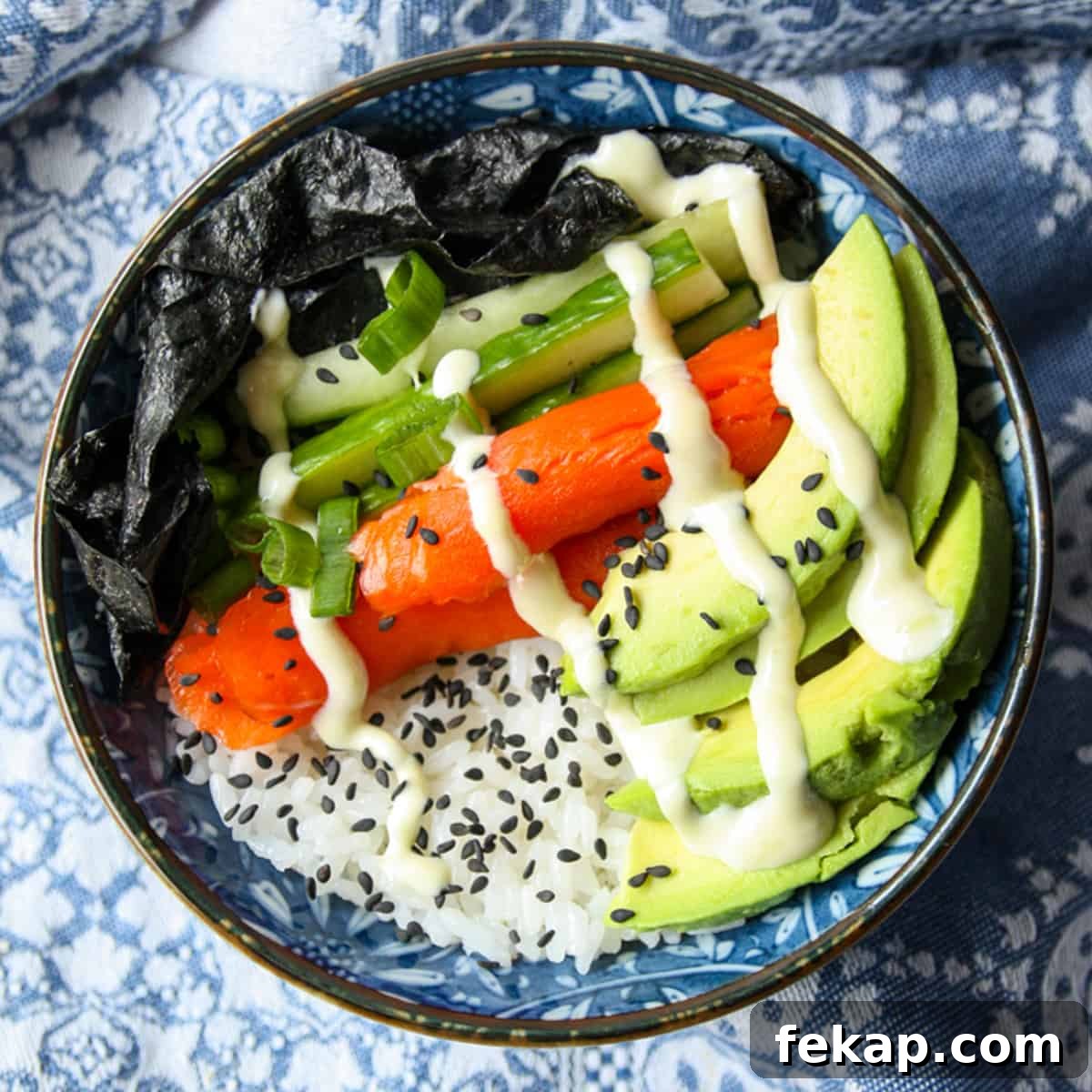
March is Nutrition Month, and this nourishing Salmon Sushi Bowl Recipe is a delicious way to celebrate. Made with smoked wild sockeye salmon, sushi rice, crisp vegetables, creamy avocado, nori, sesame seeds, and a quick wasabi mayonnaise, these bowls deliver all the flavor of sushi without the need to roll, slice, or order takeout.
This post is sponsored by the Marine Stewardship Council. As always, all opinions are my own.
What are Sushi Bowls?
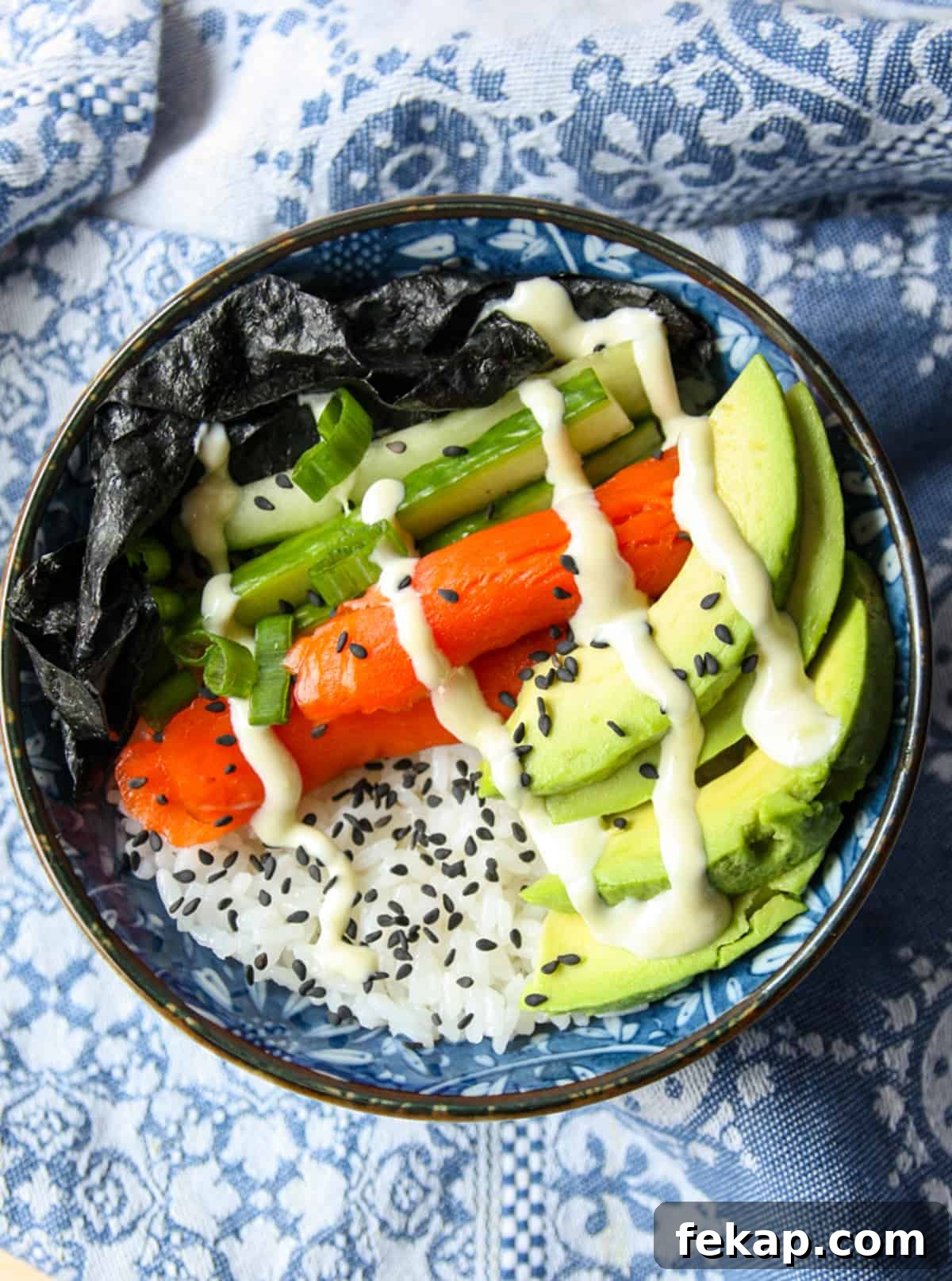
Sushi bowls are all the ingredients you love in a sushi roll, served in a bowl instead of wrapped and sliced. Think of them as a deconstructed sushi roll: rice on the bottom, seafood and vegetables on top, and a flavorful sauce to bring everything together.
They are perfect for those days when you are craving sushi but want something quick, easy, and homemade. There is no need for a bamboo mat, rolling technique, or perfectly cut pieces. You simply layer the ingredients, add your favorite toppings, and enjoy.
Sushi bowls are similar to poke bowls, but they are not exactly the same. Poke bowls usually include marinated raw fish, often tuna. Sushi can include raw fish, but it does not have to. Many sushi rolls are made with cooked seafood, smoked fish, or even vegetables. Sushi bowls are also sometimes called chirashi bowls.
These smoked salmon sushi bowls are made with MSC certified sustainable wild sockeye salmon, which adds rich flavor, protein, and a beautiful color to every bowl.
What is the Marine Stewardship Council?
The Marine Stewardship Council, or MSC, is a global non-profit organization with a mission to help keep oceans healthy and ensure wild seafood remains available for future generations.
The MSC works with fisheries around the world and encourages them to meet a globally recognized standard for seafood sustainability. The organization also helps consumers understand why choosing certified sustainable seafood matters for ocean health and for their own meals.
When you choose seafood with the MSC blue fish label, you are choosing wild seafood that is certified sustainable and traceable to its source. It is a simple shopping habit that can support healthier oceans.
Nutrition Month
March is Nutrition Month, which makes it a great time to think about easy ways to add more nutritious meals to the weekly rotation. Seafood is a convenient and delicious option because it cooks quickly, works with many flavors, and provides high-quality protein.
Seafood can also be a practical choice for anyone who is trying to eat less meat. Fish and shellfish are fast to prepare, which makes them especially useful for busy weeknights, simple lunches, or relaxed dinners at home.
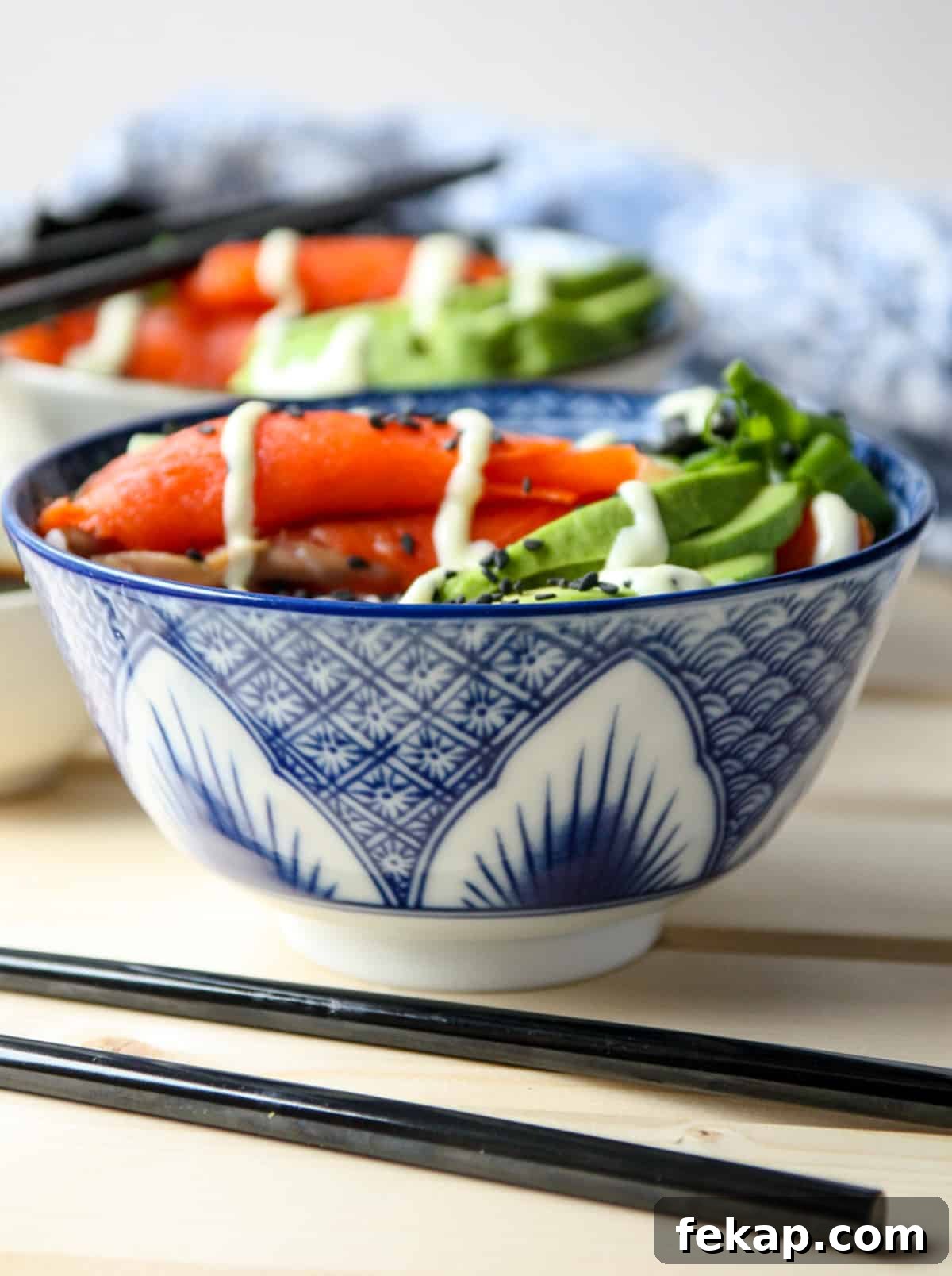
This salmon sushi bowl recipe is a great example of how seafood can fit into a balanced meal. It includes rice for energy, salmon for protein, avocado for creaminess, cucumber for crunch, nori for classic sushi flavor, and a bold wasabi mayonnaise for heat.
By choosing MSC certified sustainable seafood, you can enjoy a meal that is good for you while also supporting responsible seafood choices.
Seafood Nutrition Benefits
There are many good reasons to include seafood in your diet. Seafood is a complete source of protein, and a 3-ounce serving can provide a significant portion of daily protein needs.
Seafood is also naturally lower in calories than many other protein options. Lean fish varieties are especially light, while fattier fish are still nutrient-rich and satisfying.
Most seafood is low in saturated fat and contains heart-healthy fats, including polyunsaturated fats and omega-3 fatty acids. These are often referred to as “good fats” and are one of the reasons fish is such a popular choice for healthy meals.
Seafood is also a source of important vitamins and minerals, including B vitamins, vitamin D, and vitamin A. When paired with vegetables, rice, and flavorful seasonings, it becomes an easy foundation for a balanced bowl meal.
How Do You Know it’s Sustainable?
The easiest way to know whether seafood is certified sustainable is to look for the MSC blue fish label. This label means the seafood is wild, certified sustainable, and traceable back to its source.
Certified sustainable seafood is available in many forms, including canned, pouched, frozen, and fresh products. The smoked wild sockeye salmon used in these sushi bowls is one example of a seafood product that can make everyday meals both convenient and delicious.
Choosing certified sustainable seafood does not need to be complicated. A quick look for the blue fish label at the grocery store can help you make a responsible choice while still enjoying your favorite seafood recipes.
Why You Will Love This Easy Sushi Bowl
You get all the sushi flavor without the work of rolling, slicing, and shaping sushi rolls. Everything goes straight into a bowl, making this a fast and approachable recipe.
This salmon sushi bowl is easy to customize. Use your favorite sushi roll as inspiration and add the vegetables, sauces, or toppings you enjoy most.
Homemade sushi bowls are budget-friendly and often much cheaper than takeout. They are also easy to prepare in small or larger portions.
This recipe works well for meal prep. If you already have cooked rice ready, the bowls come together in minutes. For the freshest result, add the avocado just before serving.
Tips and Variations
- Use brown rice instead of white sushi rice, or try cauliflower rice for a lighter option.
- Replace the smoked salmon with crabmeat or imitation crab to make a California roll-inspired sushi bowl.
- Use crispy shrimp instead of salmon for a shrimp tempura-style bowl.
- Swap the salmon for shiitake mushrooms if you want a vegan sushi bowl.
- For a different spicy mayonnaise, replace the wasabi paste with sriracha.
- Try teriyaki sauce or hoisin sauce if you prefer a sweeter, savory finish.
- Add more vegetables such as cooked yam, carrots, green or red cabbage, asparagus, green onions, or daikon radish.
- Serve with gluten-free soy sauce or tamari to make this salmon sushi bowl recipe gluten-free.
Want More Goodness in a Bowl?
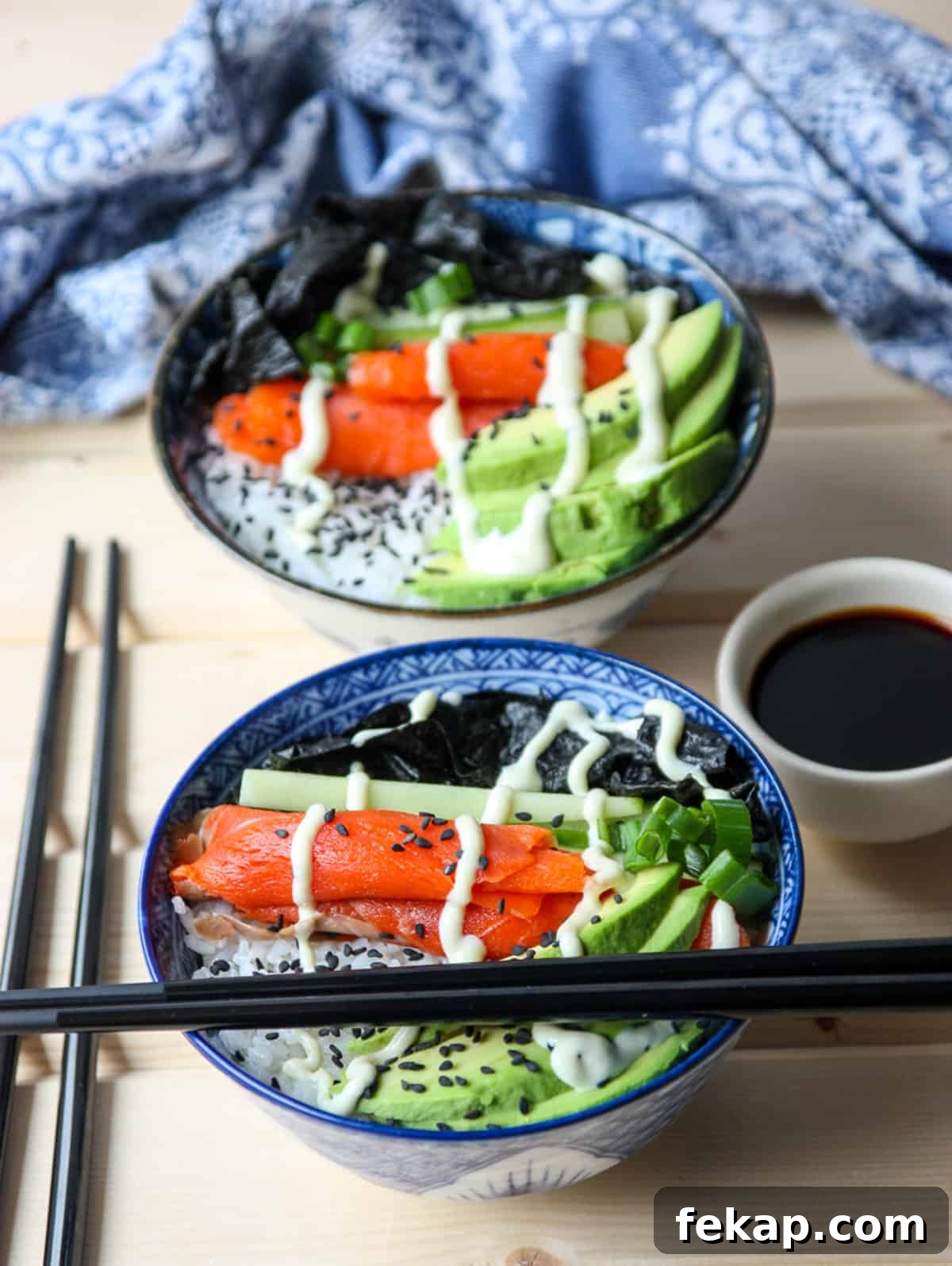
If you love easy bowl recipes, try building meals with your favorite combinations of grains, vegetables, protein, and sauce. Pizza bowls, burrito bowls, quinoa salads, and sushi bowls are all simple ways to turn familiar flavors into satisfying meals.
Did you make this recipe? Please leave a rating in the comments and let us know how it turned out. If you made any changes, share them too. Your feedback is always appreciated.
Recipe
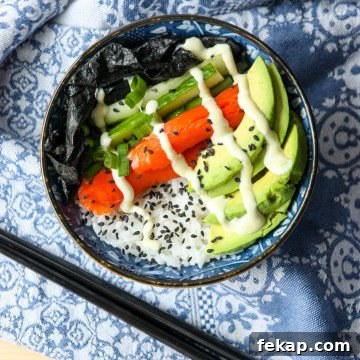
Salmon Sushi Bowls
Ingredients
Wasabi Mayonnaise
- 2 tablespoons real mayonnaise
- 1 tablespoon wasabi paste
- 1 teaspoon rice vinegar
Bowls
- 1 cup sushi rice, cooked and cooled to room temperature
- 2 sheets nori, dampened and cut into strips
- 4 oz smoked salmon
- 1 cup cucumber, cut into matchsticks
- 1 avocado, sliced
- 2 scallions, sliced
- 1 teaspoon black sesame seeds
- Soy sauce, for serving
Instructions
Wasabi Mayonnaise
- In a small bowl, whisk together the mayonnaise, wasabi paste, and rice vinegar. Refrigerate until ready to use.
Bowls
- Divide the cooked sushi rice between two serving bowls.
- Dampen the nori with cold water, cut it into strips, and divide it between the bowls.
- Roll the smoked salmon slices into small cigar shapes and add them to the bowls.
- Top each bowl with avocado, cucumber, and scallions.
- Sprinkle with black sesame seeds and drizzle with wasabi mayonnaise.
- Serve with soy sauce on the side.
Notes
You can substitute another short-grain rice, such as arborio, for sushi rice.
Use less wasabi paste if you prefer a milder sauce.
If you cannot find wasabi paste, sriracha makes a tasty substitute.
Use gluten-free soy sauce or tamari to make this recipe gluten-free.