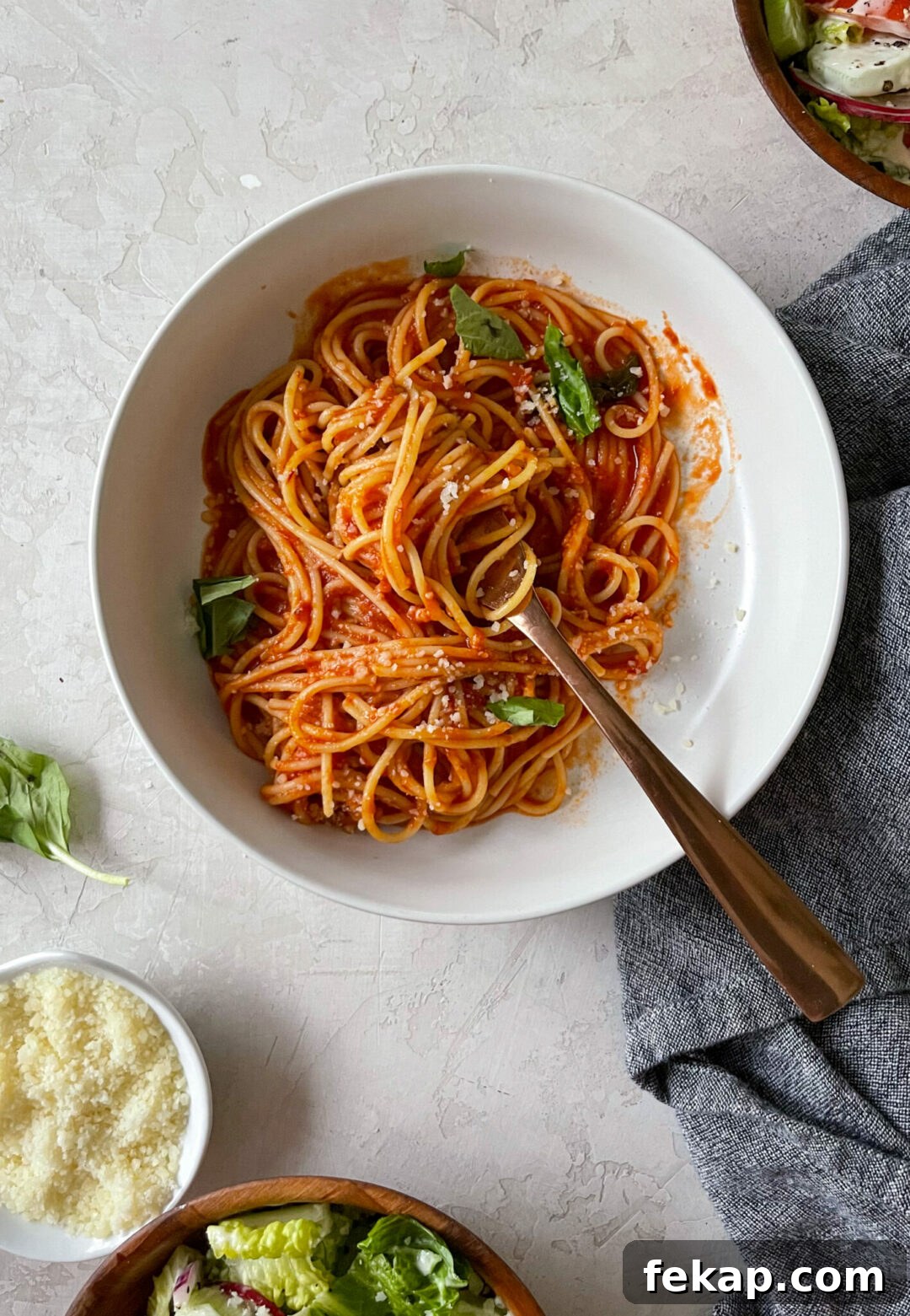
Classic spaghetti pomodoro inspired by The Bear has become a household favorite. With canned crushed tomatoes, onion, butter, olive oil, garlic, and a few simple techniques, you can build a layered, comforting sauce perfect for spaghetti. It only asks for a little patience.
Are you hooked on the kitchen drama of The Bear like so many of us? The show’s intense, authentic kitchen moments have inspired home cooks to recreate simple, well-made dishes. One of those dishes is the classic spaghetti pomodoro — unassuming but incredibly satisfying when you treat each ingredient with care.
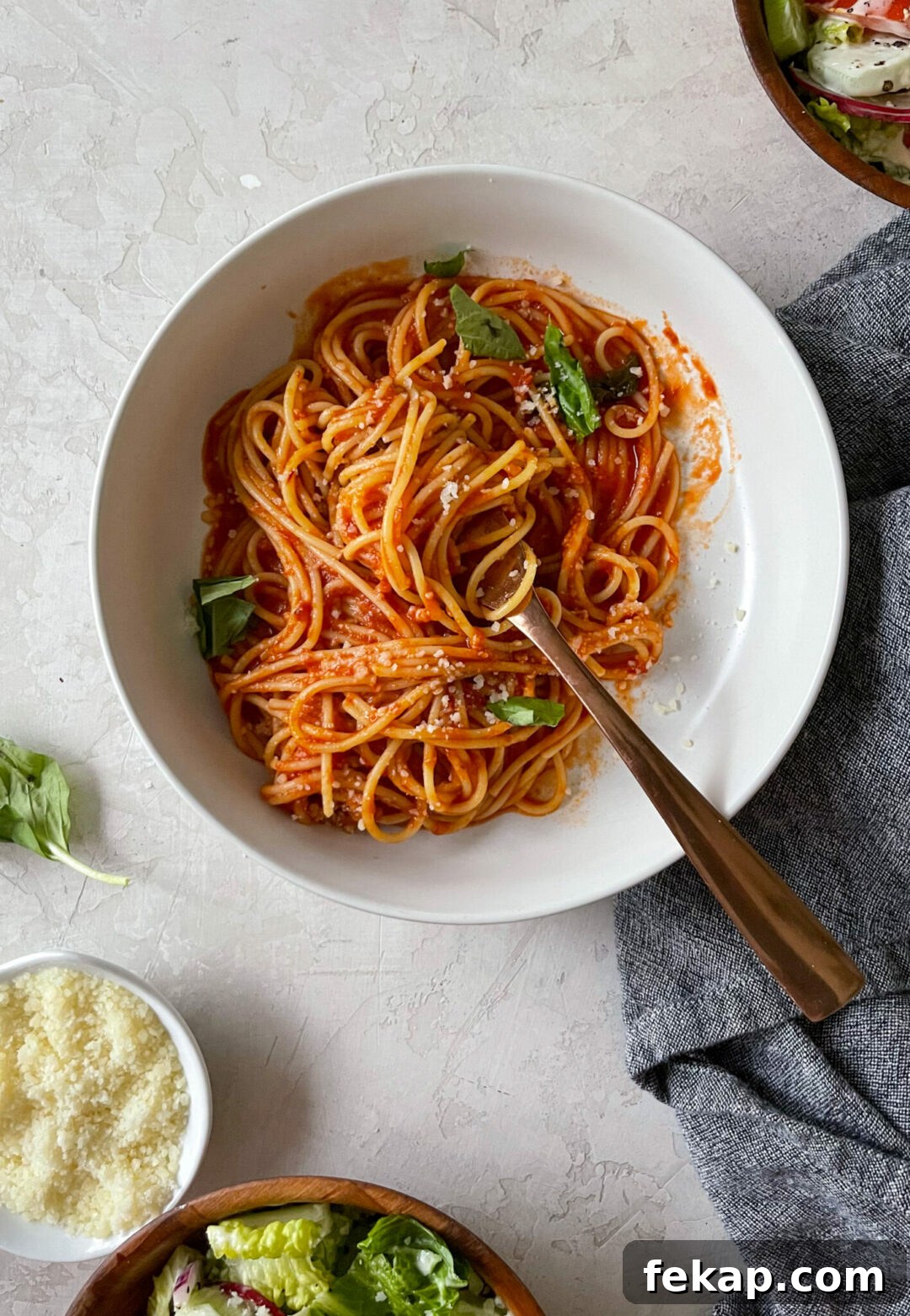
All you need to make a generous batch of spaghetti pomodoro sauce:
- canned crushed tomatoes (two 28 oz cans)
- extra-virgin olive oil
- unsalted butter
- 2 yellow onions
- tomato paste
- kosher salt
- garlic cloves
- fresh basil
- crushed red pepper flakes
- spaghetti noodles
This recipe yields a large pot of sauce — enough for a family of 4 with leftovers, or to feed 6–8 if you serve generous portions. Leftover sauce freezes beautifully, which makes it handy for busy nights or when your kitchen is under renovation.
Key tip: salt as you go
One of the easiest ways to improve a tomato sauce is to add salt gradually while you cook. Whenever you add an ingredient, season it with a pinch of salt. This builds flavor at every stage instead of trying to fix seasoning at the end.
How to make it
- Choose a heavy-bottomed Dutch oven or large sauce pot and warm it over medium heat. Add the olive oil and let it warm for a minute. Sprinkle in crushed red pepper flakes to taste and a generous pinch of salt, then stir to combine.
- Add the onions, cut-side down. For this sauce the onions are mainly there to impart sweetness and depth — they can be left in large pieces and removed later. Cook about 5 minutes to soften and begin browning.
- Add most of the butter (reserve a few tablespoons for finishing) and the sliced garlic. Cook, stirring occasionally, until the garlic is fragrant but not browned — about 5–7 minutes. Salt again lightly.
- Stir in the tomato paste and let it toast in the fat for several minutes. This step concentrates the tomato flavor and removes any raw paste taste.
- Pour in the crushed tomatoes. If you like a slightly thinner sauce, rinse one tomato can halfway with water and add that too. Season with several pinches of salt, stir, and bring the pot to a gentle simmer.
- Lower the heat and let the sauce simmer for about 30 minutes, stirring occasionally. This slow simmer lets the flavors meld and the sauce develop body. If you want more basil-infused depth, add a handful of basil leaves during the simmer; for a brighter, fresher basil finish, hold them until the end.
- When the sauce has simmered, bring a separate large pot of heavily salted water to a rolling boil and cook the spaghetti. Check the package for timing and stop the pasta about 3–4 minutes before it’s fully done so it can finish cooking in the sauce.
- Before combining, remove and discard (or compost) the large onion pieces if you prefer a smoother plate. If you want to save sauce, portion out what you won’t use and freeze it in an airtight container.
- Reduce the sauce heat to low and add a few tablespoons of butter plus 1/4 to 1/2 cup of reserved pasta water to loosen and enrich the sauce. Using tongs, transfer the drained pasta directly into the sauce pot and toss to coat. Add the remaining butter, toss, and cook for about 3–4 minutes until the noodles are perfectly al dente and well coated.
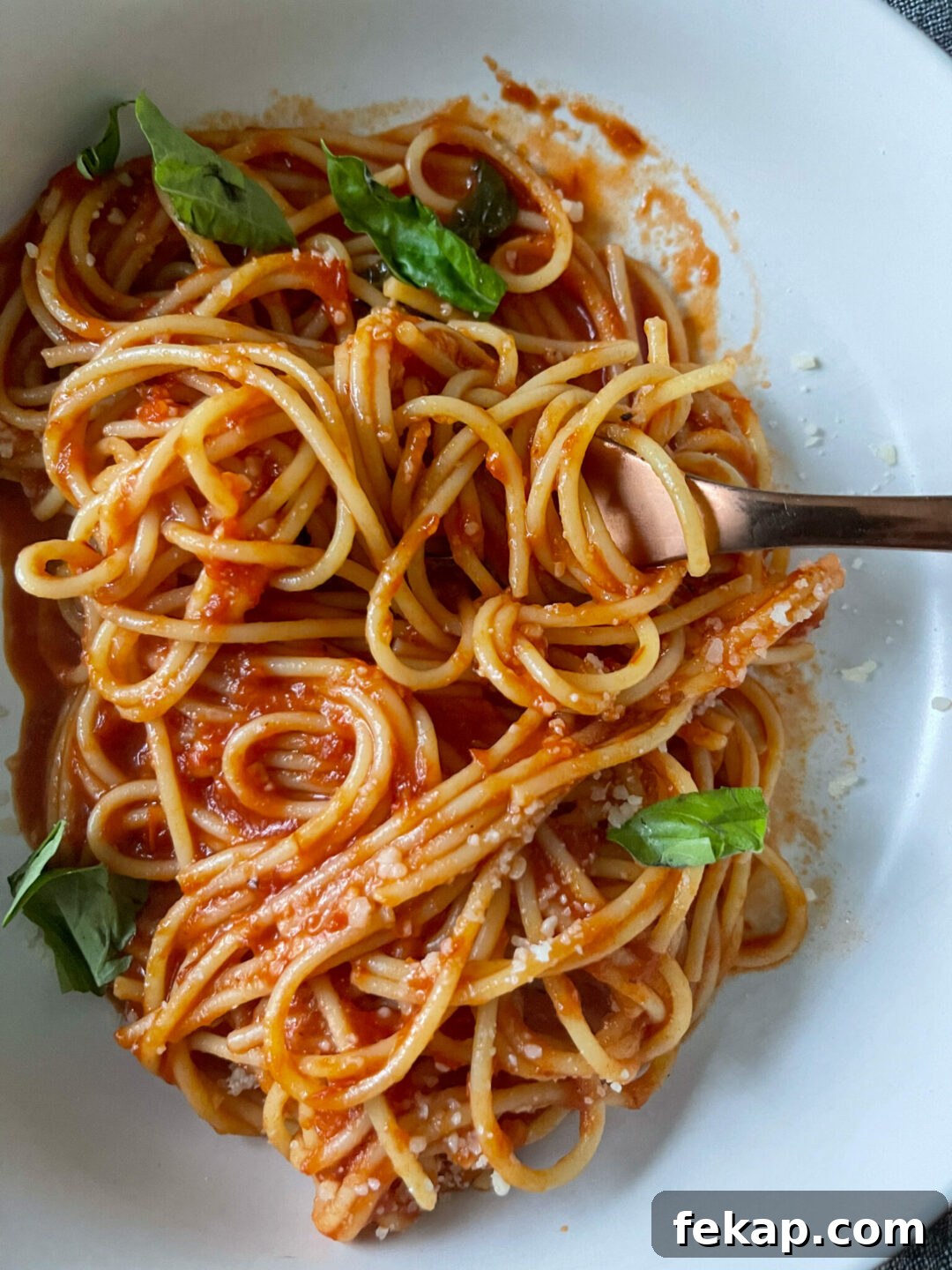
- Serve the spaghetti pomodoro in bowls, spooning extra sauce over each portion. Finish with torn fresh basil leaves and a generous grating of Parmesan. A side of garlic bread makes a classic companion.
Freezing and reheating
Cool any leftover sauce quickly, then store in freezer-safe containers. Thaw in the refrigerator overnight and reheat gently on the stove; add a splash of water or a knob of butter if it needs loosening. The sauce also works well straight from the freezer heated slowly on low.
This straightforward pomodoro rewards a little attention and a few simple techniques: salting in layers, toasting tomato paste, and finishing the pasta in the sauce. The result feels both rustic and refined — the exact kind of comfort food that keeps people coming back for seconds.