Spirulina Gomasio
I am always happy to try new and intriguing foods, especially when they appear on a shelf looking unusual enough to raise a question or two. This habit can be rather unpredictable. Sometimes I discover something delicious, original, and genuinely useful in the kitchen; at other times, I end up with a product that tastes so unpleasant that it goes straight into the category of never again. Still, I like to think of these little experiments as part curiosity, part research, and part culinary adventure.
My organic grocery store seems to know this weakness of mine very well. From time to time, it sets up small displays designed to catch the eye of shoppers who are tempted by new ingredients, traditional condiments, and health-oriented foods. I usually approach these displays with a little caution. Some products are so heavily marketed as “good for you” that they stop looking like real food and start feeling more like medicine in disguise. But every now and then, something manages to look both wholesome and genuinely appetizing. That is exactly what happened when I came across a small bag of spirulina gomasio.
I had never heard of spirulina gomasio before, but the name alone was enough to make me curious. It sounded both Japanese and oceanic, earthy and mysterious, like the kind of condiment that might transform a simple plate of vegetables or rice into something more interesting. So I bought the bag, brought it home, and began reading more closely to understand what I had just added to my pantry.
A little explanation may be useful. Gomasio is also known as sesame salt. It is traditionally made by grinding sea salt together with toasted sesame seeds, creating a fragrant, nutty, mineral-rich seasoning that is widely used in Japanese cooking. The word comes from “goma,” the Japanese word for sesame. Because the salt is blended with sesame rather than used on its own, gomasio offers flavor, aroma, and texture at the same time. It can be sprinkled over rice, noodles, vegetables, salads, or other simple dishes when they need a savory finishing touch.
Spirulina, on the other hand, is a blue-green algae known for its deep color and high concentration of vegetable protein. It has often been described as one of the most protein-rich whole foods available, and it has been consumed for centuries. The Aztecs, for example, harvested it from a lake that once existed in the area where Mexico City now stands. Under a microscope, spirulina has a delicate spiral shape, which explains its name. In powdered form, it has a distinctive marine character and a color that immediately suggests the sea, even before you taste it.
Spirulina is also known for being rich in nutrients, including vitamins, minerals, phytonutrients, antioxidants, and iron. Because of this nutritional profile, its cultivation has been discussed as one possible way to help address malnutrition, particularly in parts of Africa. Some people also associate spirulina with therapeutic benefits for various health concerns, although scientific research is still ongoing and not every claim has been fully confirmed. For everyday cooking, however, the most important point is much simpler: when combined with sesame salt, spirulina becomes a flavorful condiment rather than just a nutritional supplement.
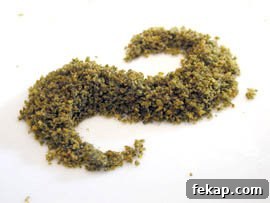
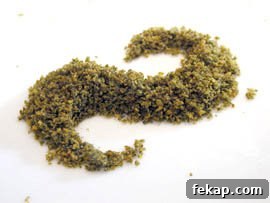
The result is surprisingly appealing. This spirulina gomasio has a flavor that I would describe as a hazelnut from the sea: nutty, toasted, lightly salty, and gently reminiscent of seaweed. It is savory without being overpowering, and it adds depth to very simple foods. The texture is unusual too. It is not quite a powder and not quite flakes; it has a soft, mossy, slightly crumbly quality that clings nicely to whatever it touches. The package suggests using it to season pasta, rice, and salads, all of which sound like natural pairings. So far, though, I have enjoyed it most simply sprinkled over raw, crunchy vegetables, especially carrots and radishes. Used this way, spirulina gomasio brings freshness, saltiness, nuttiness, and a subtle taste of the sea in just one pinch.