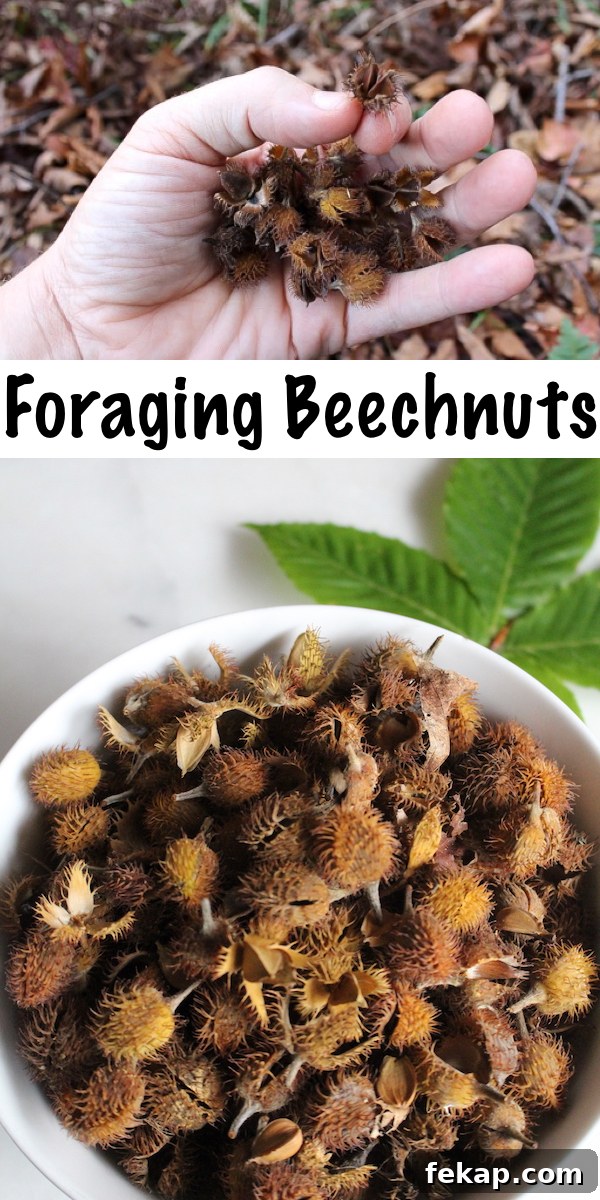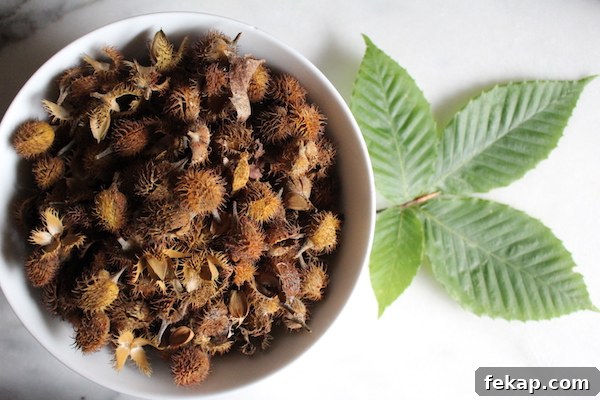
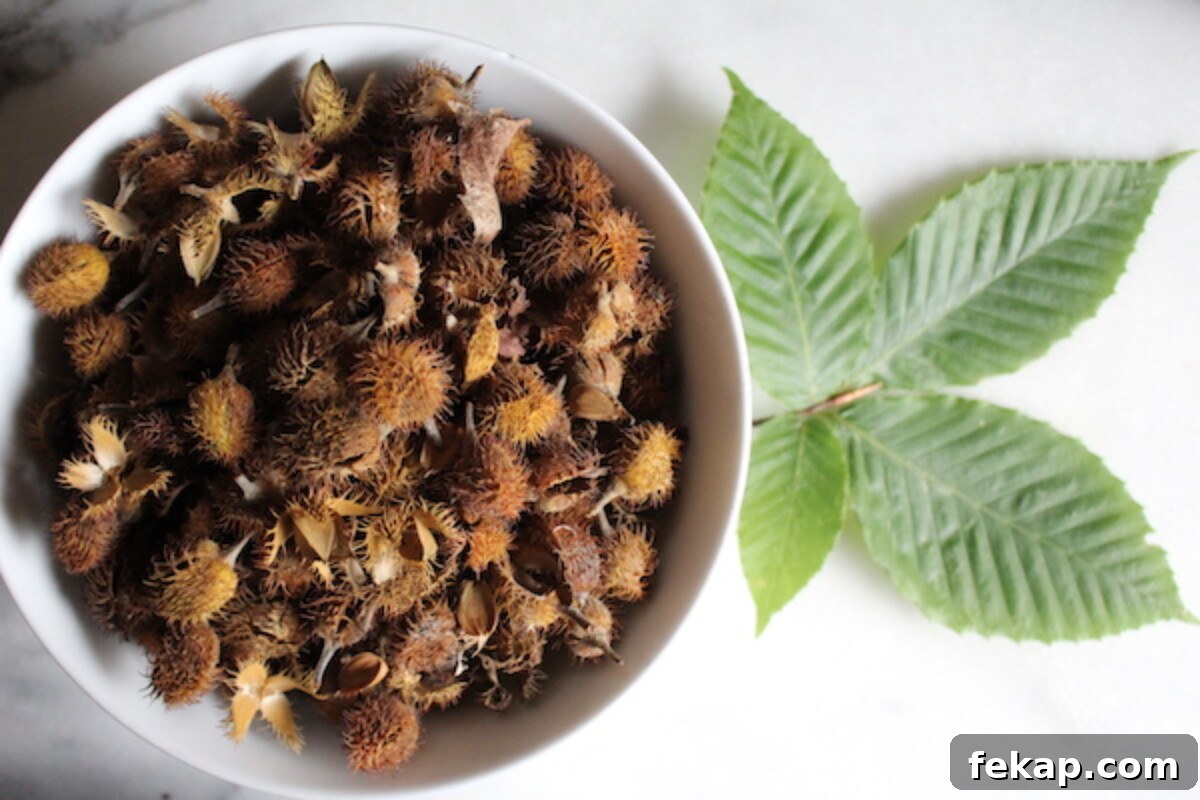
Beech nuts are small, flavorful, nutrient-dense wild nuts produced by beech trees (Fagus species) in autumn. Their bright, spiky outer husks are easy to recognize on the forest floor, and once you know what to look for, they can be one of the most rewarding wild foods to forage in fall.
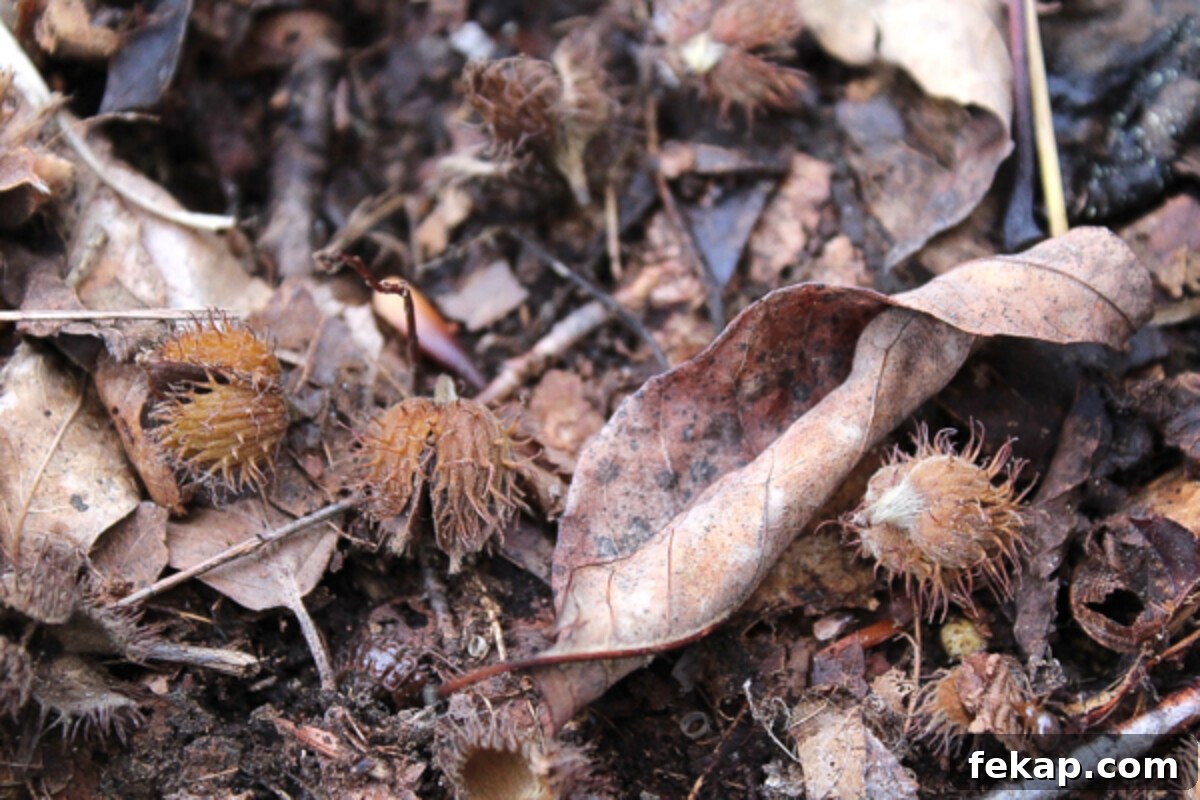
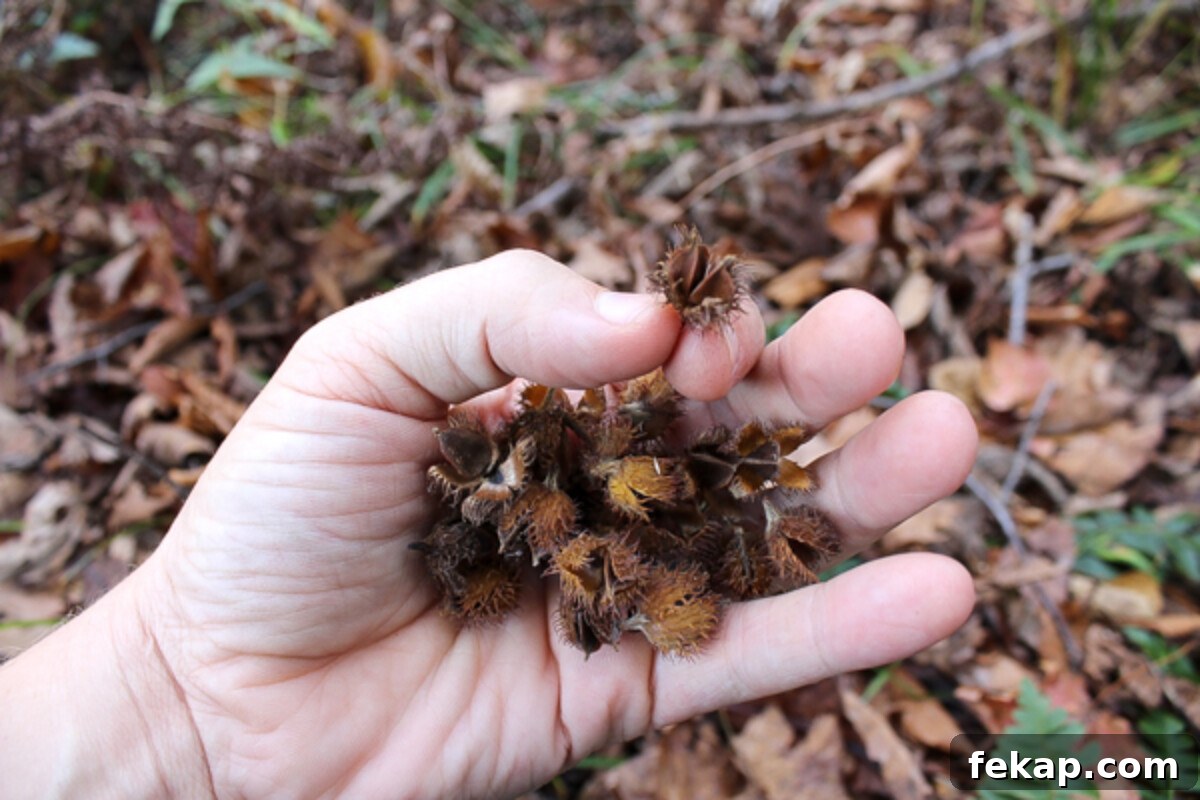
I first noticed beechnuts while walking through the woods. A tiny, brightly colored pod with a prickly texture caught my eye among the fallen leaves. When I looked closer, I realized the ground around a smooth gray-barked tree was scattered with them.
After a little research, I learned that these were beechnuts. They were once a familiar food in both Europe and North America, but today many people have never heard of them. They are not easy to harvest mechanically, and they are much smaller than the cultivated nuts most people buy or grow, which helps explain why they have largely disappeared from modern kitchens.
For foragers, beechnuts are a valuable fall food. They contain roughly 50% fat and about 20% protein, making them a useful source of calories at a time of year when many wild foods are fruits rich in natural sugars and carbohydrates. By comparison, acorns contain about 7% protein.
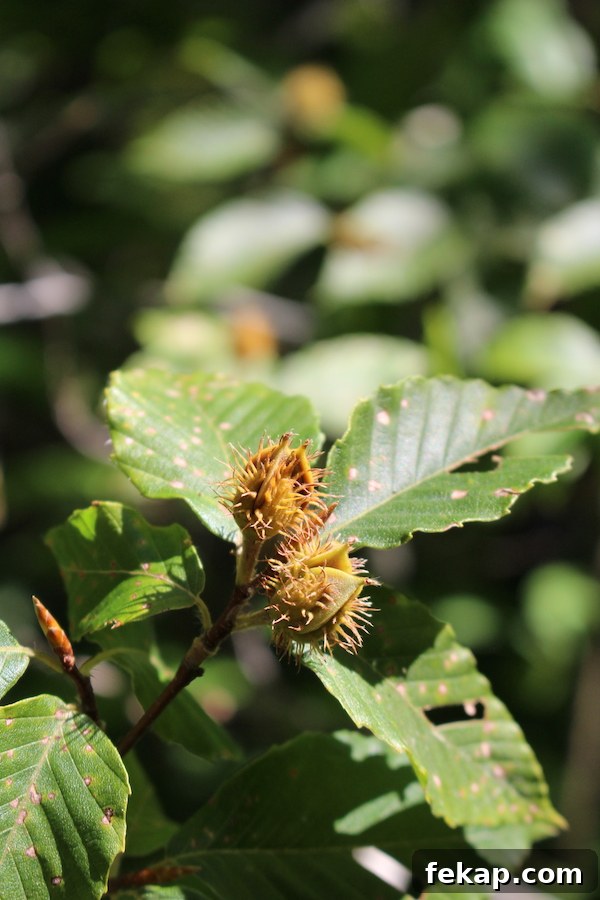
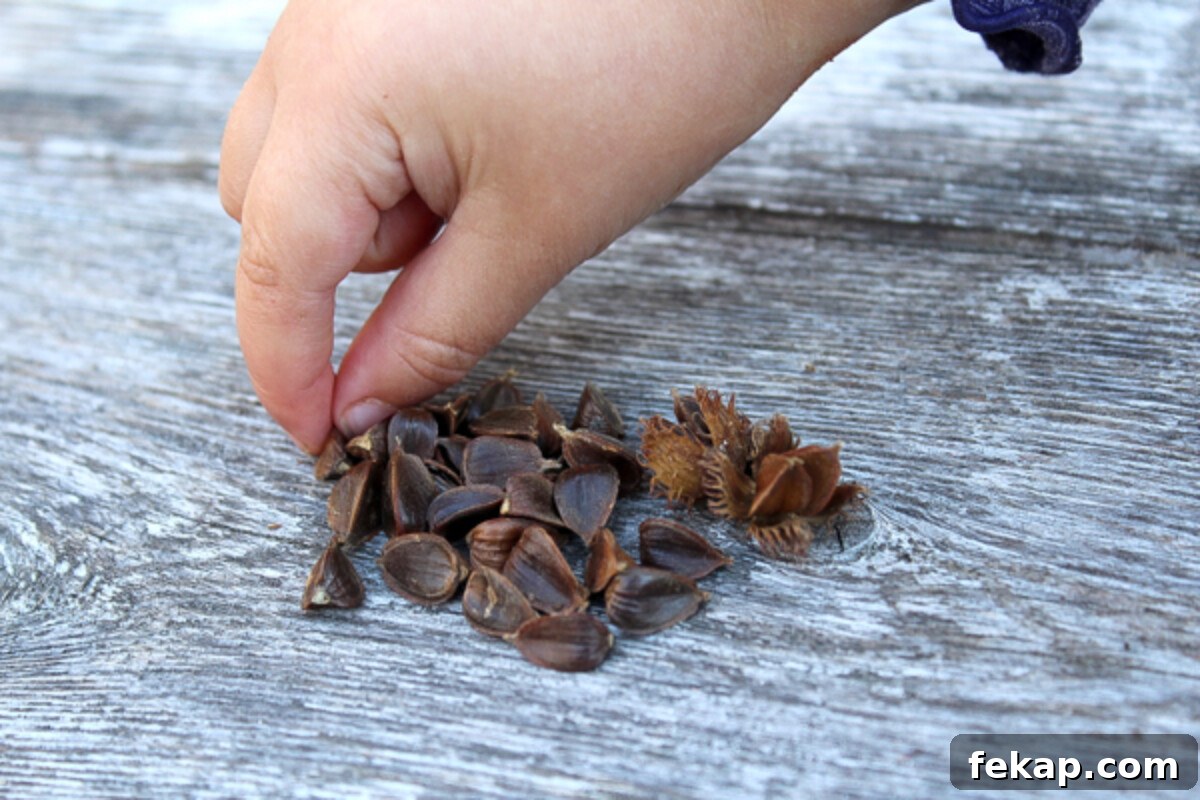
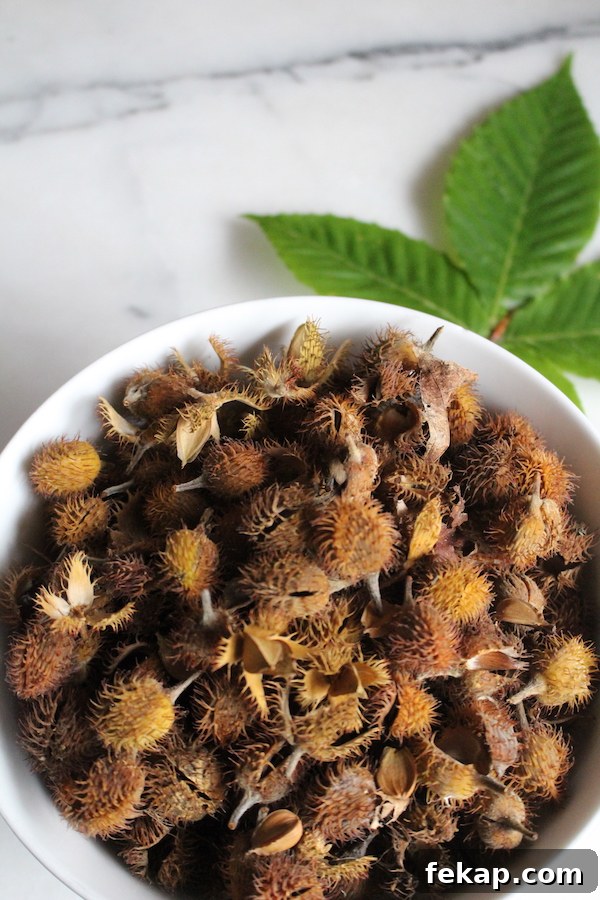
Beechnuts grow inside a distinctive spiky outer husk that opens when ripe. Inside are usually two small, triangular nuts, each with three pointed sides. Beneath the outer husk, each nut has a thin, fibrous inner shell that can be removed with a fingernail once the nuts have dried and cured.
In Vermont, beechnuts usually ripen and drop in late September. If you wait until mid-October, many will be hidden under leaf litter, but they are still possible to find. Rake back the leaves beneath a beech tree and look for the familiar velcro-like husks.
The nuts have a mild tannic flavor, but they are still pleasant enough that even children may enjoy them straight from the shell. A few raw beechnuts are generally not a concern for many people, but they are best cooked before eating in quantity.
Raw beechnuts contain saponin glycoside, which may cause stomach upset if eaten in large amounts. Roasting improves the flavor and helps neutralize the toxin, making the nuts safer and more enjoyable to eat.
Identifying Beech Trees
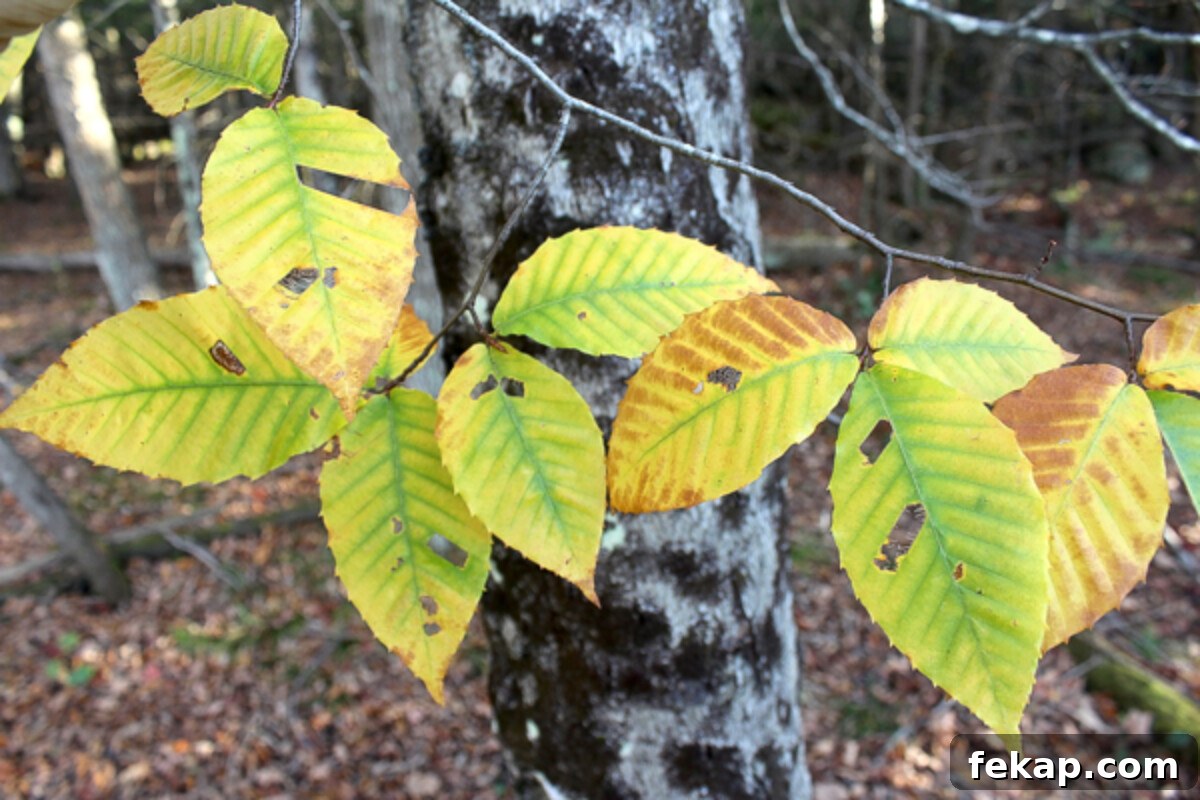
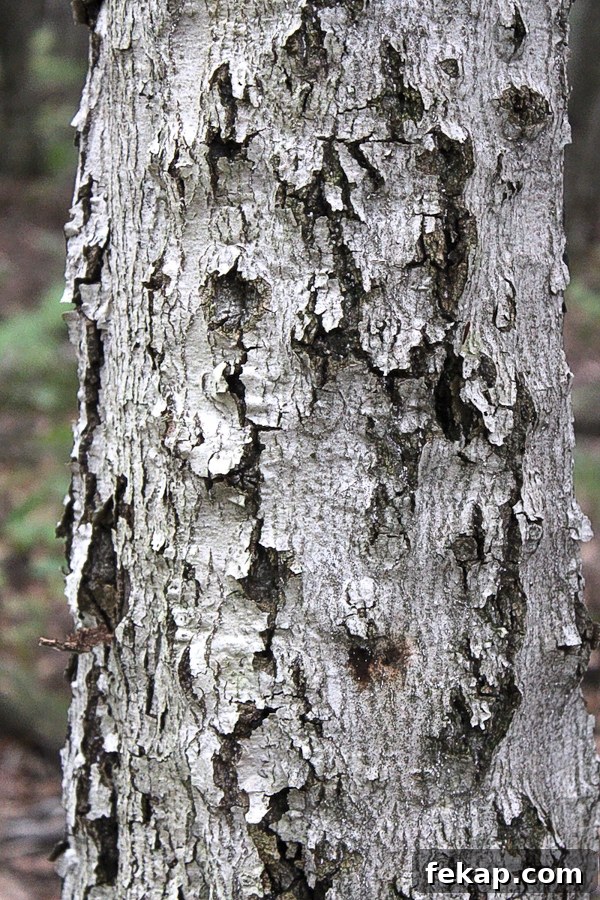
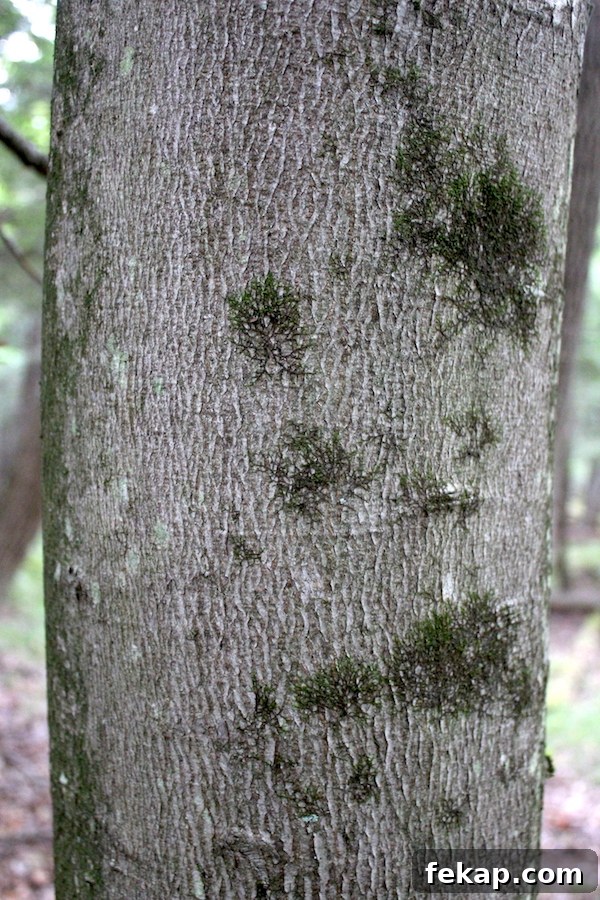
To identify a beech tree, start by looking for smooth gray bark. Mature beech trunks are often strikingly smooth compared with the rough bark of many other hardwoods. Follow the trunk upward and look for oval leaves with pointed tips and small points along the edges. The leaves are usually 2 to 6 inches long, shiny green in summer, and copper-colored in fall.
Beech leaves also have clear pairs of veins running outward from a central vein. Each vein ends at a small point along the leaf edge, which is a helpful feature when identifying the tree.
Some beech trees have bark with scales, cracks, or rough patches caused by beech scale disease. Diseased trees often produce fewer nuts, and the nuts they do produce may be empty. You may remove the outer husk and inner shell only to discover there is no nut inside.
Beech scale disease involves both an insect and fungi. A small scale insect, Cryptococcus fagisuga, wounds the bark. Those wounds can then be colonized by fungi, including Neonectria ditissima and Neonectria faginata. The fungal infection is what eventually damages or kills the tree.
Once the cycle begins, it can be difficult to stop. The fungus creates larger wounds in the bark, which allows more insects to colonize the tree, and those insects create more openings for the fungus.
Unlike some tree species that have been devastated by introduced pests and diseases, beech trees often persist. They may die back from the top, but many recover by sending up suckers from the base. The drawback for wildlife and foragers is that as the disease progresses, affected trees may produce more empty beechnut shells.
For the best beechnut harvest, look for healthy beech trees with smooth gray bark and a good crop of full husks beneath them.
Processing Beech Nuts
Processing beechnuts is simple, though it does take time. The outer husks can be removed by hand, or you can rub handfuls of husks between towels and then separate the nuts from the chaff. The husks are prickly, but they are not sharp like chestnut burrs. Their texture is closer to velcro than thorns.
After removing the outer husks, let the nuts dry for about two to three weeks. Like many nuts, beechnuts are moist when they first fall from the tree, and their flavor improves after curing. Spread them in a single layer in a dry, well-ventilated indoor space.
Once cured, beechnuts can keep for a long time if the inner shells remain intact. If you do not plan to use them right away, store them in their shells in a tight-sealing, rodent-proof jar or container.
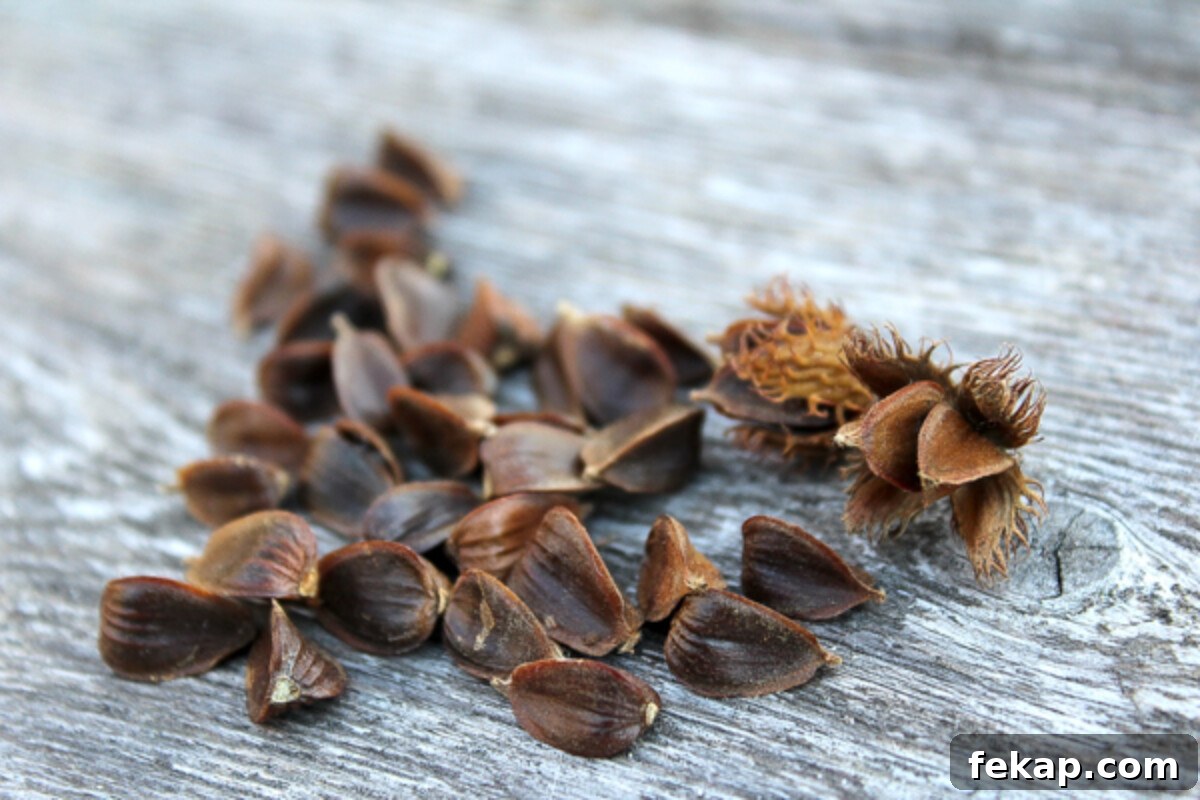
If you want to eat or cook with the beechnuts immediately, remove the thin inner shell. This step is the most time-consuming part of processing a large harvest. The shell is delicate and can usually be peeled open with fingernails or cracked carefully before pulling it apart.
The process is similar to shelling sunflower seeds: not difficult, but it requires patience. Inside each triangular shell is one small beechnut.
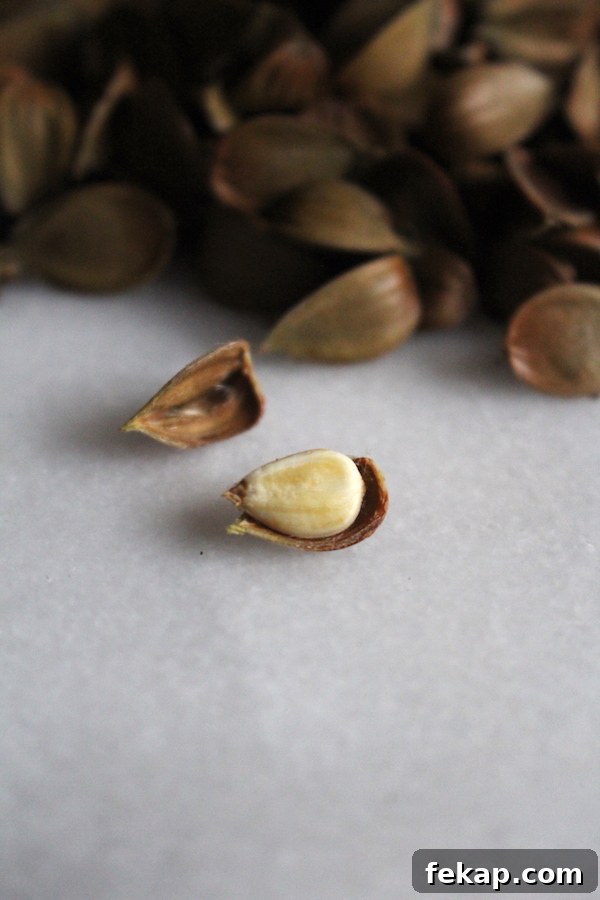
Some beechnuts, especially from European beech (Fagus sylvatica), may have an additional papery coating with tiny hairs that can irritate the throat. If you encounter this, rub the shelled nuts between towels and pick out the clean white nutmeats. American beech (Fagus grandifolia) may not show this as commonly.
After shelling, roast the beechnuts in a dry pan for about 3 to 5 minutes, just until fragrant. Roasting improves their flavor and helps make them suitable for eating.
Culling Beechnuts
When foraging beechnuts, expect part of your harvest to be empty shells. Some blanks are caused by tree disease, while others are the result of insects feeding on the nutmeat before you find it.
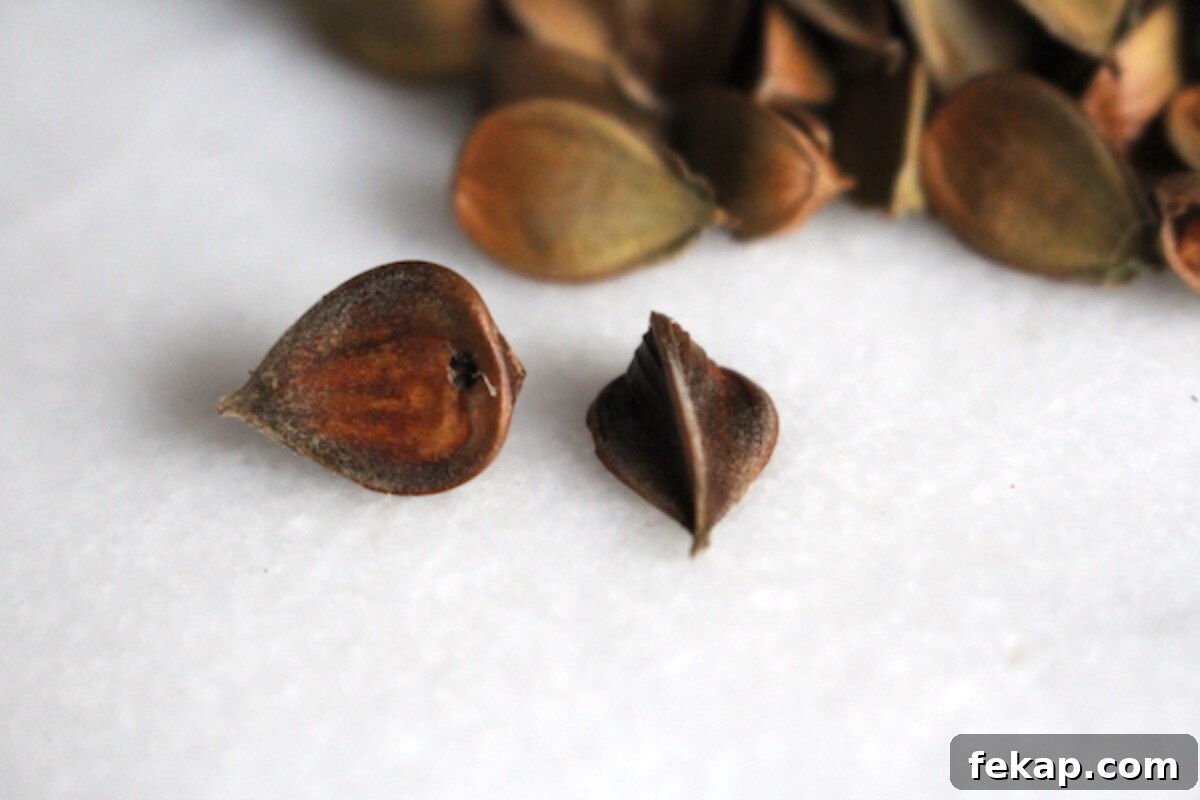
Often, you can spot an empty beechnut before opening it. The shell may look concave, flattened, or slightly collapsed because there is no nut inside.
If insects have already eaten the nut, the shell may show a tiny exit hole. Discard any nuts with insect holes or clearly collapsed sides before curing. This simple sorting step saves a great deal of time later.
Historical References to Beechnuts
Beechnuts appear in historical accounts and older food traditions. In Farmer Boy, one of the Little House books, Almanzo and his family gather beechnuts and process them using the same equipment used for oats, beans, and grains:
“’What say we run some beechnuts through?’ Father asked. So they pitched beech leaves into the hopper, and now the whirring fans blew away the leaves, and the three-cornered brown nuts poured out. Almanzo filled a peck-measure with them, to eat that evening by the heater.”
Cooking with Beechnuts
Today, beechnuts in the United States are often treated as a forager’s curiosity or survival food, but they have a much broader culinary history. In Europe, beechnuts have been used for cooking, pressed for oil, roasted, and ground.
The nuts can be pressed into a rich oil for dressings, with reported yields of about 1 quart of oil from 10 pounds of nuts. They have also been roasted and ground as a coffee substitute. Some foragers consider roasted beechnut coffee one of the better wild coffee alternatives.
In the United States, beechnuts were historically ground into flour and used in baked goods. Replacing part of the flour in cakes with beechnut flour could stretch grain supplies while adding flavor and nutrition.
Recipes for Cooking with Beechnuts
Beechnuts can be used in simple wild food recipes, including nut butter, muffins, pies, and baked goods. The following recipes are adapted from older wild food traditions and work best with roasted, shelled beechnuts.
Beechnut Muffins Recipe
This savory muffin is closer to a rich, buttery dinner roll than a sweet modern muffin. There is no added sugar.
1 cup beechnut flour
1 cup cornmeal
1 cup flour
3 tsp. baking powder
1/2 tsp. salt
2 eggs, beaten
1 1/2 cups milk
2 tsp. butter, melted
1/2 cup beechnuts, chopped
Mix the dry ingredients in one bowl. In a separate bowl, beat together the eggs, milk, and melted butter. Add the wet ingredients to the dry ingredients, then fold in the chopped beechnuts. Pour the batter into greased muffin pans or lined muffin cups and bake at 375°F for 20 minutes.
Oatmeal-Beechnut Pie Recipe
This pie is somewhat like a traditional pecan pie, but thicker and chunkier, with oats, coconut, and chopped wild beechnuts.
1/2 cup beechnuts, finely chopped
3 eggs
3/4 cup rolled oats
1/2 cup butter, melted
1/2 cup dried shredded coconut
1 cup maple syrup
3/4 cup cane sugar
1 unbaked 9-inch pie crust
Beat the eggs, then combine all ingredients in a bowl. Pour the filling into the unbaked pie shell and bake at 350°F for 45 minutes.
Other Beech Products
Beech trees can also be tapped for syrup, much like maple trees. However, tapping beech is not as practical for small-scale home syrup makers. Tapping injures the bark, and because beech trees can already be vulnerable to bark disease, it is understandable to be cautious.
Beech syrup production generally requires a vacuum pump system. Without that equipment, the sap yield is very low, making it more suitable for commercial operations than backyard syrup making.
One commercial producer explained that beech sap only runs under high vacuum, and the syrup yield per tap is much lower than maple. The timing also differs, with beech tapping generally requiring thawed ground so the roots can draw moisture through the vacuum system.
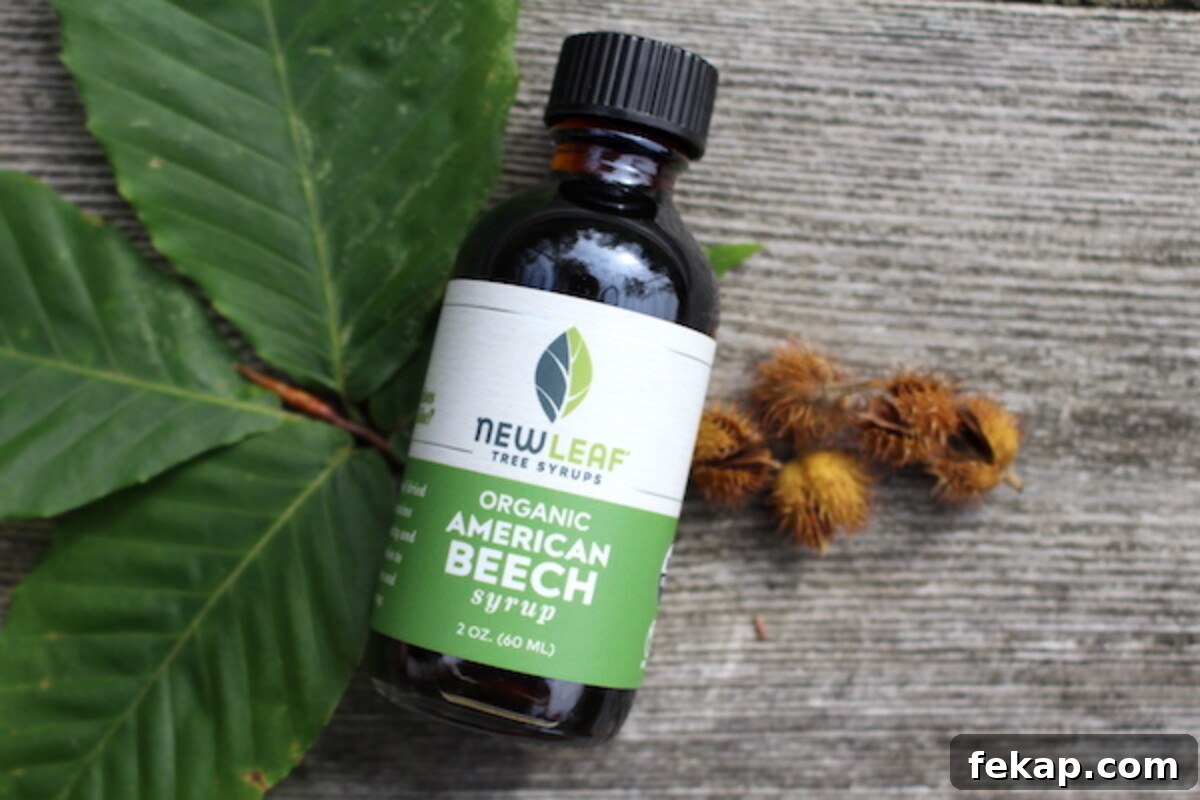
Even if homemade beech syrup is not realistic for most small operations, it is another interesting way to appreciate the beech tree as a food source. Between the syrup and the nuts, beech trees offer more than many people realize.
Once your beechnuts are gathered, cured, shelled, and roasted, they can be eaten by the handful or used in baked goods. They take effort to process, but for patient foragers, beechnuts are a delicious and satisfying wild autumn harvest.