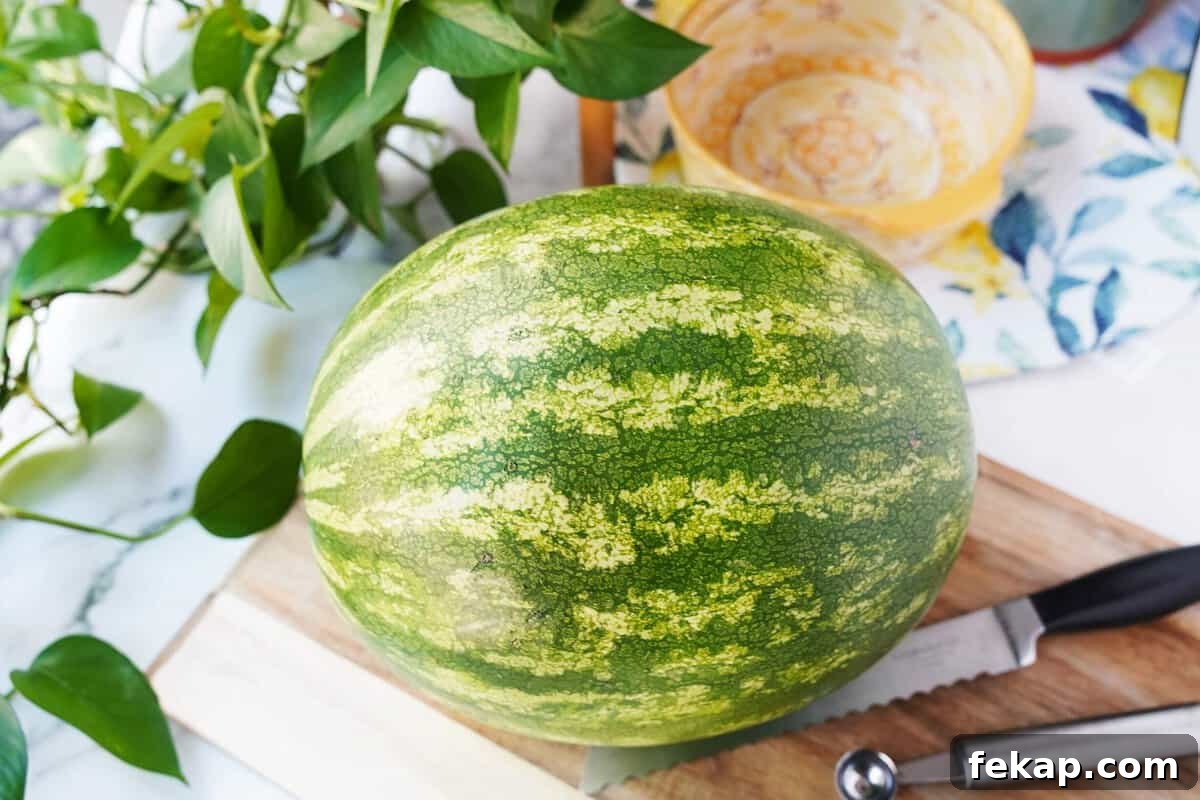
How do you pick a good watermelon? Don’t worry — we’ve got you. Below are reliable tips and easy-to-remember tricks to help you choose a sweet, juicy watermelon every time.
Who doesn’t love the cool, refreshing taste of a perfectly ripe watermelon on a hot summer day? This classic fruit is a staple at picnics, BBQs, and beach trips. At roughly 92% water, watermelon is one of the best fruits to help you stay hydrated during warm weather.
With so many melons to choose from, picking the best one can feel tricky. Use the simple steps below and you’ll be more confident selecting a ripe, flavorful watermelon at the store or farmers’ market.
Ready to learn how to pick a good watermelon?
Start with the Appearance
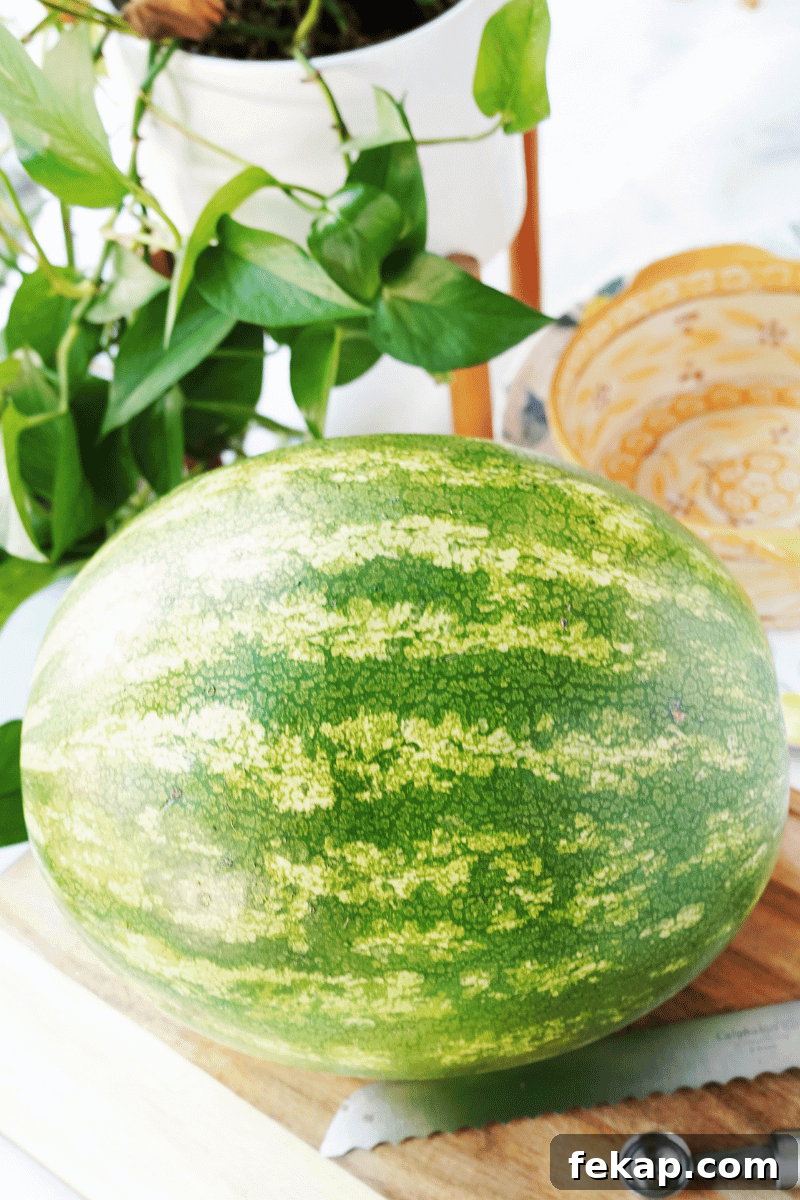
The visual cues are the first things to check. A watermelon’s exterior gives many clues about ripeness and quality.
Color: A ripe watermelon usually shows a deep, even green on the rind. A creamy yellow or orange spot on the underside (the field or “ground” spot) is a good sign it ripened on the vine.
Shape: Look for a symmetrical, evenly shaped melon without unusual bumps or dents. Irregularities can suggest uneven growth or internal problems.
Size and Weight: Pick up a few similar-sized melons and choose the one that feels heaviest for its size. A heavier watermelon generally contains more water and will be juicier.
Surface Condition: Avoid melons with deep cuts, soft spots, or large bruises. Minor scratches are common, but soft areas can indicate overripeness or rot.
Can You Thump a Watermelon?
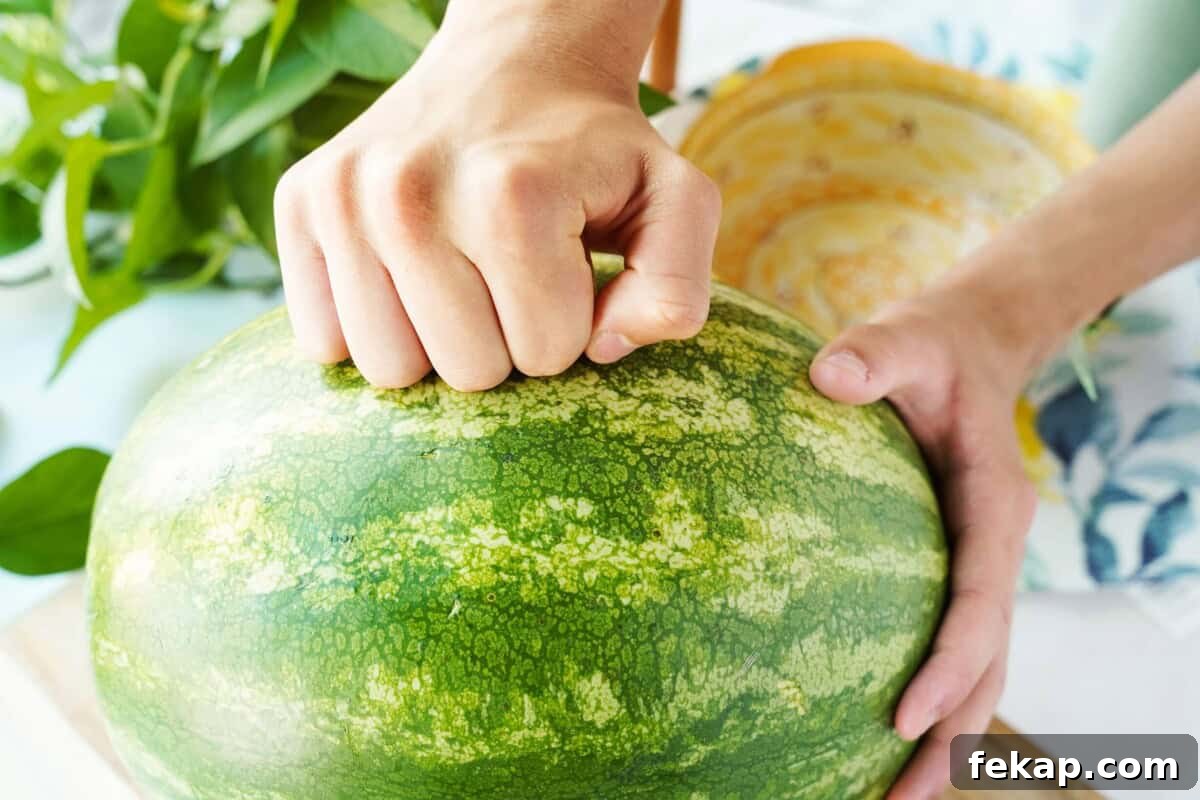
Thumping or tapping a watermelon is a popular tip, but it’s not always reliable on its own. Instead, try the Look, Lift, Turn method for a more consistent result.
Look: Inspect the rind for uniform color and firmness. Avoid melons with cuts, soft spots, or mold.
Lift: Compare weight. A ripe watermelon will feel heavier than an unripe one of the same size due to higher water content.
Turn: Check the underside for a creamy yellow or orange ground spot. A pale or white spot suggests the melon was picked too early.
Find the Sun Spot

The sun spot, also called the field or belly spot, is where the watermelon rested on the ground while growing. That spot reveals how long the fruit was allowed to ripen:
Creamy Yellow or Orange Spot: A golden or creamy spot usually means the watermelon sat in the sun long enough to ripen. Avoid melons with a white or greenish belly spot — those are likely underripe.
How Do You Pick a Good Watermelon?
Combine the visual checks with a feel test. A ripe watermelon is symmetrical, firm, heavy for its size, and has a creamy yellow field spot. If the rind is intact and there are no large soft patches, you’re likely picking a good melon.
One additional quick check is the stem area: if a small portion of stem remains, it should look dry rather than fresh and green. A dry stem often indicates the fruit has fully matured.
With these steps — look for color and even shape, lift for weight, check the belly spot, and inspect the rind — you’ll increase your chances of bringing home a sweet, juicy watermelon.
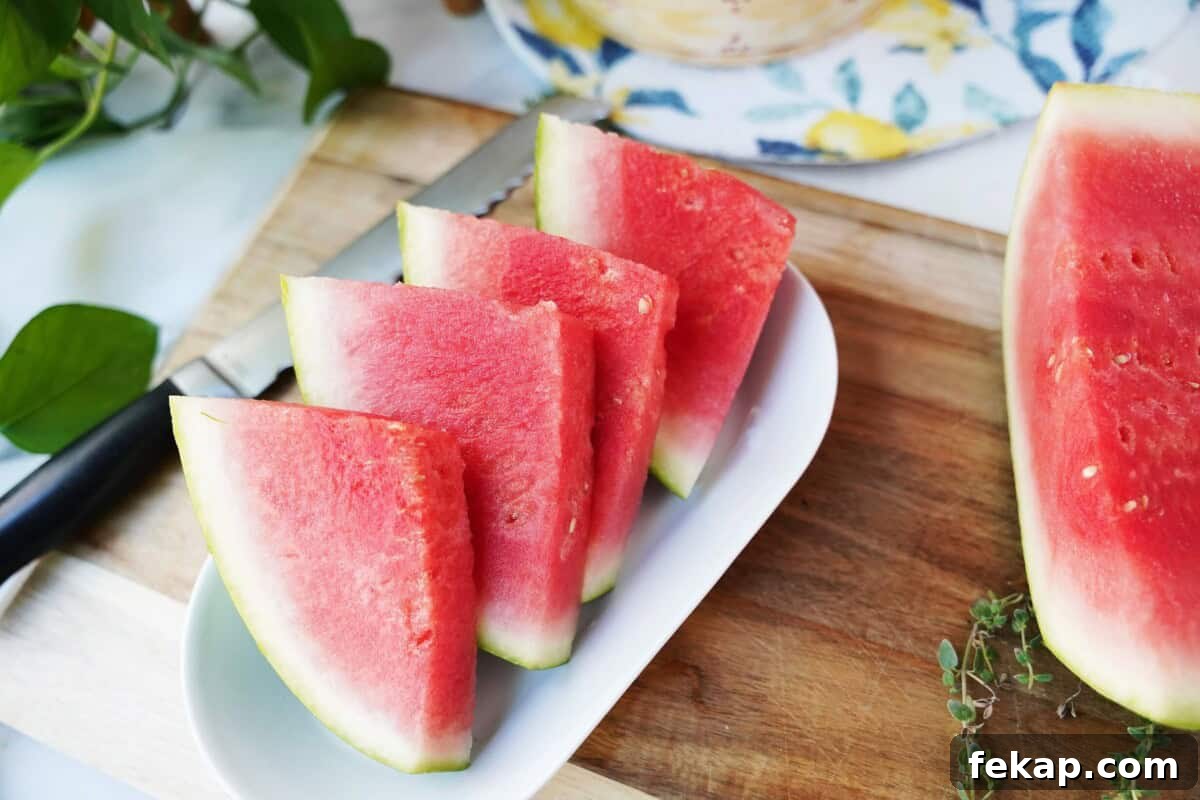
Enjoy the Whole Watermelon
Did you know you can use nearly the entire watermelon? After selecting a great melon, the simplest option is to slice or cube it and enjoy it fresh. But watermelon can also be grilled, blended into popsicles, transformed into treats for pets, or used creatively in salads and sushi-style dishes. Even the rind can be prepared and eaten in a variety of recipes.
More Watermelon Ideas and Recipes
- Watermelon & Cucumber Salad
- Elote-Style Watermelon Salad
- Watermelon Margarita Slices
- Air Fryer Watermelon Rind Churros
- Watermelon S’mores
- Sandia Loca
- Chocolate-Covered Watermelon Bites
- Watermelon Caprese with Balsamic Glaze
- Spicy Tomato & Watermelon Salad
Follow accounts on your favorite social platforms for more watermelon tips, recipes, and inspiration.