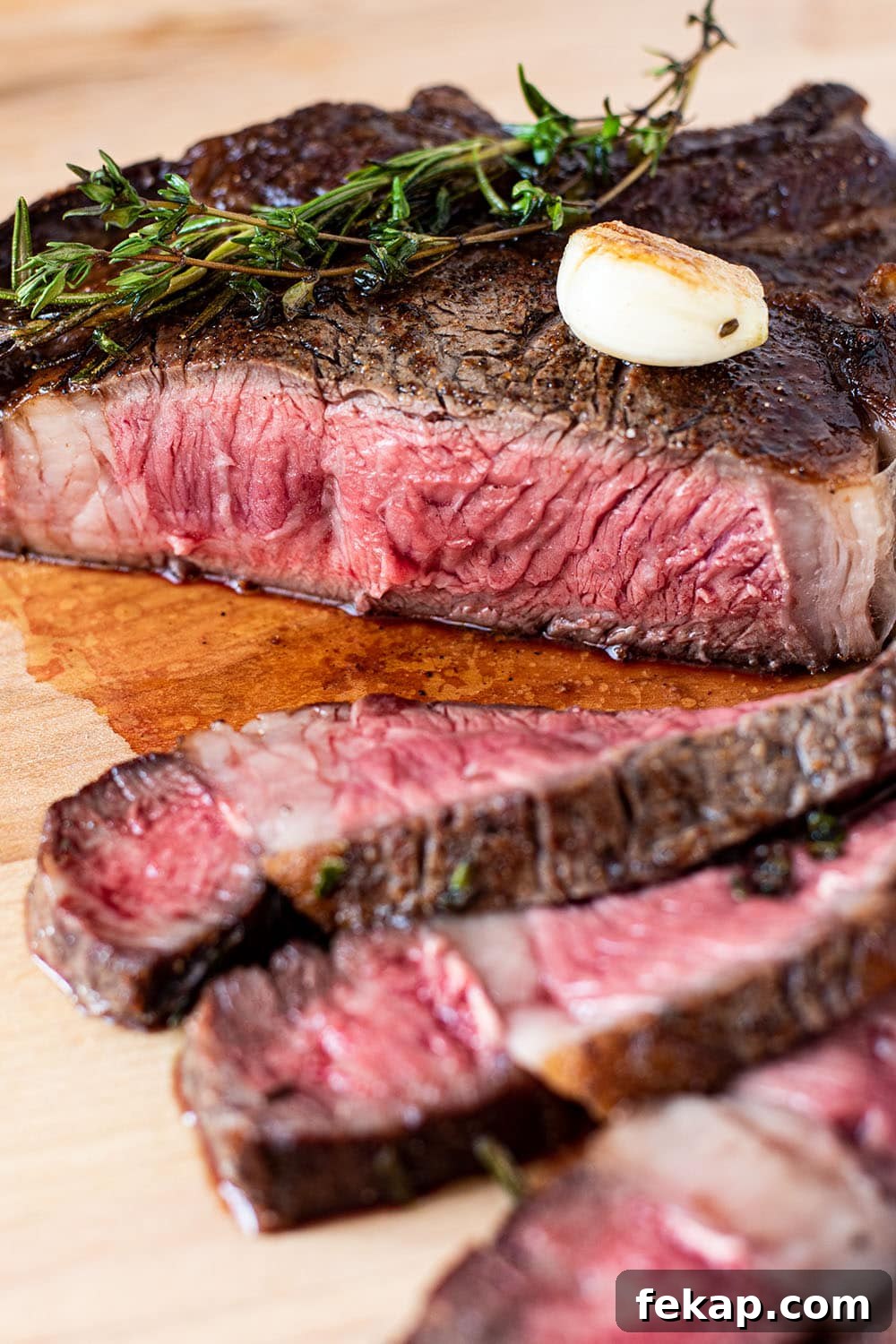
Reverse-seared steak means slow-roasting a steak in the oven and finishing it with a quick, high-heat sear in a skillet. This technique reverses the conventional approach of searing first then finishing in the oven. For thick cuts—roughly 1½ to 2 inches or more—reverse searing delivers exceptionally even doneness from edge to edge and a deeply caramelized crust. The examples below use a 2-inch bone-in cowboy steak roasted for about an hour and seared 60–90 seconds per side to achieve a perfect medium-rare.
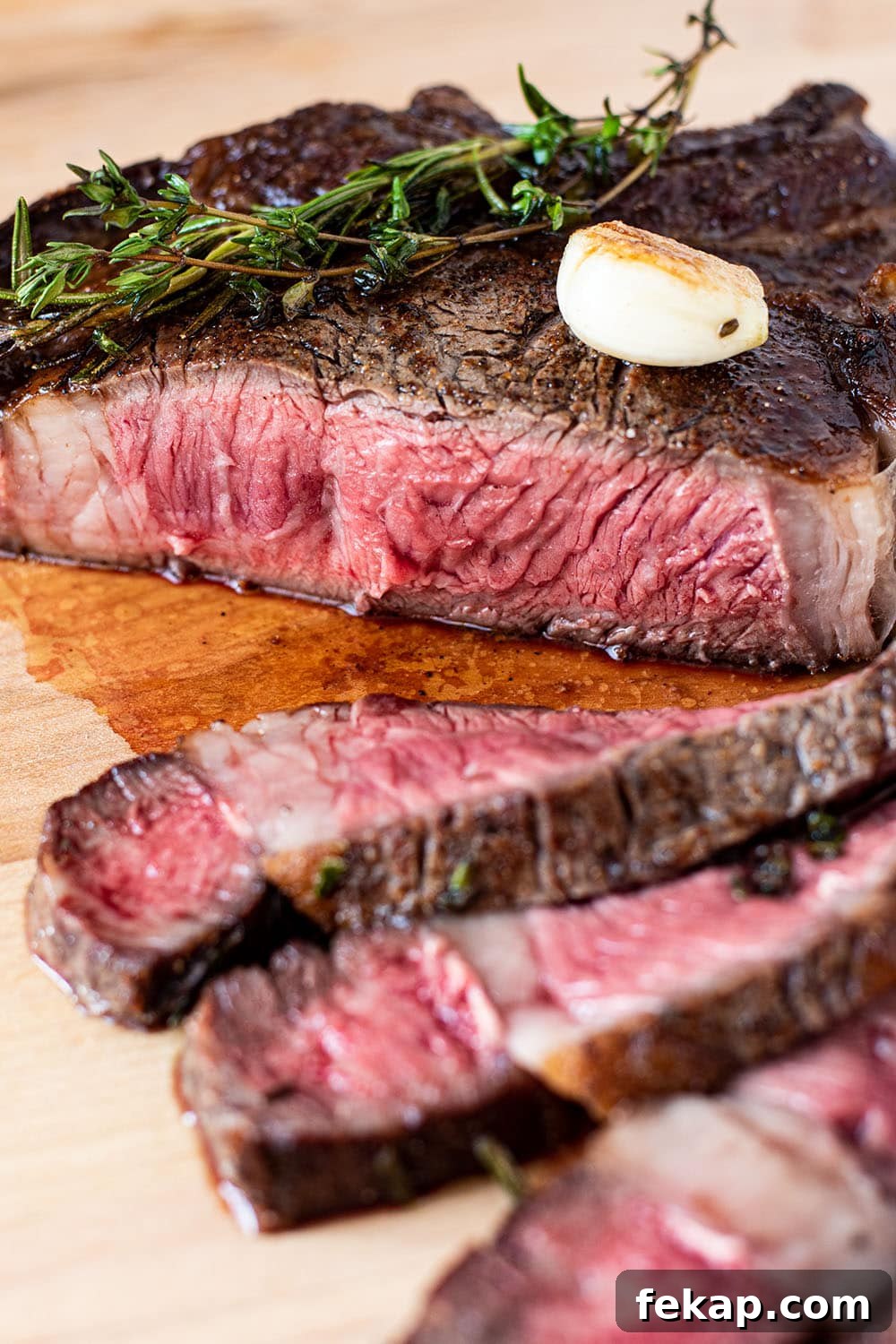
This method is ideal for thicker steaks: when cooked low and slow, the interior heats evenly with far less risk of overcooking the outer layers. Because the steak spends more time in the oven, its surface dries slightly, which promotes a superior crust when you finish with a hot pan sear. If you want a consistent medium-rare and a phenomenal seared exterior, reverse searing is an excellent choice.
Why This Recipe Works
- Even internal temperature: cooking at a low oven temperature gives a wide, forgiving window for medium-rare and reduces the chance of overshooting your target doneness.
- Better crust development: the drier exterior after slow roasting browns more effectively during the final pan sear, producing a deeper, more uniform crust than searing first.
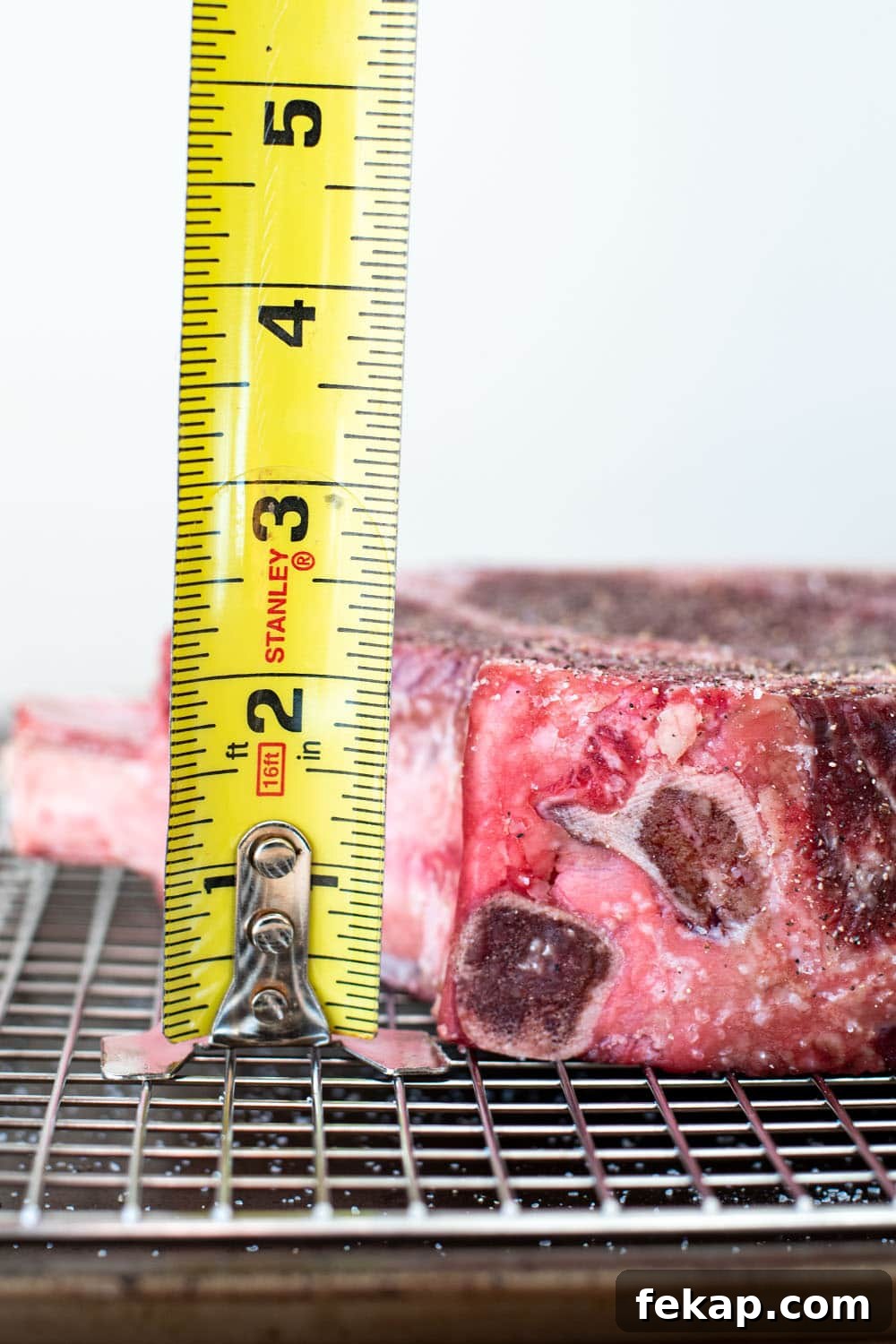
The reverse sear works best with steaks at least 1½–2 inches thick; thinner steaks are likely to overcook during the searing step. A 2-inch steak will typically take close to an hour in a 250°F oven to reach the oven target for medium-rare, and the final sear will add roughly 10°F to the internal temperature.
This approach is similar in spirit to sous vide cooking—both give a consistent internal doneness—but reverse searing often produces a better sear because the exterior is relatively dry before it hits the skillet.
Dry Brining Steak
Dry brining improves flavor and surface texture. Place steaks on a wire rack over a rimmed baking sheet, season liberally with coarse sea salt or kosher salt and freshly ground pepper, and refrigerate uncovered for at least one hour and ideally overnight. The surface will dry slightly, which helps create a deep crust when seared.
Allow steaks to come close to room temperature before cooking: remove them from the fridge 30–45 minutes prior to roasting so they cook more evenly. No additional seasoning is necessary if you dry-brined them earlier.
How to Reverse Sear Steak
The reverse-sear process has three clear steps. Follow them for reliable, restaurant-quality results.
- Season the steak with coarse salt and pepper and let it warm on the counter for 45–60 minutes.
- Slow-roast in the oven at 250°F until the steak reaches approximately 10°F below your final target temperature.
- Flash-sear in a very hot cast-iron skillet for 60–90 seconds per side to create a caramelized crust.
Step 1.
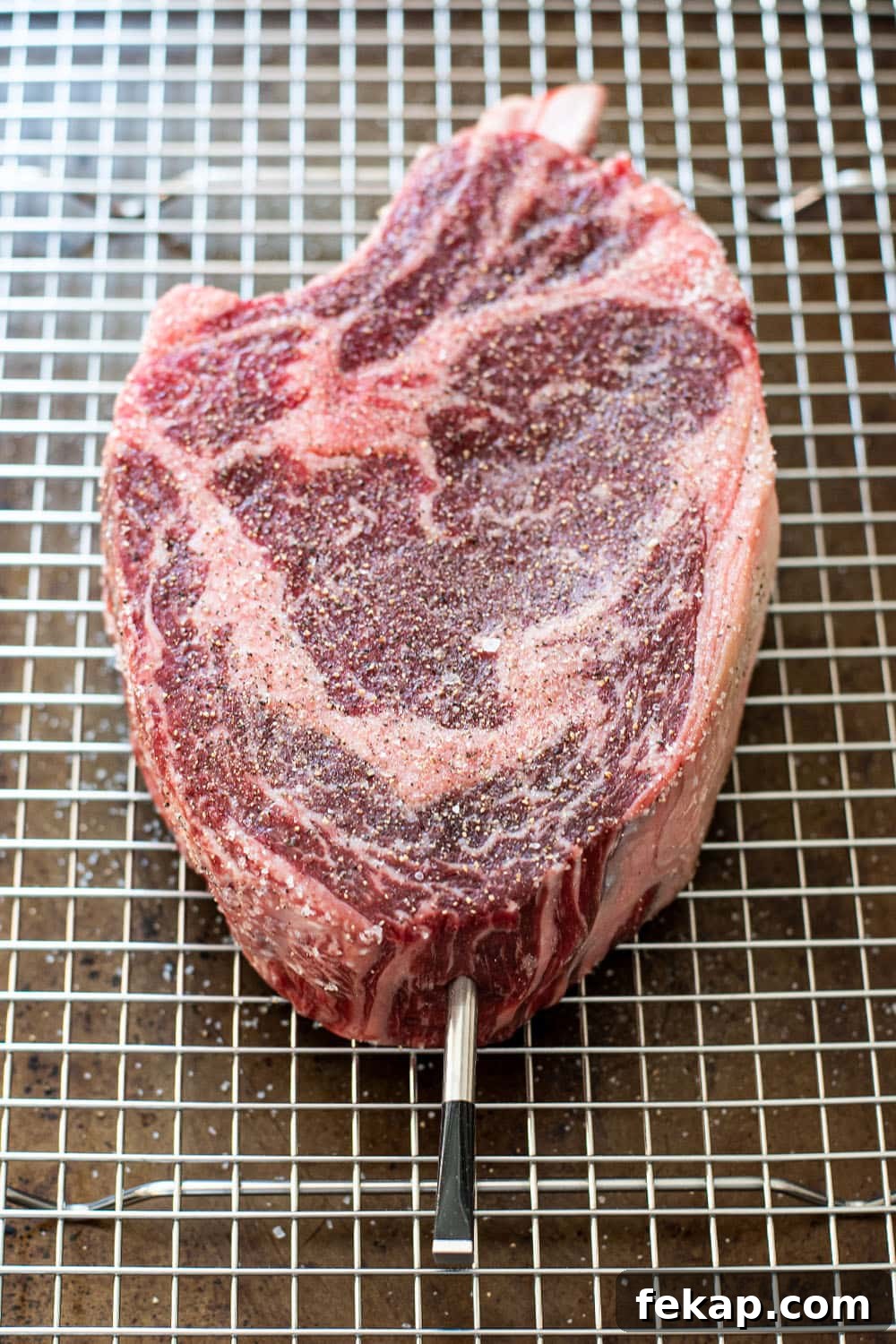
Remove the steak from the fridge 45–60 minutes before cooking so it approaches room temperature. Pat the surface dry with paper towels, then place the steak on a wire rack set inside a rimmed baking sheet. Season generously with coarse salt and freshly ground pepper.
Quick Tip
Elevating the steak on a rack ensures even airflow around the meat and prevents the bottom from overcooking. The rack also helps the surface dry for a better final sear.
Step 2.
Preheat the oven to 250°F and position the steak on the middle rack. Roast until the thickest part of the steak reads about 10°F below your desired final temperature—the sear will raise the temperature slightly. Expect a 2-inch steak to take roughly 50–55 minutes for medium-rare. When you remove it from the oven the surface may look dull or slightly gray; the sear will transform it.
Quick Tip
A reliable, instant-read or probe thermometer is essential for the oven phase. Monitoring the internal temperature removes guesswork and helps you hit the precise doneness you want.
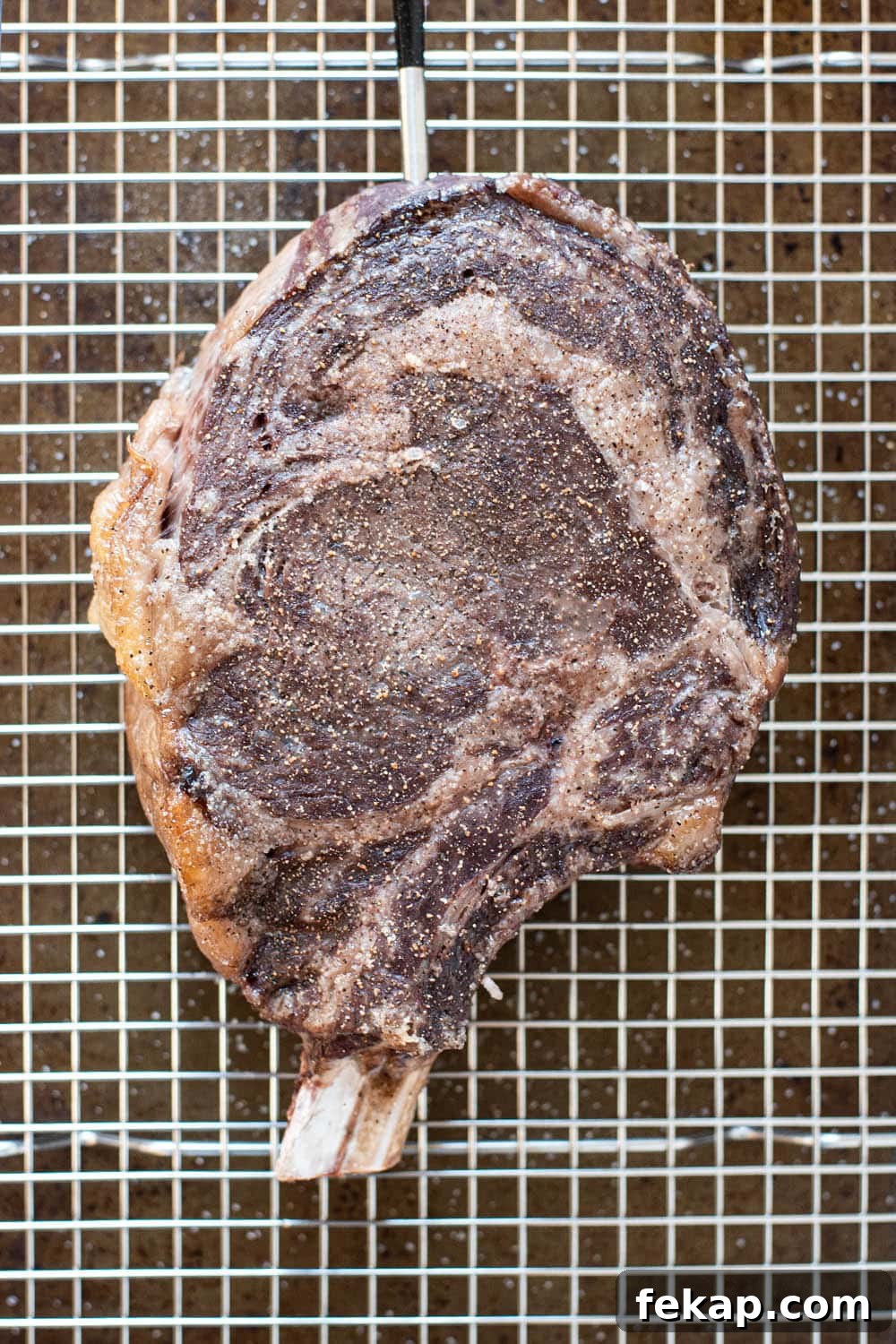
Step 3.
After removing the steak from the oven, pat it dry again to remove any surface moisture. Heat a tablespoon or two of a high-smoke-point oil in a cast-iron skillet until it is scorching hot and just beginning to smoke. Add the steak and press gently to ensure full contact. Sear 60–90 seconds per side without moving the steak. Optionally sear the edges for 15–20 seconds to brown fat caps and sides.
During the last sear, add butter, garlic, and fresh herbs (like thyme or rosemary) to the pan. Tilt the pan and spoon the melted, herb-infused butter over the steak to finish and add flavor. The steak can be served immediately after searing—because it was cooked slowly, it doesn’t require a long rest.
Quick Tip
Finish-basting with butter and herbs in the skillet adds aroma and a silky finish to each bite.
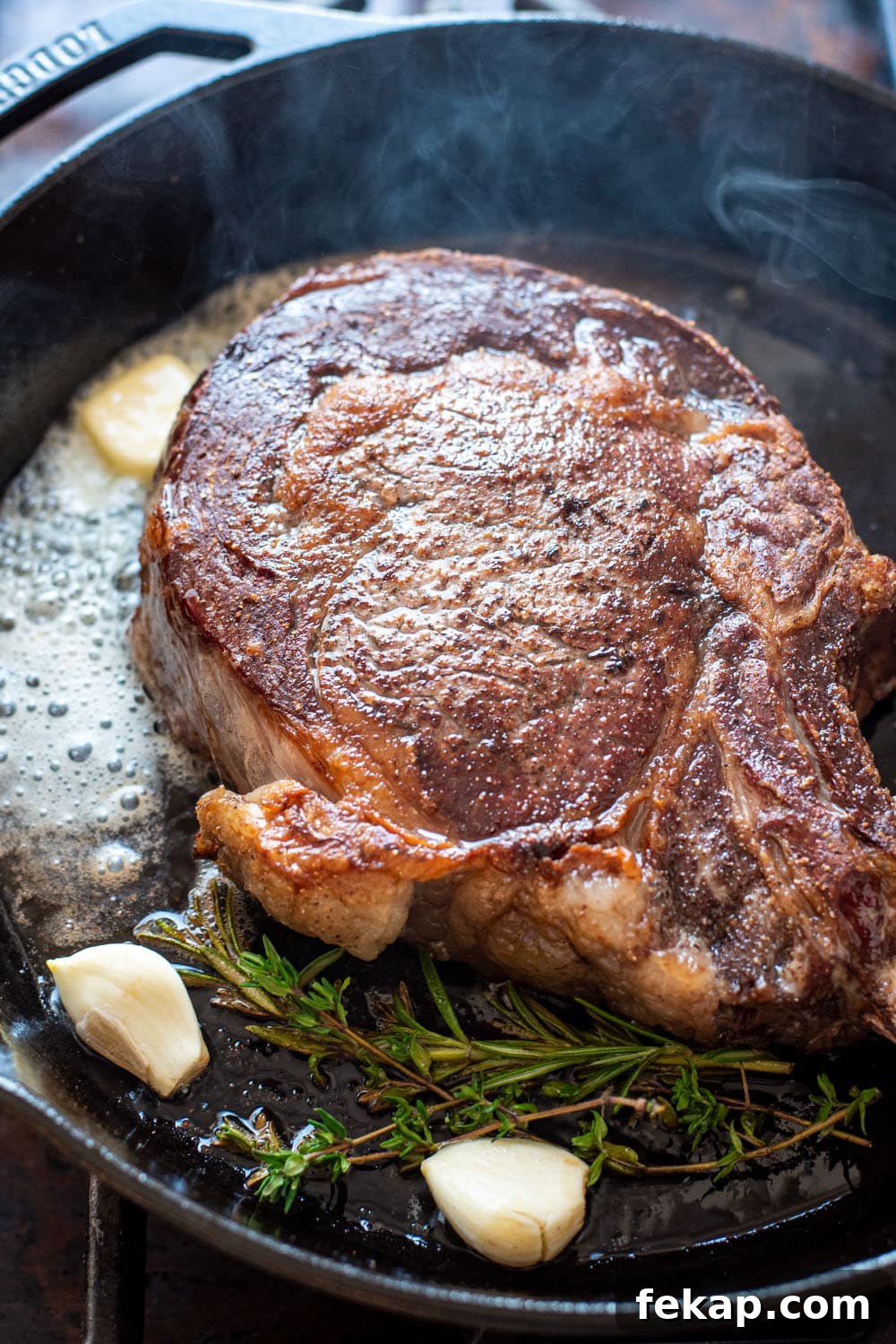
SMOKE WARNING: High-heat skillet searing can produce smoke. Open a window and run your kitchen vent fan to improve ventilation before you begin.
Steak Temperature and Timing
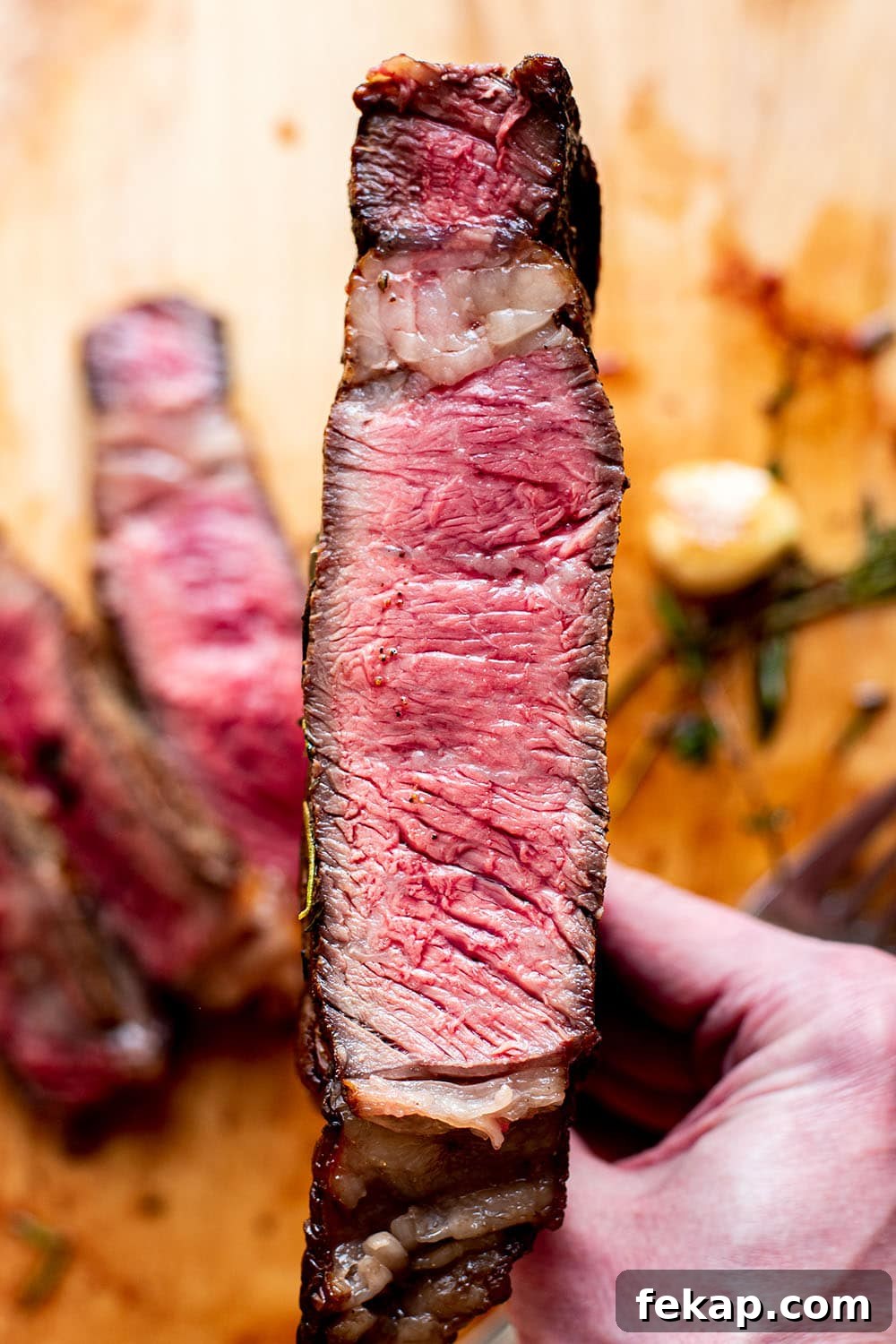
The table below is a general guide for a 2-inch steak roasted at 250°F. Times vary with steak thickness and oven performance. The oven target temperatures are the internal temperature you want in the oven before searing; the final target includes the extra heat added during the sear.
| Doneness | Target Oven Temp | Final Target Temp | Oven Duration |
|---|---|---|---|
| Very Rare / Rare | 105–110°F | 115–120°F | 40–45 minutes |
| Medium Rare | 115–120°F | 125–130°F | 50–55 minutes |
| Medium | 125–130°F | 135–140°F | 60–65 minutes |
| Medium Well | 135–140°F | 145–150°F | 70–75 minutes |
Frequently Asked Questions
Not recommended. Steaks thinner than 1½ inches are likely to overcook during the final sear, which negates the benefit of the slow-roast step.
Using a wire rack is highly recommended because it allows even air circulation and prevents the bottom of the steak from cooking faster than the rest.
No, but a reliable instant-read or probe thermometer makes it much easier to monitor internal temperature and hit your desired doneness consistently.
What to Serve With Steak
Classic pairings include roasted or mashed potatoes and Brussels sprouts. Crispy roasted fingerling potatoes, garlic butter roasted red potatoes, or smashed potatoes are excellent sides. For a richer plate, serve with cream cheese mashed potatoes. Roasted Brussels sprouts with bacon and Parmesan or restaurant-style Brussels sprouts are great vegetable options. For surf-and-turf, consider seared scallops or baked lobster tails alongside your steak.
More Steak Recipes
How to Grill Filet Mignon
Sous Vide Steak – A Beginner’s Guide
Filet Mignon Recipe
Porterhouse Steak Recipe
Enjoyed this recipe? If you make it, please leave a star rating and a brief review in the comments to help others find it.
How to Reverse Sear Steak
Ingredients
- 1 frenched bone-in ribeye, 20–24 ounces (roughly 2 inches thick)
- 2 tablespoons butter
- 1 thyme sprig
- 1 rosemary sprig
- 1 garlic clove
- 1–2 tablespoons canola or vegetable oil
- Coarse sea salt or kosher salt and freshly ground pepper, to taste
Instructions
- Preheat the oven to 250°F.
- Remove the steak from the fridge 45 minutes to 1 hour before cooking to bring it closer to room temperature. Pat the steak dry and place it on a wire rack set in a rimmed baking sheet. Season generously with coarse salt and pepper.
- Put the steak on the middle oven rack and roast until the center of the thickest part is about 10°F below your final desired temperature: rare ~110°F, medium-rare ~115–120°F, medium ~125–130°F, medium-well ~135–140°F. A digital thermometer yields the most consistent results. A 2-inch steak often takes around 55 minutes to reach these oven targets.
- Remove the steak from the oven and pat the surface dry. Heat oil in a cast-iron skillet over high heat until it is very hot and begins to smoke. Sear the steak 60–90 seconds per side without moving it, pressing briefly to ensure contact. Optionally sear the side edges for 15–20 seconds to brown fully.
- During the final sear, add garlic, butter, and fresh herbs to the skillet. Spoon the melted herb butter over the steak to finish. Serve immediately—no long resting period is required after a reverse sear.
Notes
SMOKE WARNING: Searing at very high heat can produce smoke. Ventilate your kitchen by opening a window and running an exhaust fan if available.
Nutrition
Carbohydrates: 0.4 g
Protein: 68 g
Fat: 45 g
Saturated Fat: 17 g
Cholesterol: 321 mg
Sodium: 1449 mg
Fiber: 0.1 g
Sugar: 0.2 g
Nutrition information is automatically calculated and should be used only as an approximation.