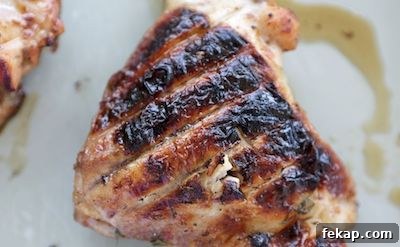
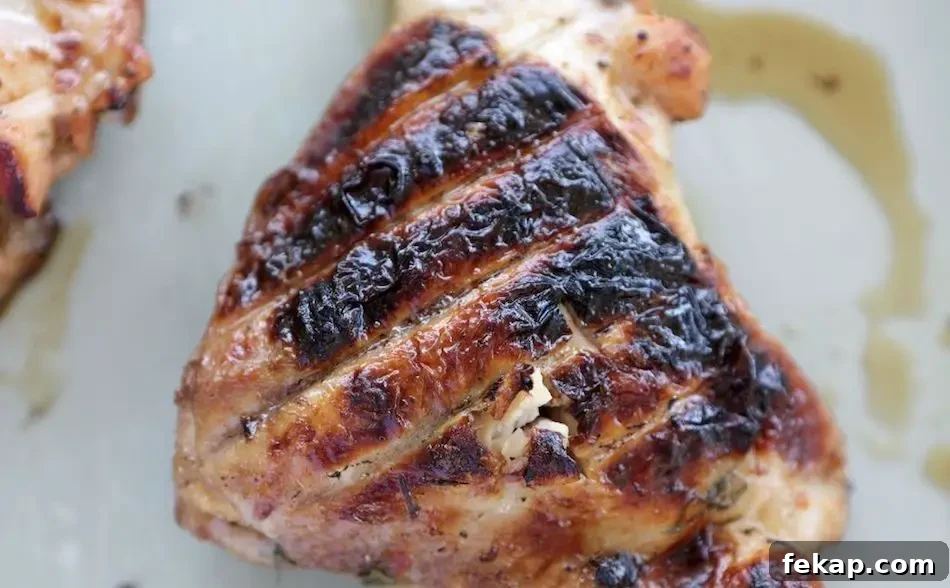
Chicken thighs are richer in fat and contain more connective tissue and blood vessels than breast meat, which makes them among the most flavorful parts of the bird. Because raw poultry commonly carries harmful bacteria, it’s essential to cook chicken to a safe internal temperature rather than relying on appearance. The most reliable way to confirm doneness is with a quality instant-read thermometer.
Food-safety guidance: the USDA recommends a minimum internal temperature of 165°F (74°C) for cooked poultry. Many pitmasters and cooks, however, prefer to bring thighs to around 175°F (79°C) to ensure maximum tenderness while keeping the breast at or near 165°F to avoid drying it out. When smoking or grilling a whole bird, position thighs and legs toward the hottest area of the grill or smoker. Keep the chicken out of the 40°F–140°F danger zone during storage and defrosting, and avoid letting cooked meat drop below 140°F during holding. For crisp skin, cook in the ~300°F range.
Key Points
- Thighs have more fat and connective tissue, producing richer flavor and juicier meat.
- Always verify doneness with a thermometer; don’t rely on color alone.
- USDA minimum safe temperature for poultry is 165°F (74°C); thighs are often cooked to ~175°F for tenderness.
- Probe both breast and thigh when cooking a whole chicken to ensure even doneness.
- Keep raw and cooked chicken out of the 40°F–140°F danger zone.
- Cook at about 300°F for crisp skin; avoid low temperatures that leave skin rubbery.
- The pink smoke ring that can appear on smoked chicken is a surface reaction and does not necessarily mean the meat is undercooked.
- Test and calibrate instant-read thermometers regularly; replace units that are consistently inaccurate.
Why Chicken is Dangerous
Raw chicken can carry bacteria such as Salmonella and Campylobacter. These organisms are commonly found on raw poultry and can transfer to other surfaces during handling. Thorough cooking is the simplest, most effective way to kill these bacteria and prevent foodborne illness.
Symptoms from contaminated chicken range from nausea, vomiting and diarrhea to abdominal pain and fever. Severe cases can lead to dehydration or other complications, especially in vulnerable people. Using a food thermometer to confirm that the internal temperature has reached a safe level is the best way to avoid these risks.
| Method | Temperature (°F / °C) | Cooking Time | Target Internal Temperature (°F / °C) |
|---|---|---|---|
| Oven-roasted | 425–450°F / 220–230°C | 25–30 minutes per pound | 165°F (74°C) minimum; thighs often finished to ~175°F (79°C) |
| Grilled | 350–450°F / 175–230°C | 6–8 minutes per side (varies by cut) | 165°F (74°C) minimum |
| Pan-fried | N/A | 6–8 minutes per side | 165°F (74°C) minimum |
| Slow cooker | N/A | 4–6 hours on low, 2–3 hours on high | 165°F (74°C) minimum |
How to Smoke Chicken Thighs
Smoking chicken thighs yields great flavor and tender meat when done correctly. Use a probe or instant-read thermometer to monitor the thickest part of the thigh, avoiding bone contact. For a typical low-and-slow smoke, preheat the smoker to 225–250°F (107–121°C) and expect roughly two hours, though time varies by size and smoker performance. Pull thighs when they reach your target temperature: 165°F is safe, while many cooks prefer 170–180°F for a more tender result.
To crisp the skin, increase the smoker temperature to 300–350°F for the final 15–30 minutes, or finish the thighs on a hot grill. Dry the skin thoroughly before cooking—pat with paper towels or air-dry uncovered in the refrigerator for a few hours—and avoid over-brining, which can soften the skin.
| Type of Chicken | Cooking Time (minutes per pound) | Internal Temperature (°F / °C) |
|---|---|---|
| Whole bird | 25–30 | 165°F (74°C) minimum |
| Boneless breasts | 15–20 | 165°F (74°C) |
| Thighs | 40–50 | 165°F (74°C) minimum; commonly finished to ~175°F (79°C) |
| Wings | 40–50 | 165°F (74°C) |
Instant-Read Thermometers
An accurate instant-read thermometer is essential for food safety and consistent results. Cheap thermometers can be slow or inaccurate; look for models that provide fast readings and a proven track record for accuracy. Regularly test your thermometer with an ice-water test and a boiling-water test to confirm performance.
How to Test a Thermometer for Accuracy
- Ice bath test: Fill a container with crushed ice and cold water, then insert the probe. It should read 32°F (0°C) within a small margin.
- Boiling water test: Insert the probe into boiling water (accounting for altitude) and verify it reads close to 212°F (100°C) at sea level.
What to Do If Your Thermometer Is Inaccurate
If tests show your thermometer is off by several degrees, you can compensate if you know the offset, but the safest approach is to recalibrate the device if possible or replace it. Investing in a reliable unit saves time and reduces the risk of undercooked poultry.
The Science Behind the Pink Color in Smoked Chicken
Smoked chicken often develops a pink “smoke ring” beneath the surface. This is a chemical reaction between smoke and the meat pigments—harmless and not an indication that the chicken is undercooked. Always verify doneness with a thermometer rather than color.
How to Get a Crispy Skin
- Cook at or above 300°F for crispier skin; lower temps tend to produce rubbery skin.
- Dry the skin thoroughly before cooking.
- Avoid excessive spritzing or leaving a water pan directly beneath the meat when crisping.
- Apply a light coat of oil to help the skin brown evenly.
- Reserve sugary sauces for the last 10 minutes of cooking to prevent burning.
Tips for Smoking Chicken Thighs
- Choose a mild fruitwood (apple, cherry) or a neutral hardwood (oak, pecan) for balanced smoke flavor.
- Trim excess fat to reduce flare-ups and improve appearance.
- Use a dry rub or a mild marinade to add flavor; apply salt separately if desired.
- Preheat your smoker to 225–250°F for an even cook, then finish hotter for crisping if needed.
- Smoke skin-side up, then check temperature in the thickest part of the meat.
- Let cooked thighs rest a few minutes before serving so juices redistribute.
How To Cook Chicken Thighs On A Grill
- Season thighs with your preferred rub.
- Set the grill to about 300°F for balanced cooking and crisp skin.
- Cook for roughly 40–50 minutes total, flipping as needed for even browning.
- Baste with sauce in the final 10 minutes to avoid burning sugar-based glazes.
- Aim for a safe internal temperature; pull to rest around 170–175°F if you prefer juicier thighs.
Best Rub and Glaze Tips
Many commercial and homemade rubs work well. Watch salt content and adjust seasoning to taste. Apply barbecue sauce or glaze during the last 10 minutes of cooking so it sets without burning.
Recommended Tools
Reliable thermometers and probes are the most important tools for smoking and grilling. A dual-probe thermometer helps monitor both ambient smoker temperature and meat temperature, while a fast, accurate instant-read thermometer is invaluable during finishing. Butcher paper can be useful for larger cuts; use food-grade, unwaxed paper if wrapping.
Meat Thermometers — Your Most Important Tool
Consistent, accurate temperature measurement is the single best way to ensure safe, delicious chicken. Test and maintain your thermometers, and prioritize accuracy and speed when choosing an instant-read unit. With the right tools and technique, smoking and grilling chicken thighs becomes both safer and more satisfying.