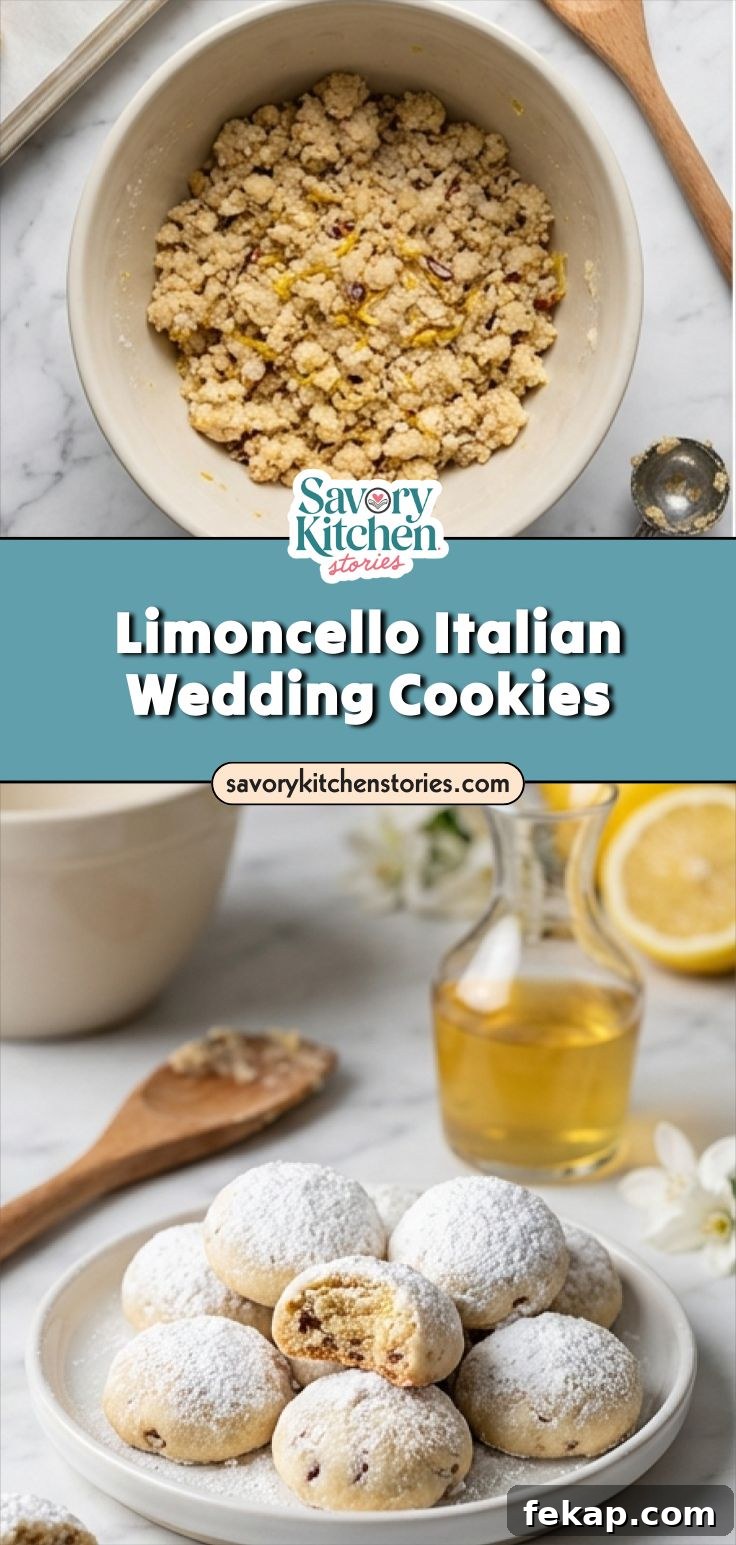
Limoncello Italian Wedding Cookies are a bright, nutty treat that feels a little celebratory with every bite. The aroma of lemon zest blended into sugar, the tender, buttery crumb, and the snowy finish of confectioners’ sugar make this cookie a favorite for gatherings, gifts, and simple indulgence. I bake these for friends, pack tins for unexpected guests, and bring them to parties where their delicate lemon-pecan flavor always gets noticed. The charm of this recipe is in the small details: infused sugar, gently pebbled dough, and a double dusting of powdered sugar for a soft, festive finish.
How This Recipe Became My Sunny-Window Tradition
The first time I made these cookies it was a rainy afternoon and the kitchen filled with the bright scent of lemons. Zesting released lively oils into the sugar, and kneading the dough into small balls became a calming, rhythmic task. Fresh from the oven, lightly golden at the edges, the cookies took on a snowy coat of confectioners’ sugar. The first bite—tender, buttery, and lemon-sparked with toasty pecan bits—felt like a small revelation. Ever since, these cookies have been my go-to for bringing a little warmth and cheer to any occasion.
Primary Ingredients and Why They Matter
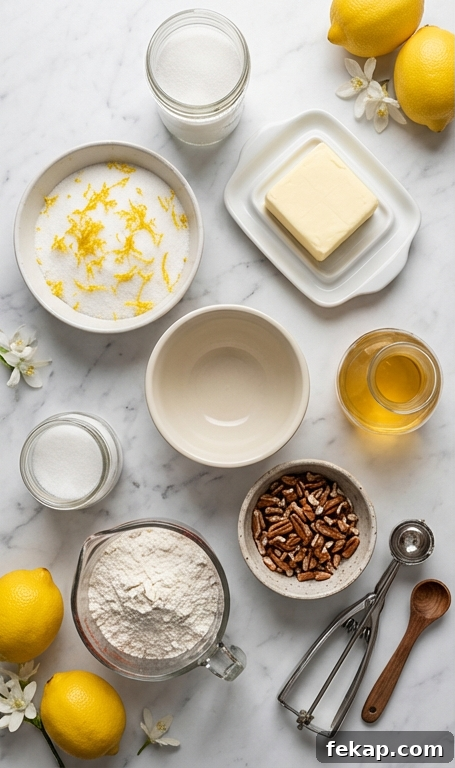
- White sugar: Rubbed with lemon zest to capture citrus oils that brighten flavor; fine cane sugar works well too.
- Lemon zest: The primary source of citrus aroma—avoid the bitter white pith and use fresh, preferably organic, lemons.
- Salted butter: Adds richness and a tender crumb; if using unsalted butter, add a pinch more salt to taste.
- Vanilla extract: Rounds and balances the lemon; pure vanilla gives the best depth.
- All-purpose flour: Provides structure; mixing half AP flour with cake flour yields a softer cookie if desired.
- Limoncello: Gives authentic lemon-liqueur flavor—homemade or a quality bottle adds warmth and complexity.
- Pecans: Toasted for extra flavor; walnuts or almonds are fine substitutes for different textures.
- Confectioners’ sugar: Sifted for a smooth, snowy coating that defines Italian wedding cookies.
Essential Kitchen Tools and Friendly Alternatives
A few simple tools make these cookies easier to make consistently: a mixer to cream butter until airy (hand-beating works if needed); a microplane for clean zesting; a cookie scoop or tablespoon for even portions; parchment or silicone mats to prevent sticking; and a cooling rack so cookies set without becoming soggy. None of these are required, but they help streamline the process and improve results.
Step-by-Step Preparation Guide
Step 1: Preheat the oven
Preheat the oven to 400°F and position the rack in the center. Having a hot oven ready keeps baking predictable and helps the cookies set quickly.
Step 2: Prepare the baking sheets
Line two baking sheets with parchment paper or silicone mats so you can work continuously without waiting to clean pans between batches.
Step 3: Zest and infuse the sugar
Combine granulated sugar with the zest of two large lemons. Massage the zest into the sugar until it’s fragrant and slightly moist—this step releases the lemon oils that define the cookie’s flavor.
Step 4: Cream the butter and aromatics
Cream softened butter with the lemon-infused sugar until pale and airy. Mix in vanilla and a pinch of salt so flavors distribute evenly and the texture stays light.
Step 5: Form the dough with flour and limoncello
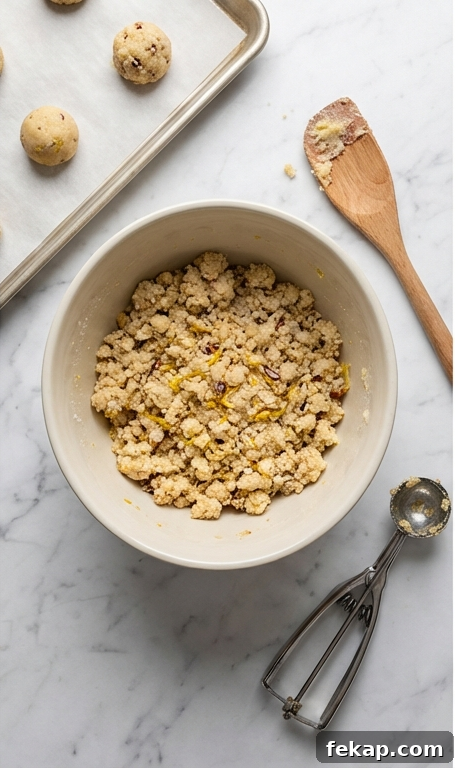
Stir in all-purpose flour until the mixture resembles damp sand with small pebbles. Add limoncello and mix just until the dough comes together—small bits of flour pebbles are fine and help keep the cookies tender.
Step 6: Fold in the pecans
Fold in chopped pecans until evenly distributed, giving the dough a textured look with visible nut pieces and lemon flecks.
Step 7: Scoop and roll the cookies
Portion the dough with a 1.5″ cookie scoop or a tablespoon, then gently roll each portion into a smooth ball. Space them 2″–3″ apart on the prepared sheets so they have room to set.
Step 8: Bake until very lightly golden
Bake 12–15 minutes, watching closely for the slightest hint of color on the edges and bottoms. The tops should remain pale and set for a tender interior.
Step 9: First powdered-sugar roll while warm
While still warm, roll the cookies in sifted confectioners’ sugar so the coating adheres. Transfer to a cooling rack to reach room temperature.
Step 10: Final sugar finish and rest before storing
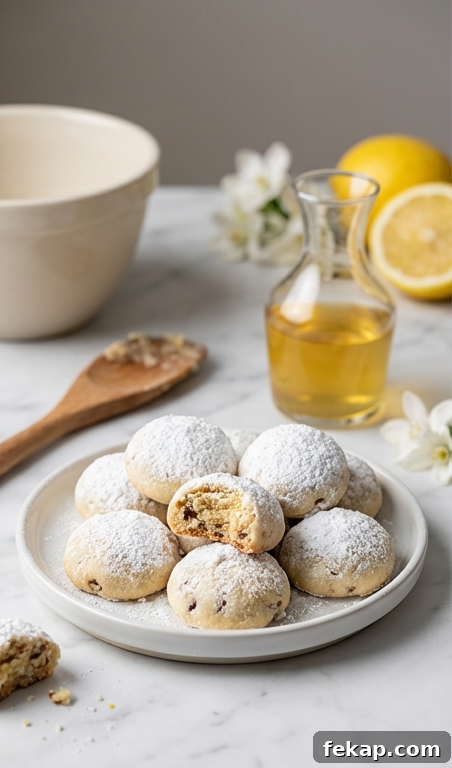
Once fully cool, roll cookies again for a brighter finish if desired. Let them rest 30 minutes so the sugar sets, then store in an airtight container. They’ll keep at room temperature for up to a week.
Making It Your Own
Customize the cookies by swapping some lemon zest for orange or blood orange zest for a sweeter citrus profile. Add an extra teaspoon of limoncello for a stronger liqueur note, reducing other liquids slightly to maintain dough texture. For a nut-free version, use toasted sunflower seeds; for gluten-free, choose a 1:1 gluten-free flour blend and chill the dough a bit longer before baking. Each tweak offers a new, delicious variation.
How to Serve
Serve on a platter dusted with extra confectioners’ sugar alongside espresso or a small glass of limoncello for a themed pairing. For parties, arrange cookies in neat circles and tuck edible flowers or lemon slices between clusters for a pretty presentation. For gifting, layer cookies with parchment between to protect the delicate coating.
Storage and Reheating Tips
Store cooled cookies in an airtight container at room temperature for up to a week, placing parchment between layers to keep them from sticking. In humid climates, include a loose paper towel to absorb extra moisture. To refresh cookies, warm briefly in a 275°F oven for 3–5 minutes, then cool and re-dust with confectioners’ sugar if needed. Avoid microwaving, which can make them greasy.
Common Mistakes and How to Avoid Them
Don’t overwork the dough—mix just until it comes together and leave small flour pebbles for tenderness. If cookies spread too much, chill the scooped balls for 10–20 minutes before baking. Always rub zest into sugar to release essential oils; skipping this step reduces the cookie’s characteristic brightness. Watch the oven closely to prevent browning and preserve a soft texture.
Final Thoughts
These Limoncello Italian Wedding Cookies are quick to make, travel well, and bring a burst of citrusy comfort to any table. They suit casual coffee breaks and elegant gatherings alike—try them this weekend and see if they don’t become a favorite in your baking rotation.
Frequently Asked Questions
- What is the best way to zest lemons without getting bitter pith? Use a microplane and remove only the thin, colored outer layer, avoiding the white pith beneath.
- Can I make the dough ahead of time? Yes—chill the dough up to 48 hours or freeze scooped balls for up to a month. Bake from chilled or frozen, adding a minute or two to the bake time if needed.
- Is there an alcohol-free substitute for limoncello? Use diluted lemon extract or a splash of lemon juice with a teaspoon of simple syrup to mimic the moisture and flavor.
- How do I keep the cookies from becoming greasy? Avoid overbaking and maintain the proper butter-to-flour ratio; high heat and brief bake time help set the structure without excess oiliness.
- Can I use walnuts or almonds instead of pecans? Yes—walnuts or slivered almonds work well and each nut adds its own texture and flavor nuance.