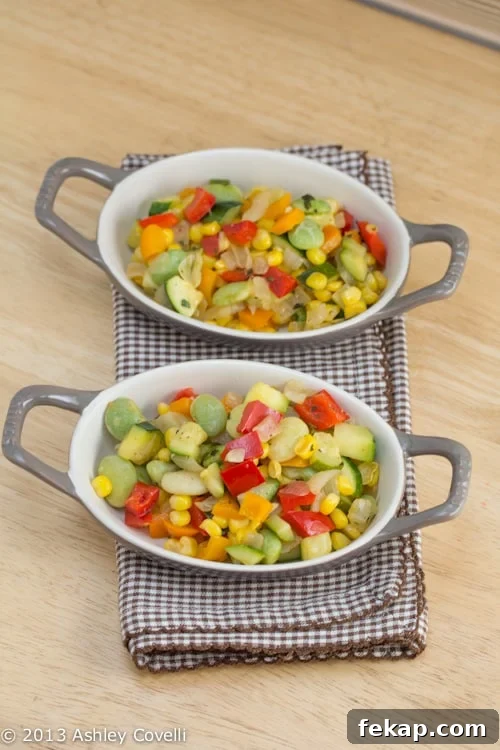
This month’s Supper Club theme was Southern, and I wanted to bring something a bit lighter to balance the meal. I had never made succotash before and thought this iron-skillet version would be a colorful, vegetable-forward side that still feels substantial. The recipe is straightforward—most of the time is simply chopping the vegetables—but the method and a few small touches really lift the dish.
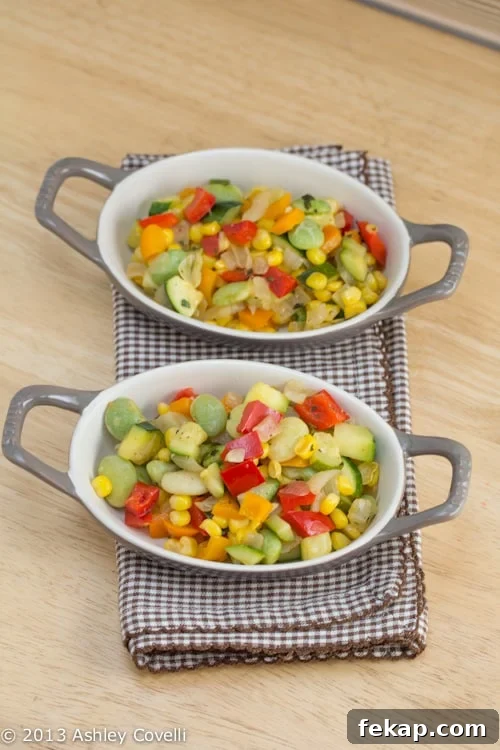
Iron-Skillet Succotash
Bon Appétit November 2010
3 tablespoons butter
1 large white onion, cut into ½-inch pieces (about 2 ½ cups)
18 ounces medium zucchini (about 4), trimmed, cut into ½-inch cubes
1 large red bell pepper, cut into ½-inch pieces (about 1 ½ cups)
1 large orange bell pepper, cut into ½-inch pieces (about 1 ½ cups)
1 10-ounce package frozen lima beans or shelled edamame, partially frozen
1 10-ounce package frozen corn kernels, partially frozen
1 tablespoon minced fresh marjoram
Coarse kosher salt and freshly ground black pepper
Technique: Skillet-Roasted Succotash
Cooking the vegetables in a heavy skillet over moderate heat for a bit longer than a quick sauté helps the flavors meld while keeping some texture and bite. Using butter adds a rounded richness that pairs well with the sweetness of the corn and peppers; if you prefer, a neutral oil or a combination of oil and butter will work too. This stovetop method is ideal when oven space is limited and produces bright, slightly caramelized vegetables with minimal fuss.
Preparation
Melt the butter in a heavy, large skillet over medium-high heat—cast iron is especially good for even browning. Add the onion and cook, stirring occasionally, until it becomes golden, about 5 minutes. Add the zucchini and peppers and continue to cook, stirring frequently, until they begin to soften, about another 5 minutes. Add the partially frozen lima beans (or edamame) and frozen corn and keep the mixture moving so everything heats evenly, about 4–6 minutes until warmed through. Stir in the minced marjoram and season generously with coarse kosher salt and freshly ground black pepper. Transfer the finished succotash to a large bowl and serve warm.
Tips for Success
– Use a roomy skillet. If your cast-iron pan is on the small side, start in it and finish in a larger sauté pan or transfer to a serving bowl before mixing in the beans and corn to avoid overcrowding and steaming the vegetables.
– Keep the frozen beans and corn slightly frozen when you add them; this helps prevent the mixture from becoming watery as they thaw.
– Taste and adjust seasoning at the end—succotash benefits from a bright finishing seasoning (a squeeze of lemon or a sprinkle of flaky salt works well if you like).
Variations and Substitutions
This succotash is flexible. Substitute fresh lima beans if in season, or use edamame for a different texture and extra protein. If marjoram isn’t available, fresh basil or oregano can be used in smaller amounts—marjoram has a subtle, floral note that complements the vegetables but is not essential. Add a handful of cherry tomatoes toward the end of cooking for acidity, or toss in a small diced jalapeño with the onions if you want a touch of heat.
Serving and Storage
Serve this succotash as a Southern-style side alongside grilled meats, roasted poultry, or as part of a vegetarian spread. It also makes a bright, room-temperature salad for potlucks and summer gatherings. Leftovers keep well in an airtight container in the refrigerator for up to 3–4 days; gently reheat on the stovetop over low heat or serve chilled. If the mixture seems dry after refrigeration, add a splash of water, broth, or a little more butter while warming.
Overall, this iron-skillet succotash is a simple yet flavorful vegetable side that brings color and balance to a heavier Southern menu. The butter and fresh marjoram add a subtle richness and herbaceous lift, while the skillet-roasting technique gives the vegetables pleasant caramelized notes without losing their texture.
Big Flavors Rating: 4 Stars