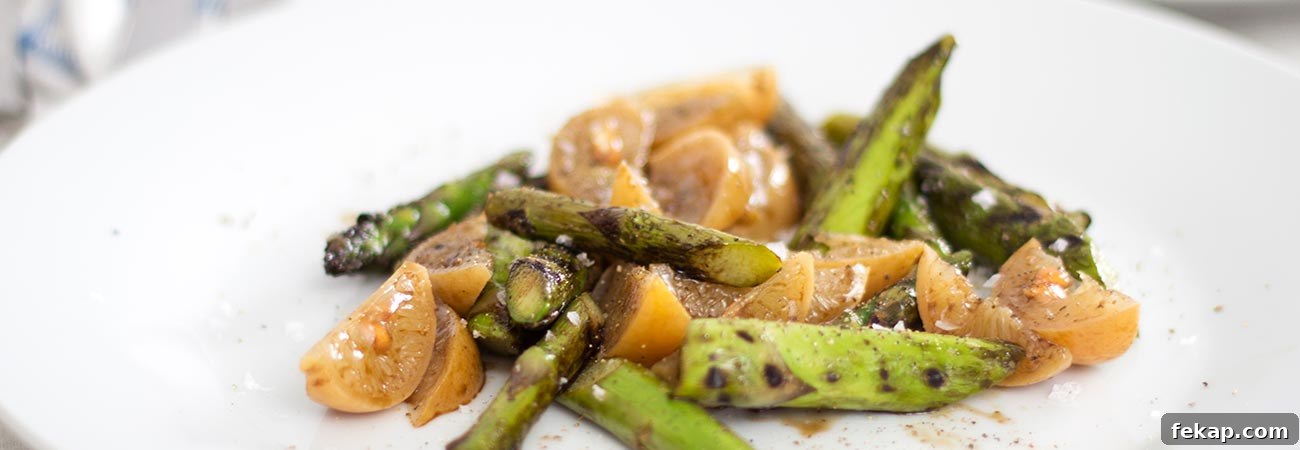
Today’s recipe is delightfully simple and perfect for when fresh asparagus is in season. If you already have asparagus on your menu, a few pieces of preserved lemon transform the dish with almost no extra effort. If preserved lemons are hard to find where you are, they are straightforward to make at home, and they keep well in the fridge, lending intense lemony depth to many dishes.
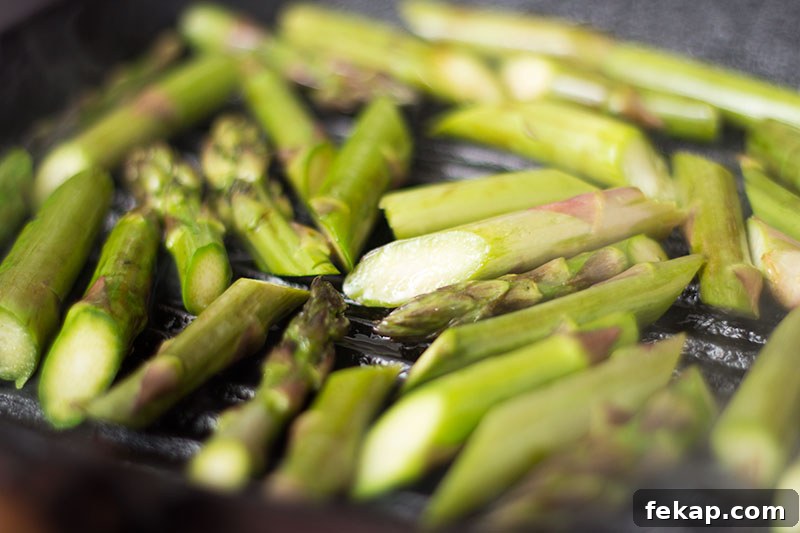
I deliberately aimed for a recipe with very few ingredients — the idea being that less fuss often means a more relaxed kitchen experience. Stripped down to the essentials, you’ll need only asparagus, preserved lemon, and olive oil, yet the result feels like a thoughtful, bright dish rather than something thrown together.
This version, with preserved lemon added after griddling, lifts the asparagus above a basic grilled preparation without complicating the process. It works beautifully as a starter or as a side to fish, chicken or a simple grain-based main. The preserved lemon adds a salty, nuanced citrus note that complements the char from the griddle.
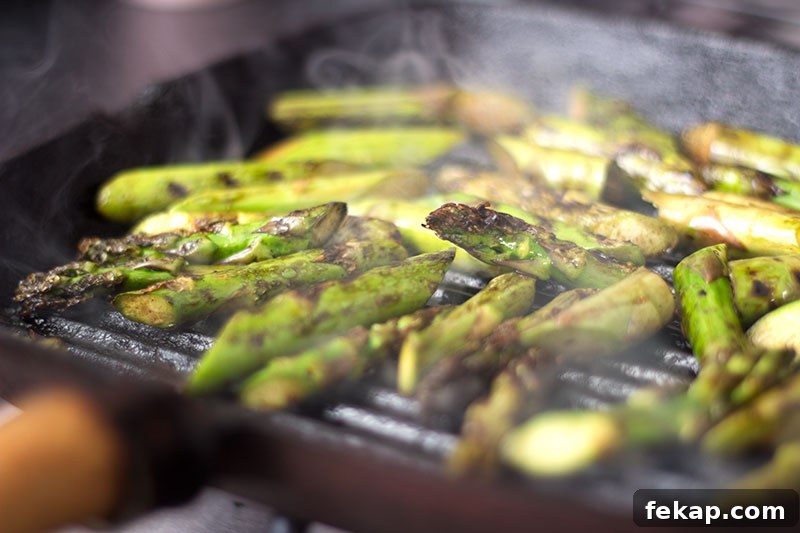
Cooking asparagus on a griddle pan delivers that pleasing char and slight smokiness you associate with outdoor barbecues, but without charcoal or an open flame. The ridges give attractive grill marks and help excess oil drain away, producing a nicely textured vegetable.
Below are a few practical tips on choosing and using a griddle pan, followed by the recipe and simple variations you can try at home.
Griddle (grill) pan buying and care guide
- Choose a heavy cast-iron pan when possible. A heavier pan holds heat evenly and helps produce consistent char on your food.
- If you often cook for more than one or two people, consider a wider pan to give you more cooking surface.
- Double-sided pans with both ridged and flat surfaces add versatility for different types of cooking.
- Always rub a thin film of oil across the pan and preheat thoroughly over medium heat before adding food for best results.
- Avoid scrubbing cast iron with strong detergents. Wipe off debris with a paper towel, or use hot water and coarse salt if needed to remove stubborn bits.
- Non-stick grill pans lose their surface quickly under high heat and rarely develop the same flavour profile; a well-seasoned metal pan is preferable.
- Lightweight pressed-metal pans cool quickly when food is added, creating uneven cooking and hotspots. A solid, heavier pan will give a more reliable result.
Now for the recipe itself — pleasantly fast to prepare, with clear flavours and minimal fuss.
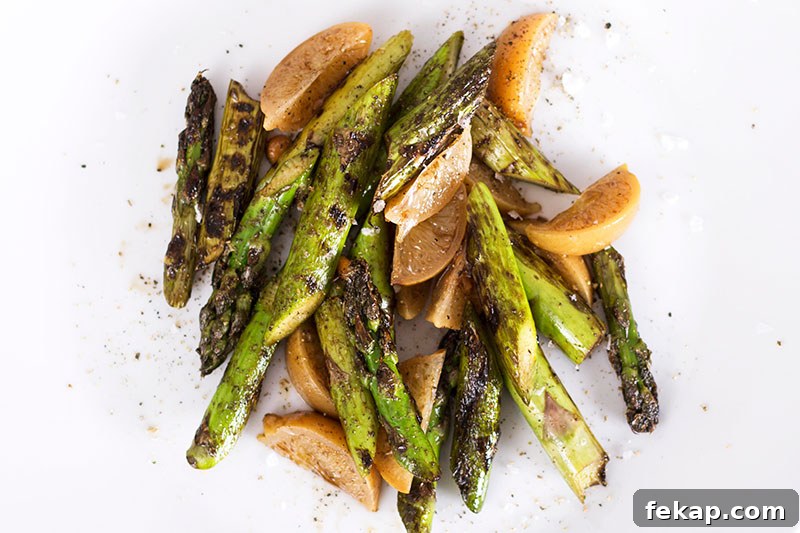
Asparagus with preserved lemons
By Gavin Wren
Serves 2 as a starter or side dish
Uses 1 pan
Ingredients
1 bunch of asparagus (trimmed)
2 preserved lemons, rinsed and finely chopped
Olive oil, for tossing and cooking
Salt and freshly ground black pepper, to taste
Directions
Place a griddle pan over medium heat and allow it to warm thoroughly for several minutes. A well-heated pan is key to getting good colour without overcooking.
Trim the woody ends from the asparagus and cut into roughly 2-inch (5 cm) pieces if you prefer shorter spears, or leave whole for a more dramatic presentation. Toss the asparagus lightly with enough olive oil to coat, but not drip.
Lay the asparagus in a single layer on the hot griddle. Cook for about 4–6 minutes, turning occasionally so each side gets some contact with the ridges. You want the stems tender but still with a little bite, and with attractive char marks.
While the asparagus finishes, finely chop the preserved lemon pulp and peel — removing any excess seeds — and mix with a small drizzle of olive oil. If your preserved lemons are very salty, give them a quick rinse before chopping.
Transfer the asparagus to a serving plate, toss with the chopped preserved lemon mixture, and season with salt and freshly ground black pepper to taste. Serve immediately while warm.
Notes and variations
- If you don’t have a griddle pan, the asparagus can be broiled on a baking sheet for a few minutes until charred at the tips, or roasted at high temperature in the oven.
- For extra brightness, finish with a small scatter of chopped fresh herbs such as parsley or mint.
- Preserved lemons pair well with fish, roasted chicken or grain dishes, so this asparagus makes a flexible side for many meals.
- Leftover cooked asparagus keeps for a day in the fridge and can be tossed cold into salads or reheated briefly.